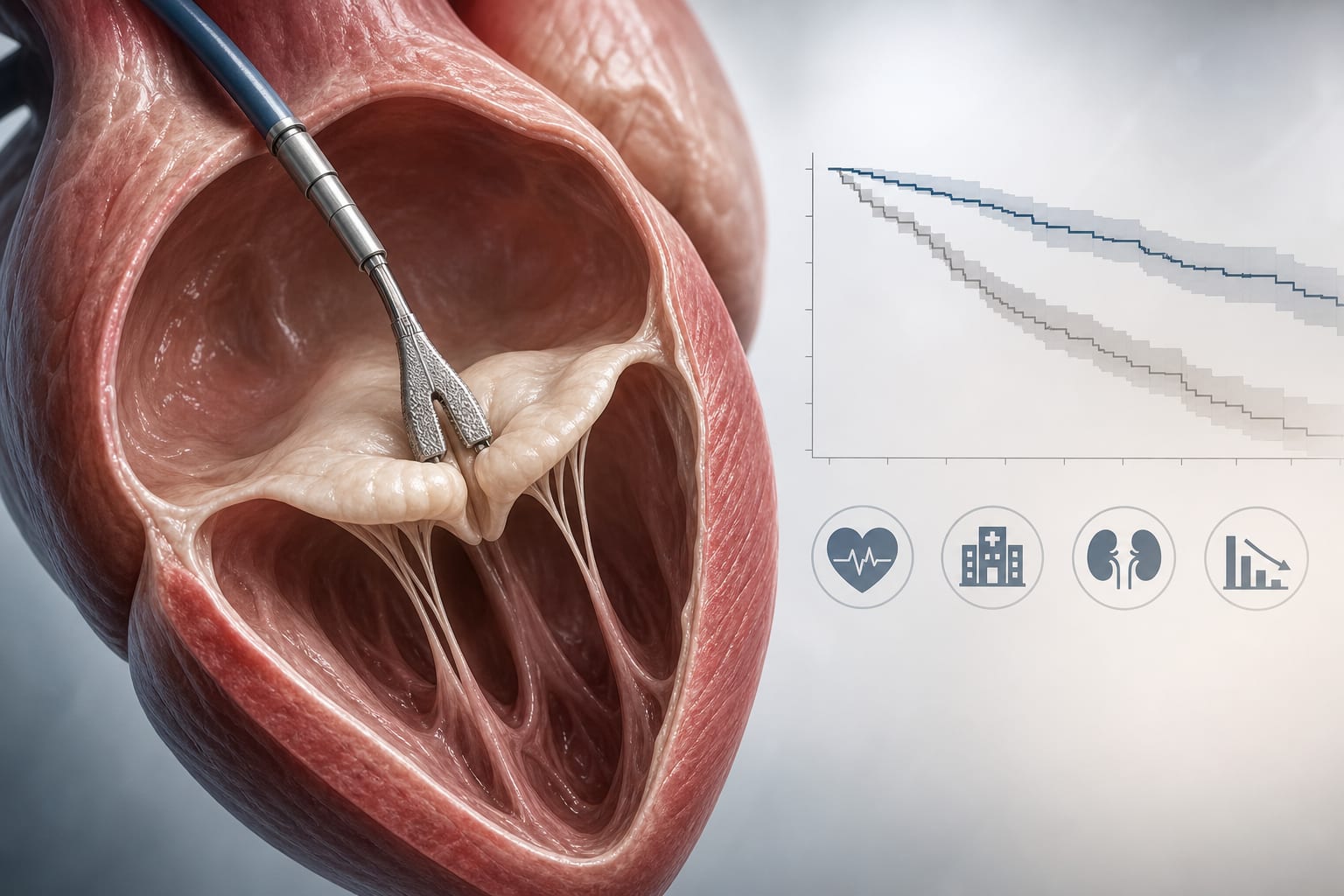
Clinical Scorecard: Long-term Clinical Outcomes Following Tricuspid Transcatheter Edge-to-Edge Repair in Patients with Tricuspid Regurgitation Compared to Medical Management
At a Glance
Category
Detail
Condition
Key Mechanisms
Tricuspid transcatheter edge-to-edge repair (T-TEER) enhances valvular competence by approximating the leaflets and exerting an indirect annuloplasty effect.
Target Population
Care Setting
Key Highlights
T-TEER associated with lower all-cause mortality at 1, 3, and 5 years.
Significant reduction in heart failure exacerbation (specific percentage needed), hospitalization, emergency visits, and major adverse kidney events (MAKEs) with T-TEER.
Study utilized propensity score matching to balance baseline characteristics.
Guideline-Based Recommendations
Diagnosis
Diagnosis of TR confirmed using ICD-10-CM codes I36.1, I36.8, or I36.9; context of these codes should be clarified.
Management
Monitoring & Follow-up
Risks
Patient & Prescribing Data
T-TEER shows favorable safety profile and potential for symptomatic and functional improvement; specific improvements should be detailed.
Clinical Best Practices
Consider earlier intervention for TR to prevent irreversible right ventricular remodeling; criteria for assessing anatomical suitability for T-TEER should be expanded.
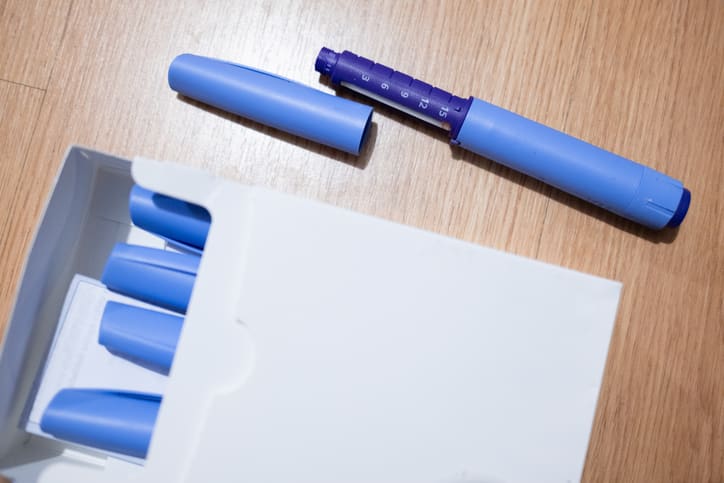
In a target-trial emulation of more than 600,000 veterans, GLP-1 RA initiators saw fewer new substance use disorders—and patients with existing SUDs had fewer overdoses, hospitalizations, and deaths.