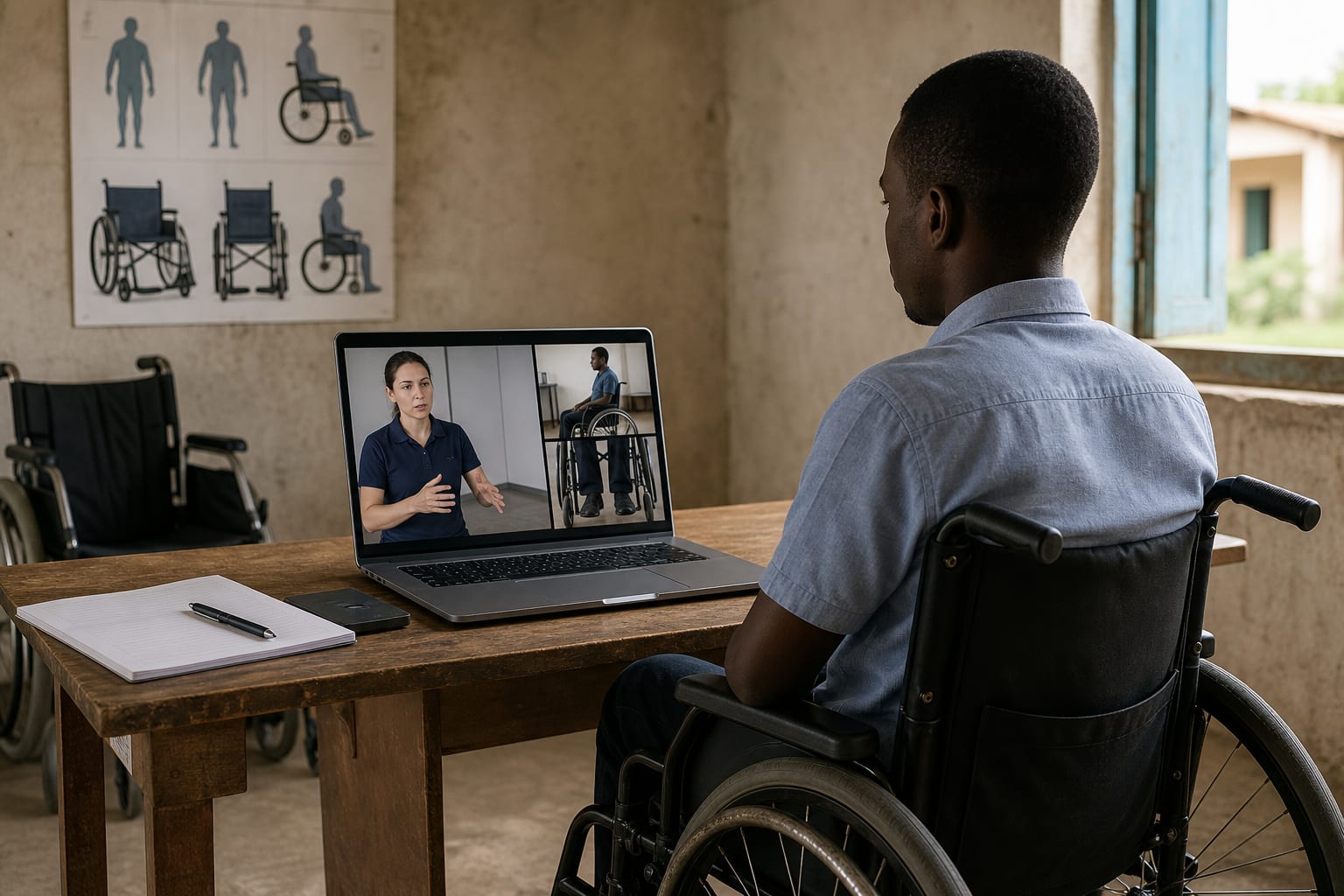
Telehealth for complex wheelchair assessment: A scoping review protocol of implementation in low-resource settings
By
Karina Berner
Gabriela Prins
Eugene Nizeyimana
Thandi Conradie
Quinette Louw
June 17, 2026
Clinical Scorecard: Implementing Telehealth for Comprehensive Wheelchair Evaluations: A Scoping Review Framework for Low-Resource Environments
At a Glance
Category Detail
Condition Wheelchair Assessment Key Mechanisms Telehealth delivery of wheelchair assessment services to improve access and outcomes. Target Population Individuals with mobility impairments requiring wheelchairs, particularly in low-resource settings. Care Setting Low- and middle-income countries (LMICs) with limited access to rehabilitation services.
Key Highlights
Over 2.5 billion people globally require assistive products, with 80 million needing wheelchairs. Access to specialized wheelchair services is limited in LMICs due to workforce shortages and infrastructure challenges. Telehealth can enhance access to wheelchair assessments, achieving comparable outcomes to in-person evaluations. Successful telehealth implementation requires clear protocols, clinician training, and adequate technological infrastructure. Knowledge gaps exist regarding current telehealth practices and stakeholder experiences in wheelchair assessments. Guideline-Based Recommendations
Diagnosis
Comprehensive assessment by trained clinicians is essential for appropriate wheelchair prescription. Management
Utilize telehealth to extend specialist wheelchair assessment services to underserved populations. Monitoring & Follow-up
Integrate objective data collection tools, such as pressure-mapping technology, within telehealth platforms. Risks
Inadequate assessments may lead to inappropriate prescriptions and increased risk of complications. Patient & Prescribing Data
Individuals with complex mobility needs, including those with high cervical spinal cord injury and progressive neurological conditions.
Telehealth can mitigate access barriers and improve participation outcomes for wheelchair users.
Clinical Best Practices
Implement culturally safe, user-centered practices that support autonomy and shared decision-making. Ensure collaborative workflows between specialist and non-specialist providers in telehealth assessments. Address environmental and socioeconomic barriers to improve access to wheelchair services. Related Resources & Content