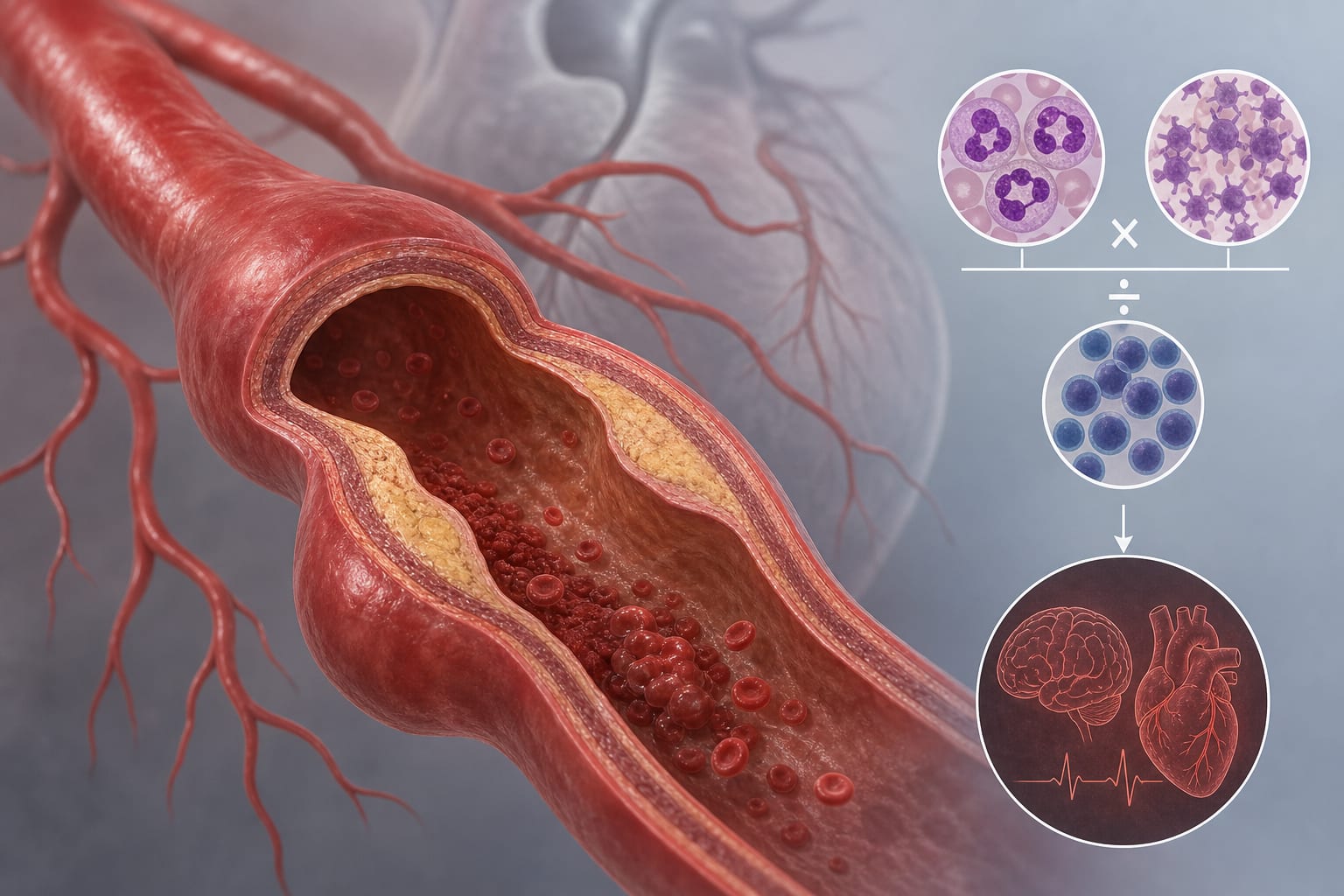
Systemic immune-inflammation Index is an independent risk factor for Major adverse cardiovascular events in patients with coronary artery ectasia - Scorecard - MDSpire
Clinical Scorecard: The Systemic Immune-Inflammation Index as a Distinct Predictor of Major Adverse Cardiovascular Events in Individuals with Coronary Artery Ectasia
At a Glance
Category
Detail
Condition
Coronary Artery Ectasia
Key Mechanisms
Systemic immune-inflammation index (SII) reflects inflammation and immune status, predicting major adverse cardiovascular events (MACE).
Target Population
Patients with angiographically confirmed coronary artery ectasia.
Care Setting
Retrospective cohort study at a hospital.
Key Highlights
18% of patients experienced MACE during a median follow-up of 30 months.
SII levels were significantly higher in patients who developed MACE.
Optimal SII cut-off value for predicting MACE was identified at 645.
SII improved model discrimination for predicting MACE (C-statistic increase from 0.72 to 0.83).
SII is an independent predictor of MACE in patients with CAE.
Guideline-Based Recommendations
Diagnosis
Use angiography to confirm coronary artery ectasia.
Management
Incorporate SII into clinical risk assessment models for patients with CAE.
Monitoring & Follow-up
Monitor SII levels as part of long-term risk stratification in CAE patients.
Risks
Patients with elevated SII are at increased risk for major adverse cardiovascular events.
Patient & Prescribing Data
Individuals with coronary artery ectasia.
SII may serve as a valuable tool for risk stratification in this high-risk population.
Clinical Best Practices
Utilize SII for prognostic assessment in patients with coronary artery ectasia.
Consider SII in conjunction with traditional cardiovascular risk factors.