Case Report: Primary hemophagocytic lymphohistiocytosis with a homozygous PRF1 variant: a case suggesting early immunoporosis and an expanded phenotypic spectrum - Scorecard - MDSpire
Advertisement
Case Report: Primary hemophagocytic lymphohistiocytosis with a homozygous PRF1 variant: a case suggesting early immunoporosis and an expanded phenotypic spectrum
Clinical Scorecard: Case Study: A Novel Homozygous PRF1 Mutation in Primary Hemophagocytic Lymphohistiocytosis Indicating Early Immunoporosis and Broadened Phenotypic Presentation
At a Glance
Category
Detail
Condition
Primary Hemophagocytic Lymphohistiocytosis (HLH)
Key Mechanisms
Mutations in genes responsible for secretory lysosome-dependent exocytosis pathway leading to immune activation.
Target Population
Pediatric patients with familial HLH, particularly those of Middle Eastern descent.
Care Setting
Pediatric hematology/oncology
Key Highlights
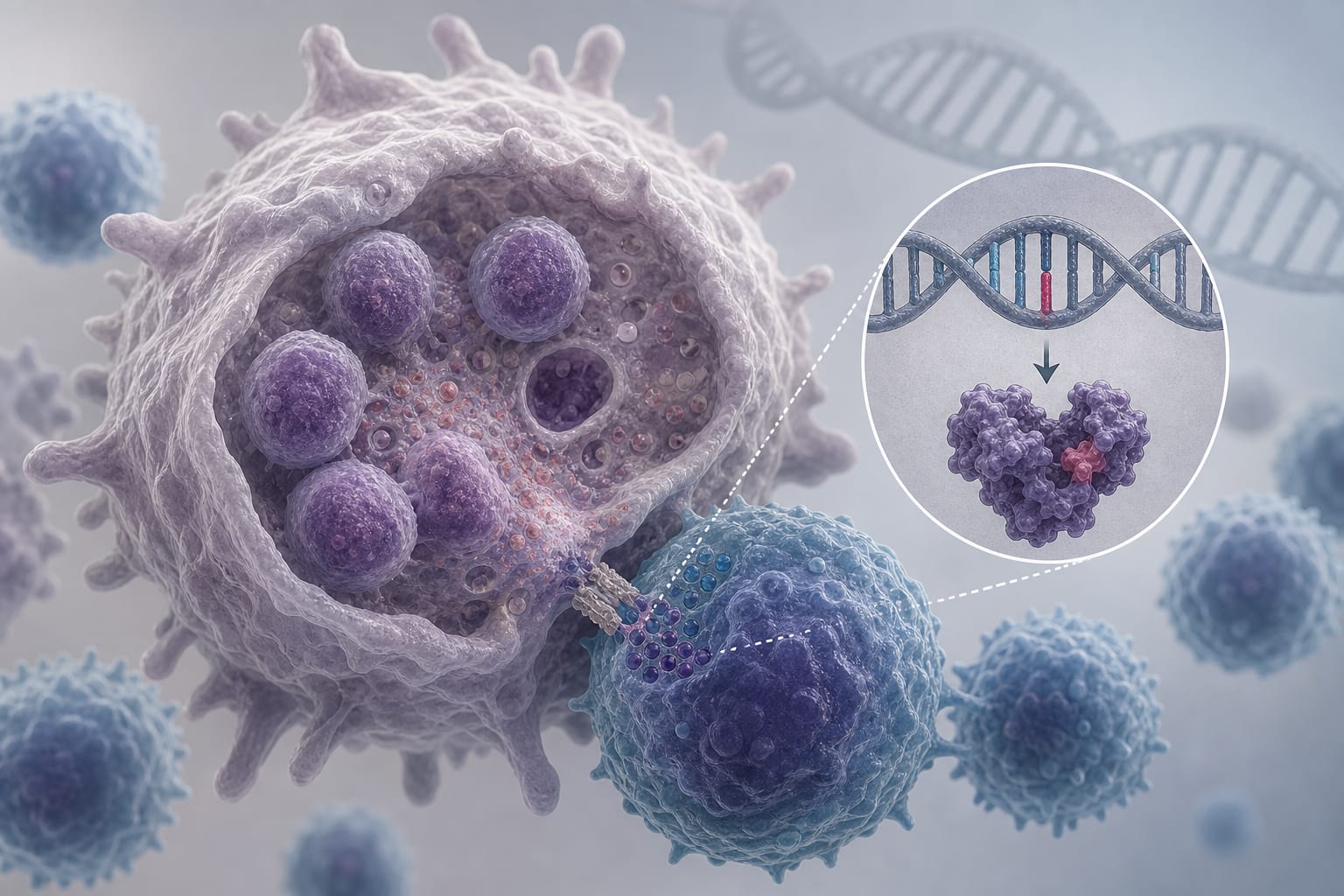
Novel PRF1 mutation p.Y296C c.887 A>G identified in a pediatric patient.
Patient presented with fever, night sweats, and splenomegaly.
Diagnosis established based on HLH-2004 criteria and genetic findings.
Initial treatment with dexamethasone followed by modified HLH 2004 protocol.
Successful hematopoietic stem cell transplantation (HSCT) with full donor chimerism.
Guideline-Based Recommendations
Diagnosis
Diagnosis of HLH requires meeting five out of eight clinical and laboratory criteria or identification of a genetic mutation.
Management
Initial treatment with dexamethasone; subsequent management with HLH 2004 protocol including etoposide and cyclosporine.
Monitoring & Follow-up
Monitor for HLH flares and response to treatment, including blood counts and inflammatory markers.
Risks
Risk of HLH flare during steroid taper and complications from immunosuppression.
Patient & Prescribing Data
Pediatric patients with familial HLH and identified genetic mutations.
Combination therapy including prednisone, etoposide, and cyclosporine may be necessary for managing HLH flares.
Clinical Best Practices
Early genetic testing for suspected familial HLH cases.
Adherence to HLH-2004 treatment protocols for management.
Involvement of genetics team for comprehensive evaluation of patients with skeletal abnormalities.