Reference values and Z-scores for left ventricular global longitudinal strain in healthy Colombian children: an echocardiographic study - Scorecard - MDSpire
Advertisement
Reference values and Z-scores for left ventricular global longitudinal strain in healthy Colombian children: an echocardiographic study
Clinical Scorecard: Establishing Reference Values and Z-scores for Left Ventricular Global Longitudinal Strain in Healthy Children from Colombia: An Echocardiographic Analysis
At a Glance
Category
Detail
Condition
Left Ventricular Global Longitudinal Strain (GLS) - a sensitive marker of systolic function and myocardial deformation, crucial for detecting subclinical myocardial dysfunction.
Key Mechanisms
Target Population
Care Setting
Key Highlights
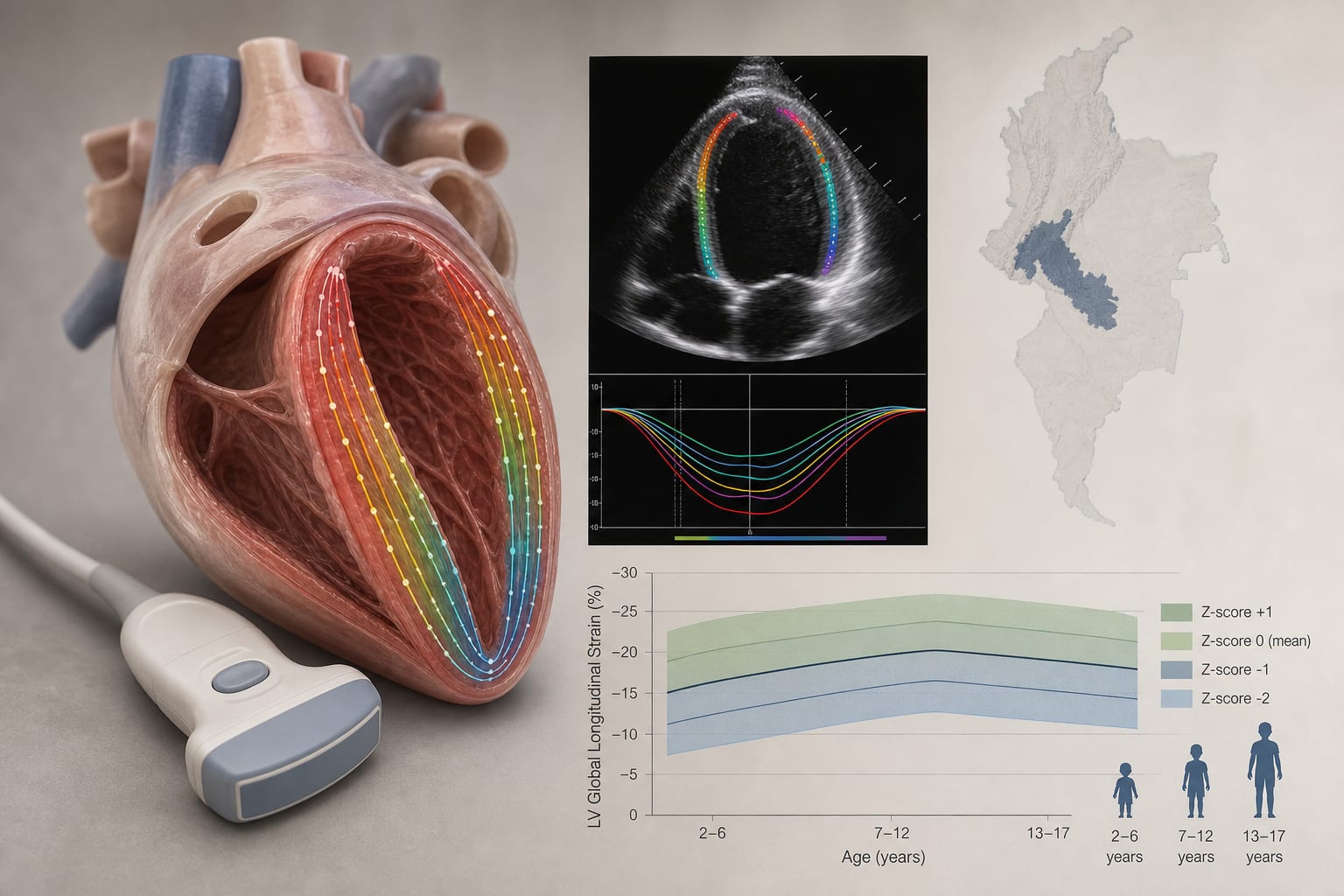
Study included 321 healthy children stratified by age (2–6, 7–12, 13–17 years)
GLS values varied significantly with age, becoming less negative in older children
Moderate correlation between GLS and age (r = 0.49; p < 0.001)
Reference values for GLS established for a Colombian pediatric population
Normal left ventricular ejection fraction maintained across age groups
Methodology included anthropometric and echocardiographic assessments.
Guideline-Based Recommendations
Diagnosis
Echocardiographic evaluation following American Society of Echocardiography guidelines, including assessment of GLS.
Management
Assessment of GLS as a key parameter for detecting myocardial dysfunction, alongside traditional measures.
Monitoring & Follow-up
Regular echocardiographic assessments in pediatric populations, with attention to GLS trends.
Risks
Exclusion of participants with structural or functional cardiac abnormalities.
Patient & Prescribing Data
Healthy children aged 2 to 17 years without structural heart disease
No specific treatments indicated; focus on establishing reference values and their clinical implications.
Clinical Best Practices
Use age-appropriate blood pressure cuffs for accurate measurements
Perform echocardiographic evaluations by certified professionals
Ensure balanced representation across pediatric age spectrum in studies
Consider follow-up assessments based on GLS findings.