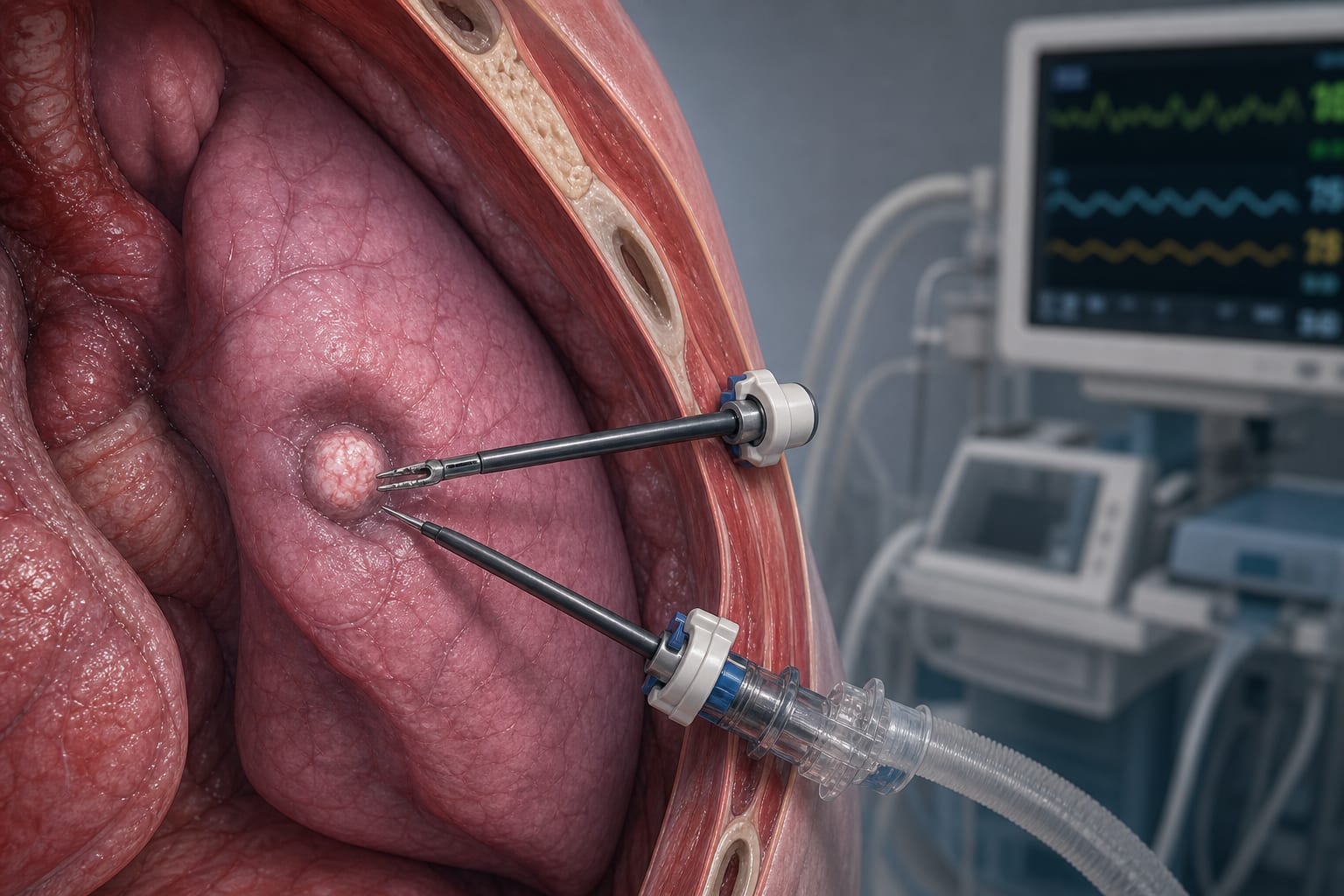
Progress in Tubeless Thoracic Surgery for Pulmonary Nodules: Present Insights and Future Obstacles
By
Hengyu Li
Lei Zhao
Hui Tian
May 25, 2026
Clinical Scorecard: Progress in Tubeless Thoracic Surgery for Pulmonary Nodules: Present Insights and Future Obstacles
At a Glance
Category Detail
Condition Pulmonary nodules Key Mechanisms Tubeless technology minimizes invasive procedures, preserving spontaneous ventilation and reducing postoperative complications. Target Population Patients with peripheral small nodules (≤2–3 cm), including ground-glass nodules, subsolid nodules, and small solid nodules. Care Setting Experienced centers performing minimally invasive thoracic surgery.
Key Highlights
Reductions in laryngeal edema, postoperative nausea and vomiting, pain, and hospital stay observed. Risks include intraoperative hypercapnia and potential need for conversion to intubation. Long-term oncological safety remains unconfirmed. Tubeless technology may optimize perioperative management and enhance recovery. Future directions include integrating advanced navigation techniques and artificial intelligence. Guideline-Based Recommendations
Diagnosis
Histological diagnosis is essential for highly suspicious nodules. Management
Surgical resection is recommended for confirmed or strongly suspected malignancy. Monitoring & Follow-up
Careful selection of patients for Tubeless surgery is crucial. Risks
Consideration of complications from traditional intubation and drainage procedures. Patient & Prescribing Data
Patients with small peripheral pulmonary nodules.
Tubeless surgery may reduce postoperative pain and enhance recovery.
Clinical Best Practices
Utilize Tubeless technology in selected patients to minimize complications. Focus on preserving spontaneous ventilation during surgery. Related Resources & Content