Unmasking biomarkers in small cell lung cancer: implication for precision oncology
Clinical Scorecard: Revealing Biomarkers in Small Cell Lung Cancer: Implications for Targeted Oncology
At a Glance
| Category | Detail |
|---|
| Condition | Small Cell Lung Cancer (SCLC) |
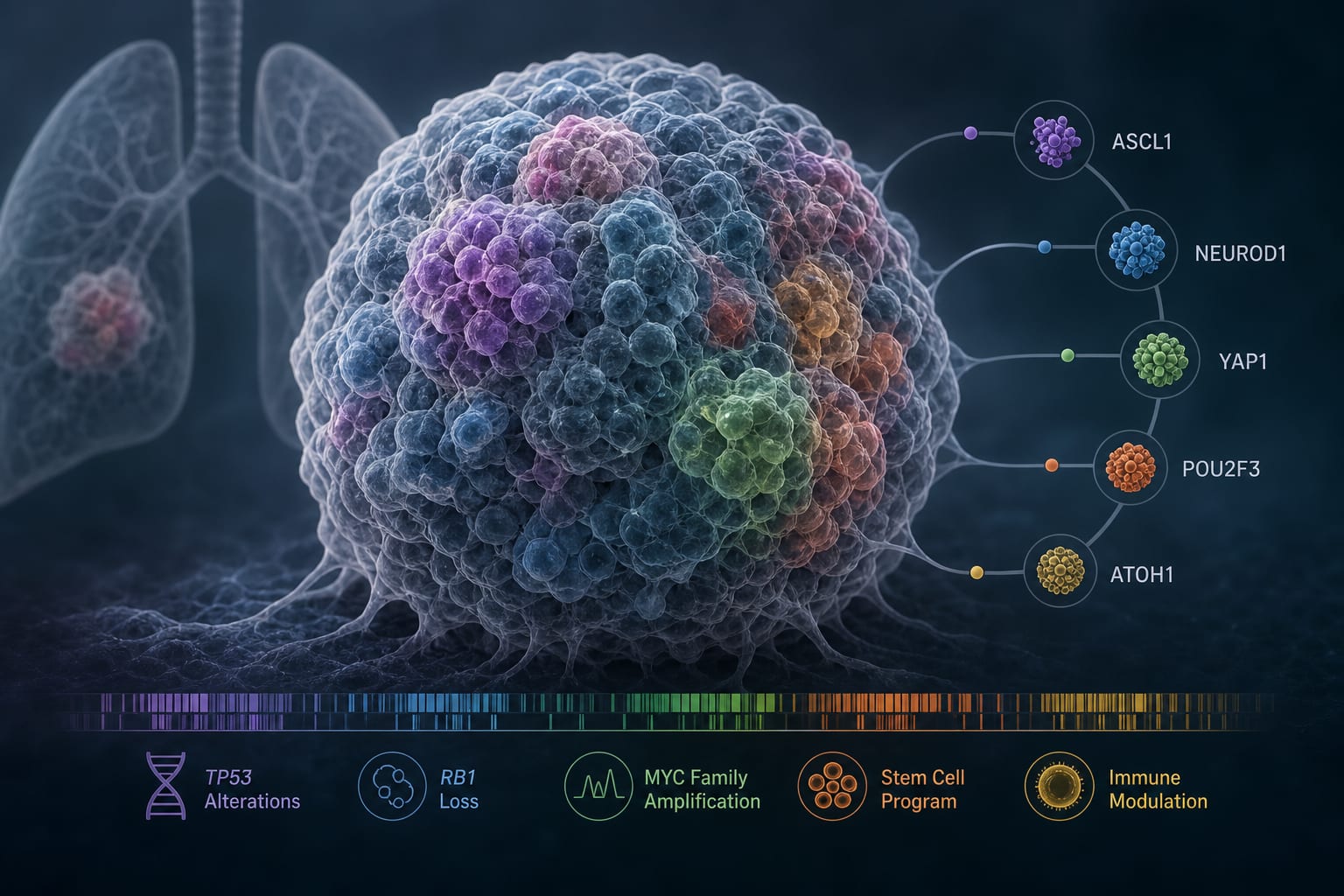
| Key Mechanisms | Genetic and transcriptional heterogeneity, mutations in TP53, RB1, and MYC family genes. |
| Target Population | Patients diagnosed with SCLC, particularly those with limited-stage and extensive-stage disease. |
| Care Setting | Oncology clinics and hospitals specializing in cancer treatment. |
Key Highlights
- SCLC is characterized by aggressive behavior and limited treatment options.
- Genetic profiling reveals key regulators that enable precision therapeutics.
- Biomarkers improve early detection and provide personalized treatment options.
- Cancer stem cells contribute to drug resistance and tumor recurrence.
- Combining molecular diagnosis with targeted therapies may enhance prognosis.
Guideline-Based Recommendations
Diagnosis
- Utilize biomarkers for early detection and diagnosis of SCLC.
Management
- Initial therapy for LS-SCLC includes platinum-based chemotherapy and radiation.
- Combination of chemotherapy and immunotherapy is preferred for ES-SCLC.
Monitoring & Follow-up
- Monitor for treatment efficacy and adverse effects, particularly with cisplatin and carboplatin.
Risks
- Tobacco smoking is the leading risk factor for SCLC development.
Patient & Prescribing Data
Patients with limited-stage and extensive-stage SCLC.
Lurbinectedin is used as a second-line treatment; Rovalpituzumab tesirine shows anti-tumor activity in recurrent cases.
Clinical Best Practices
- Incorporate genetic profiling in treatment planning.
- Consider proton-beam therapy for LS-SCLC to reduce side effects.
- Evaluate the expression of DLL3 for targeted therapy options.
Related Resources & Content