Association between Cabrol shunt and new-onset atrial fibrillation after acute type A aortic dissection surgery: a retrospective study - Scorecard - MDSpire
Advertisement
Association between Cabrol shunt and new-onset atrial fibrillation after acute type A aortic dissection surgery: a retrospective study
Clinical Scorecard: Link Between Cabrol Shunt Use and Development of New-Onset Atrial Fibrillation Following Surgery for Acute Type A Aortic Dissection: A Retrospective Analysis
At a Glance
Category
Detail
Condition
Key Mechanisms
Association between Cabrol shunt use and incidence of new-onset POAF; influence of age and aortic cross-clamp time, supported by study findings.
Target Population
Care Setting
Key Highlights
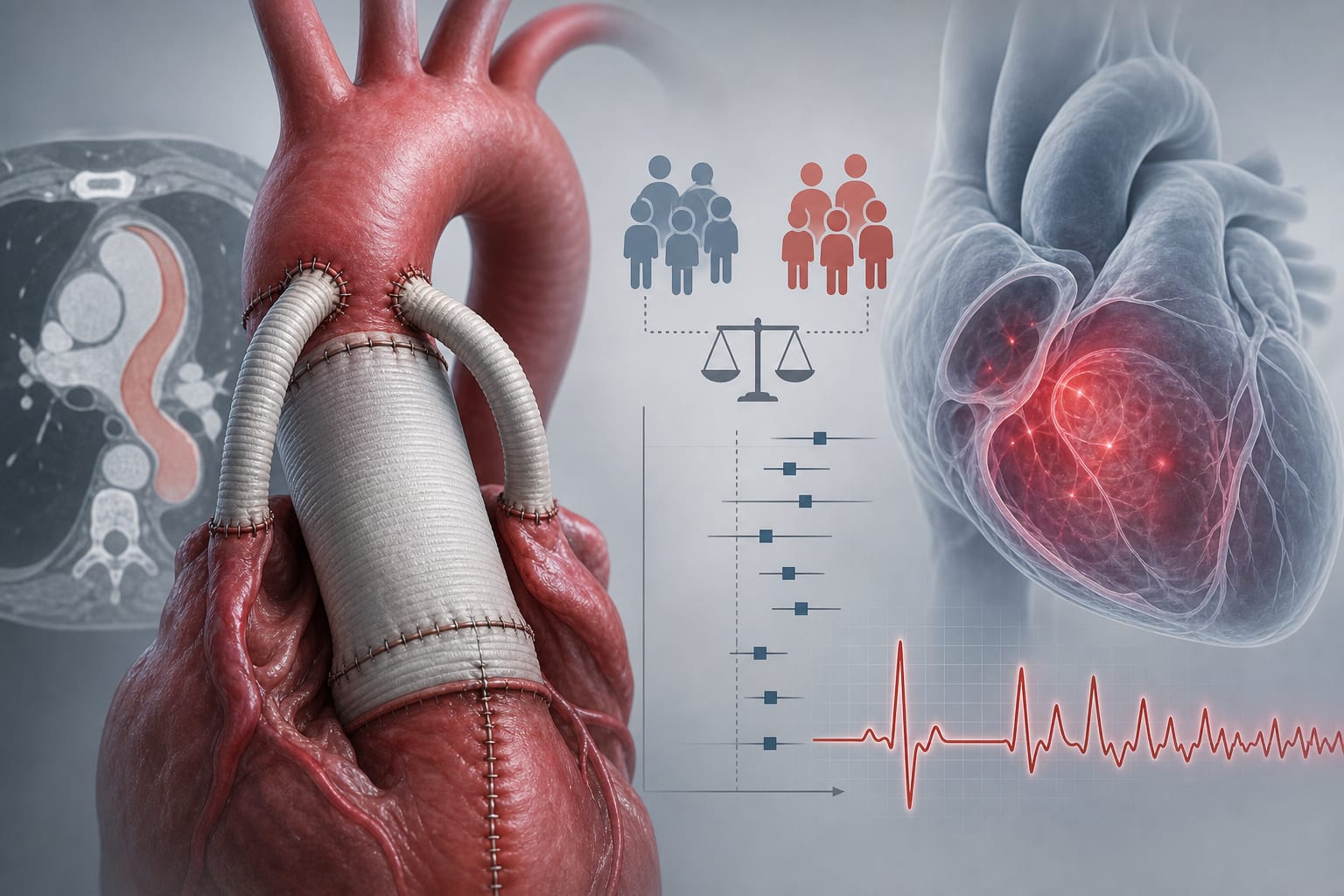
240 patients analyzed; 185 with Cabrol shunt, 55 without.
Lower incidence of new-onset POAF in Cabrol shunt group (P = 0.013).
Age and aortic cross-clamp time are independent factors for new-onset POAF.
Study conducted from December 2017 to December 2022.
Continuous ECG monitoring used for POAF detection.
Propensity score matching utilized to reduce treatment selection bias.
Guideline-Based Recommendations
Diagnosis
Management
Rhythm-related management includes beta-blocker or amiodarone use and electrolyte correction based on clinical indications. Refer to [specific guidelines or studies].
Monitoring & Follow-up
Risks
Patient & Prescribing Data
Cabrol shunt may reduce the incidence of new-onset POAF, suggesting a potential shift in surgical practice.
Clinical Best Practices
Utilize propensity score matching to reduce treatment selection bias.
Monitor electrolytes routinely during perioperative care.
Implement continuous ECG monitoring for early detection of POAF.
Educate patients on the risks of POAF post-surgery.