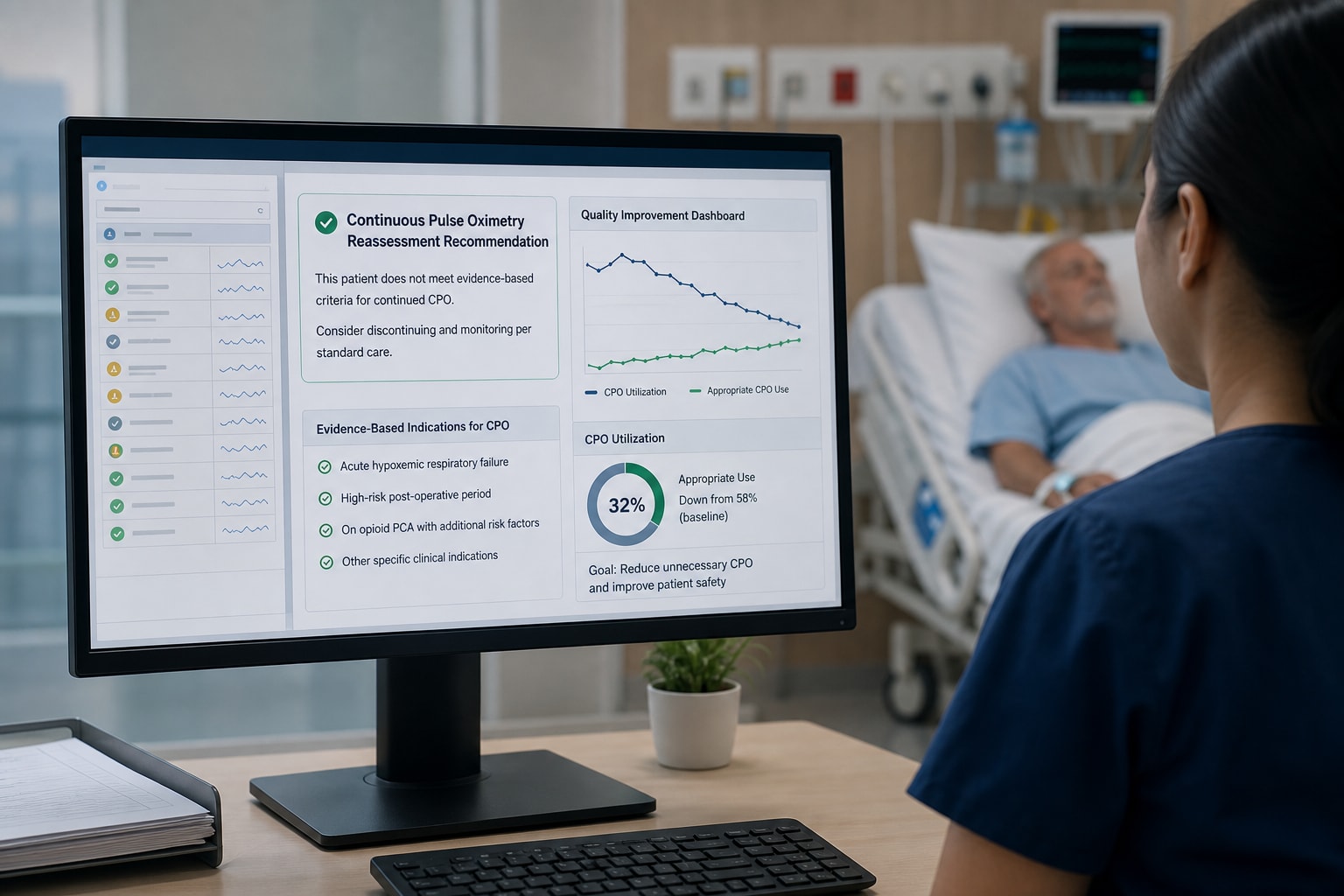
Clinical Scorecard: Enhancing Patient Safety by Minimizing Unnecessary Continuous Pulse Oximetry: A Quality Improvement Initiative Utilizing Electronic Health Records
At a Glance
Category
Detail
Condition
Continuous Pulse Oximetry (CPO) Monitoring
Key Mechanisms
Utilization of EHR-based clinical decision tools to optimize CPO orders and reduce unnecessary monitoring.
Target Population
Admitted patients requiring CPO monitoring, excluding those in emergency, ICU, procedural areas, and operating rooms.
Care Setting
Tertiary care center
Key Highlights
CPO is widely used but lacks formal inpatient utilization guidelines.
Excessive CPO monitoring can lead to patient movement restrictions and alarm fatigue.
A quality improvement initiative was implemented to optimize CPO use.
New EHR-based CPO orders and best practice advisories were developed.
Monthly CPO utilization data was shared with high CPO-utilizing services.
Guideline-Based Recommendations
Diagnosis
Identify specific indications for CPO based on risk factors for respiratory decompensation.
Management
Implement revised EHR-based CPO orders with predefined expiration times.
Monitoring & Follow-up
Utilize best practice advisories to prompt review of CPO orders.
Risks
Monitor for alarm fatigue and unnecessary prolonged CPO monitoring.
Patient & Prescribing Data
All admitted patients with CPO orders during hospitalization.
CPO orders often persisted beyond clinical indication, necessitating intervention.
Clinical Best Practices
Limit CPO orders to specific clinical indications.
Ensure CPO orders are actively reviewed and discontinued when no longer needed.
Utilize EHR tools to enhance clinician awareness of CPO order status.