Multimodal neuroimaging protocol to explore the neural mechanisms of Tiao Shen Li Yan acupuncture in post-stroke dysphagia: a randomized sham-controlled clinical trial - Scorecard - MDSpire
Advertisement
Multimodal neuroimaging protocol to explore the neural mechanisms of Tiao Shen Li Yan acupuncture in post-stroke dysphagia: a randomized sham-controlled clinical trial
Clinical Scorecard: Investigating the Neural Mechanisms of Tiao Shen Li Yan Acupuncture for Post-Stroke Dysphagia: A Randomized Sham-Controlled Neuroimaging Study
At a Glance
Category
Detail
Condition
Post-Stroke Dysphagia
Key Mechanisms
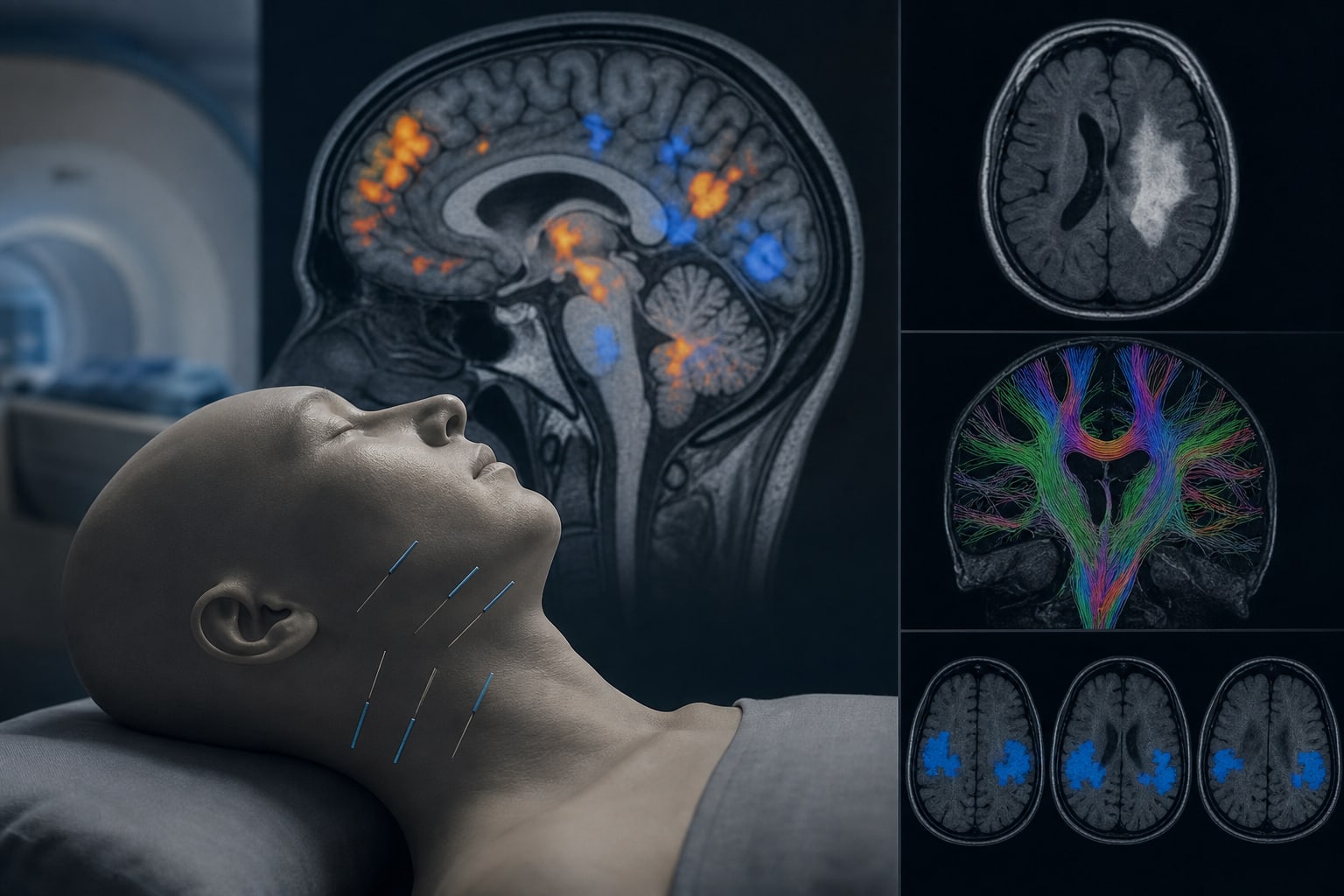
Acupuncture-induced neuroplasticity and functional reorganization of brain networks.
Target Population
Patients with post-stroke dysphagia.
Care Setting
Clinical trial setting.
Key Highlights
Acupuncture shows potential in improving swallowing function in post-stroke dysphagia.
Study employs multimodal neuroimaging techniques: resting-state fMRI and diffusion tensor imaging.
Trial includes both active and sham acupuncture groups for comparison.
Primary outcomes include functional and structural connectivity metrics.
Healthy volunteers will provide baseline neuroimaging reference data.
Guideline-Based Recommendations
Diagnosis
Standardized Swallowing Assessment (SSA) and videofluoroscopic swallowing study (VFSS) measures.
Management
Tiao Shen Li Yan acupuncture as a treatment modality for post-stroke dysphagia.
Monitoring & Follow-up
Assessment of swallowing function and quality of life through questionnaires.
Risks
Potential risks associated with acupuncture include minor discomfort or adverse reactions.
Patient & Prescribing Data
Patients diagnosed with post-stroke dysphagia.
Acupuncture may enhance swallowing function and promote neuroplastic changes.
Clinical Best Practices
Incorporate multimodal neuroimaging to evaluate treatment efficacy.
Utilize sham-controlled designs to assess true treatment effects.
Monitor both functional and structural changes in brain networks.