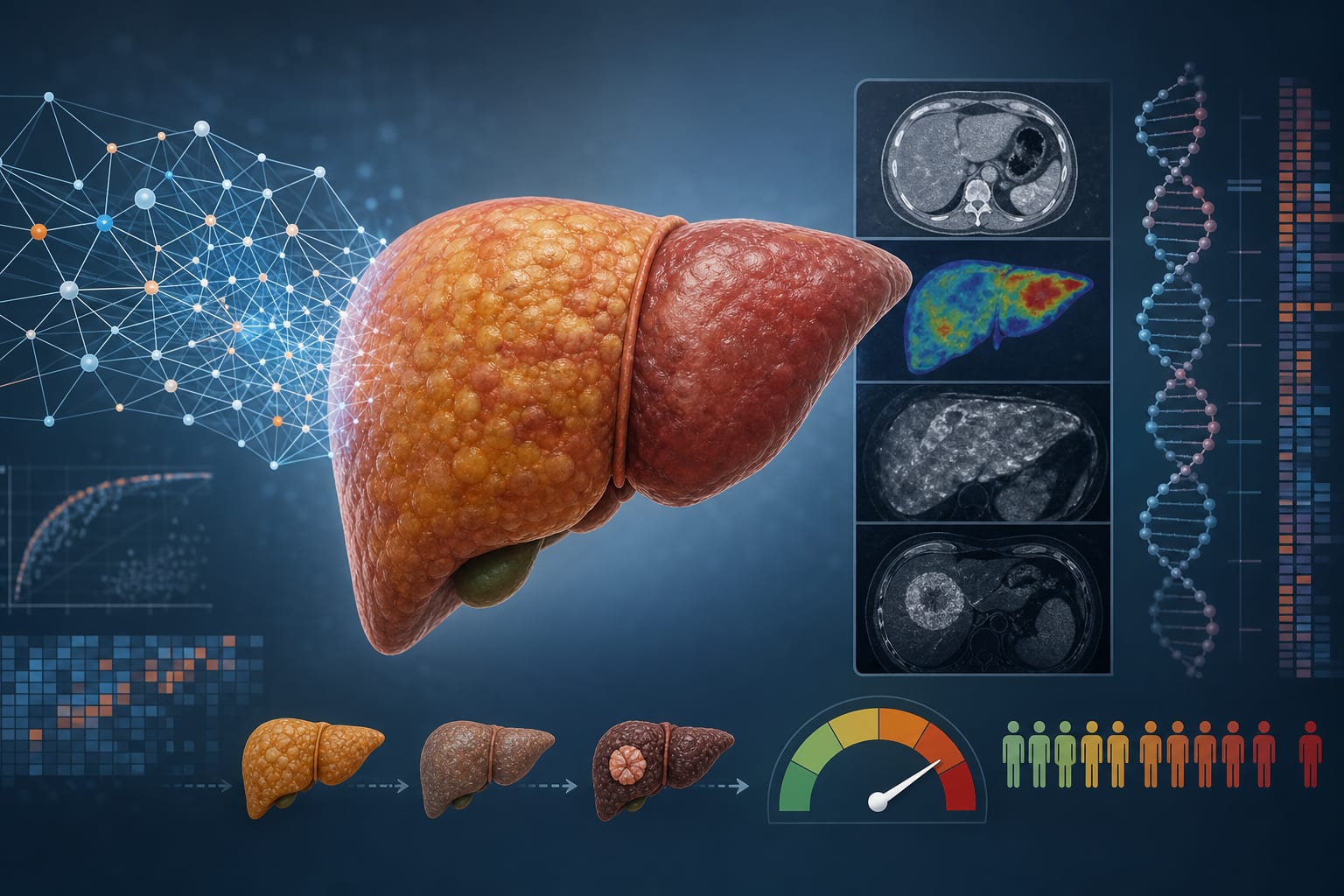
Metabolic and inflammatory mechanisms including lipotoxicity, oxidative stress, genomic instability, cytokine-mediated fibrosis, and adipokine dysregulation.
Target Population
Individuals with MASLD/NAFLD, particularly in European and Asian populations.
Care Setting
Clinical settings focusing on non-invasive diagnosis, risk stratification, and precision medicine.
Key Highlights
NAFLD is the most prevalent chronic liver disorder worldwide, affecting around 25% of the adult population.
AI and machine learning models show promise in improving diagnosis and risk stratification for HCC.
Progression to HCC can occur in up to 25% of MASLD cases without cirrhosis.
Genetic variants significantly influence disease severity and HCC risk.
There is a critical need for large, multi-centre validation studies.
Guideline-Based Recommendations
Diagnosis
Utilize AI/ML models for improved detection of MASLD and fibrosis assessment.
Management
Implement multimodal models for risk stratification of HCC in MASLD patients.
Monitoring & Follow-up
Adopt precision medicine strategies for personalized surveillance of at-risk populations.
Risks
Consider genetic susceptibility and metabolic risk factors in disease progression.
Patient & Prescribing Data
Individuals with metabolic dysfunction-related steatotic liver disease (MASLD) and associated risk factors.
AI-driven methods can enhance the predictive value of polygenic risk scores.
Clinical Best Practices
Encourage interdisciplinary collaboration among clinicians, data scientists, and policymakers.
Focus on integrating AI/ML with genetic and multi-omics data for comprehensive risk assessment.
Prioritize prospective trials to evaluate real-world effectiveness of AI-based approaches.