Exploring Caregiver Insights on an AI-Assisted Device for Daily Living Support in Families with Children Diagnosed with Autism Spectrum Disorder - Scorecard - MDSpire
Clinical Scorecard: AI-Assisted Devices for Daily Living Support in Families with Children Diagnosed with Autism Spectrum Disorder
At a Glance
Category
Detail
Condition
Autism Spectrum Disorder (ASD)
Key Mechanisms
AI-assistive technology providing adaptive, data-driven, personalised support to improve functioning and wellbeing in real-time
Target Population
Children diagnosed with ASD and their caregivers/families
Care Setting
Home and community settings with integration into disability support frameworks such as the NDIS
Key Highlights
ASD is characterised by social communication deficits and repetitive behaviours, with increasing prevalence worldwide.
Caregivers face significant challenges managing daily functioning needs, often compounded by limited access to specialised services and high caregiver burden.
AI-assistive technologies show promise in supporting adaptive functioning and independence but require co-development with caregivers for optimal benefit.
Guideline-Based Recommendations
Diagnosis
Assess adaptive functioning across core domains including mobility, communication, social interaction, self-management, learning, and self-care.
Management
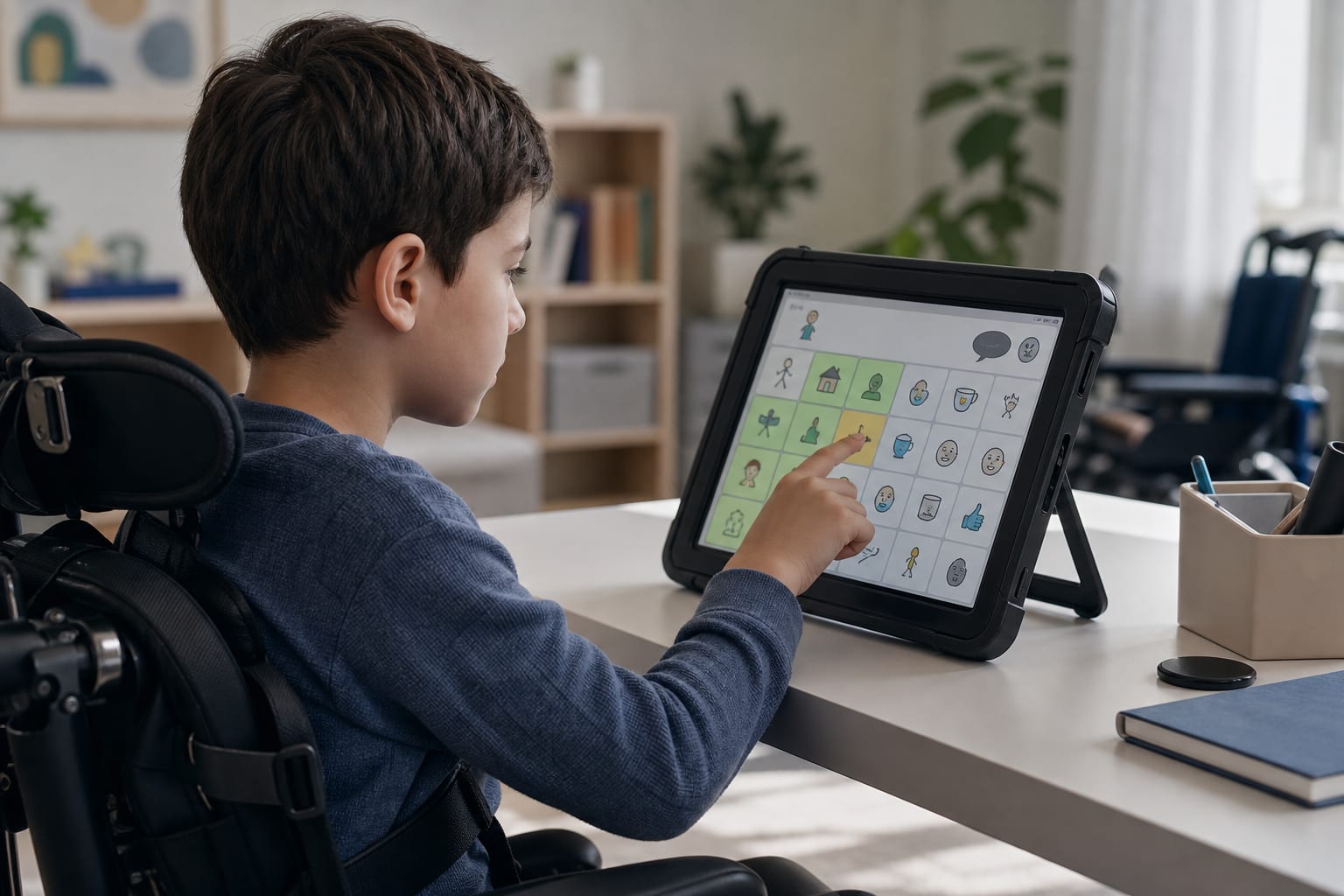
Incorporate AI-assistive devices such as apps, tablets, and interactive software to support daily living skills and participation.
Engage caregivers in co-development and feedback processes to ensure assistive technologies meet family needs.
Monitoring & Follow-up
Use AI tools to facilitate ongoing monitoring of functioning and wellbeing to tailor support and streamline service delivery.
Risks
Be cautious interpreting early AI technology studies due to small sample sizes and limited caregiver input.
Address potential barriers including caregiver stress, social stigma, and financial burden when implementing AI supports.
Patient & Prescribing Data
Children with ASD requiring support in adaptive functioning and their families
AI-assistive technologies may enhance independence in daily living activities and reduce caregiver burden when integrated within existing disability support frameworks.
Clinical Best Practices
Prioritise personalised, adaptive AI interventions co-designed with caregivers to address diverse ASD presentations.
Integrate AI supports within national disability schemes such as the NDIS to improve access and funding alignment.
Consider holistic family needs including social, communication, and self-care challenges when implementing AI tools.