From pathogenic carriers to therapeutic hope: the dual role and translational prospects of exosomes in diabetic kidney disease
-
By
-
Fen Li
-
Ruyi Zhong
-
Qing Qiu
-
July 2, 2026
-
Clinical Scorecard: Exosomes in Diabetic Kidney Disease: Exploring Their Role as Pathogenic Agents and Potential Therapeutic Targets
At a Glance
| Category | Detail |
|---|
| Condition | Diabetic Kidney Disease |
| Key Mechanisms | Involves metabolic abnormalities, chronic inflammation, oxidative stress, immune dysregulation, and fibrosis. |
| Target Population | Patients with diabetes mellitus experiencing kidney complications. |
| Care Setting | Clinical research and nephrology practice. |
Key Highlights
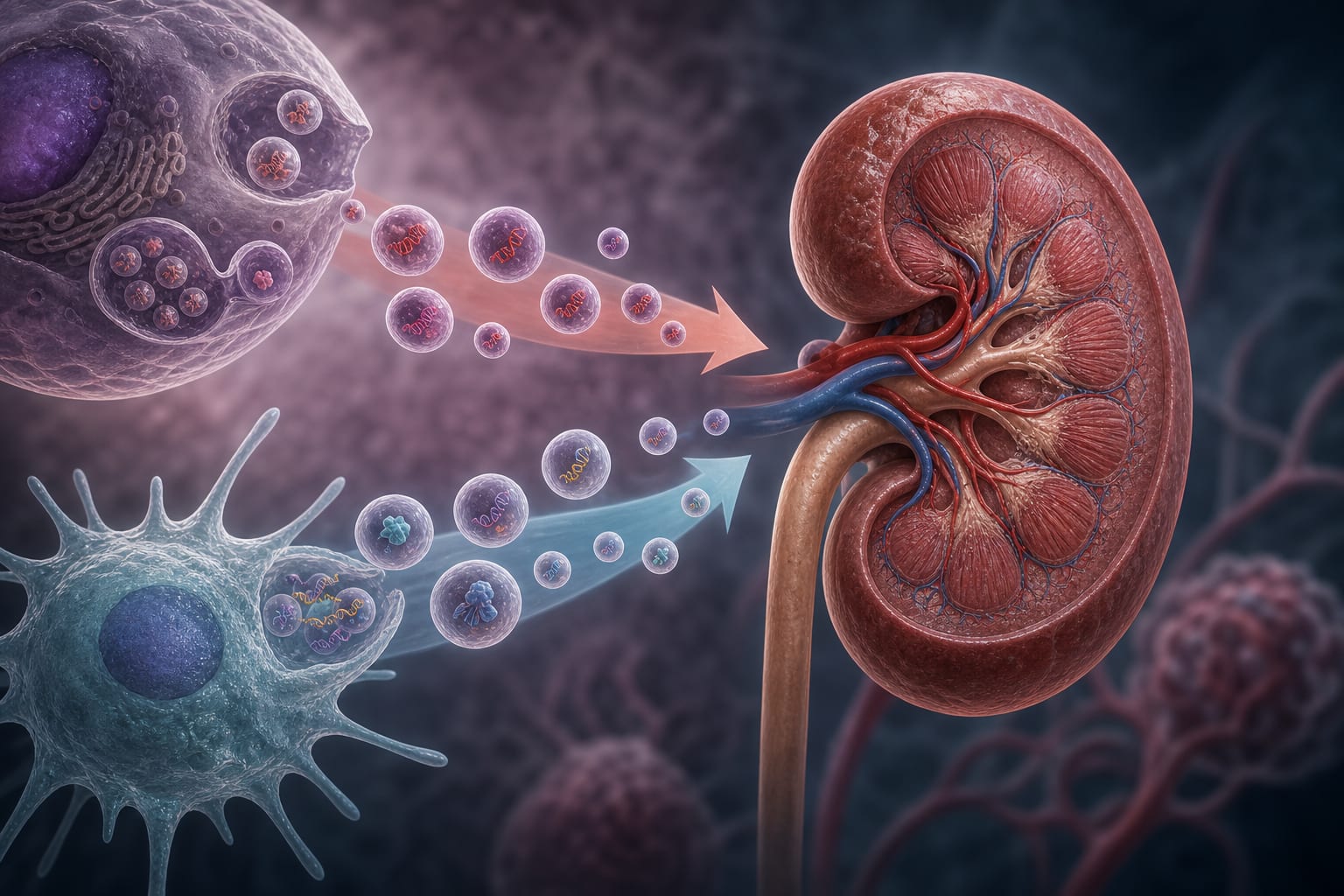
- Exosomes play a dual role in DKD: pathogenic and therapeutic.
- Pathogenic exosomes transmit harmful signals exacerbating kidney damage.
- Therapeutic exosomes have potential for kidney protection and repair.
- Current therapies often fail to prevent progression to end-stage renal disease.
- Research gaps exist in exosome purification and clinical application.
Guideline-Based Recommendations
Diagnosis
- Further research needed for precise diagnostic approaches using exosome-derived biomarkers.
Management
- Traditional therapies include strict glycemic control and ACEIs or ARBs.
Monitoring & Follow-up
- Dynamic changes in exosomes during disease progression should be monitored.
Risks
- High heterogeneity of exosomes complicates clinical translation.
Patient & Prescribing Data
Individuals with diabetic kidney disease.
Novel antidiabetic medications like SGLT2 inhibitors and GLP-1 receptor agonists show potential cardiorenal protective effects.
Clinical Best Practices
- Integrate exosome research into clinical practice for better understanding of DKD.
- Focus on the dual role of exosomes to develop targeted therapies.
Related Resources & Content