Sex-specific co-occurrence patterns of Type 2 Diabetes Mellitus and Non-Alcoholic Fatty Liver Disease among patients with colorectal cancer: a retrospective EMR-based series - Scorecard - MDSpire

Sex-specific co-occurrence patterns of Type 2 Diabetes Mellitus and Non-Alcoholic Fatty Liver Disease among patients with colorectal cancer: a retrospective EMR-based series

  • By

  • Mohammadreza Akbarian Khorasgani

  • Pouriya Katouzi

  • Melika Khalifeh Hadi

  • Masoumeh Amarloei

  • Yasaman Kianpourhafshejani

  • Sumaeya Sultana

  • Mohammed Hasan Mohammed Ahmed Al-Mlawi

  • Yunqing Zeng

  • Jiaoyang Lu

  • July 2, 2026

  • 0 min

Share

Clinical Scorecard: Gender-specific patterns of co-occurrence between Type 2 Diabetes Mellitus and Non-Alcoholic Fatty Liver Disease in colorectal cancer patients: A retrospective analysis using electronic medical records

At a Glance

CategoryDetail
ConditionColorectal Cancer (CRC)
Key MechanismsInsulin resistance, chronic inflammation, oxidative stress, gut–liver axis dysregulation
Target PopulationColorectal cancer patients with Type 2 Diabetes Mellitus and Non-Alcoholic Fatty Liver Disease
Care SettingTertiary hospital in China

Key Highlights

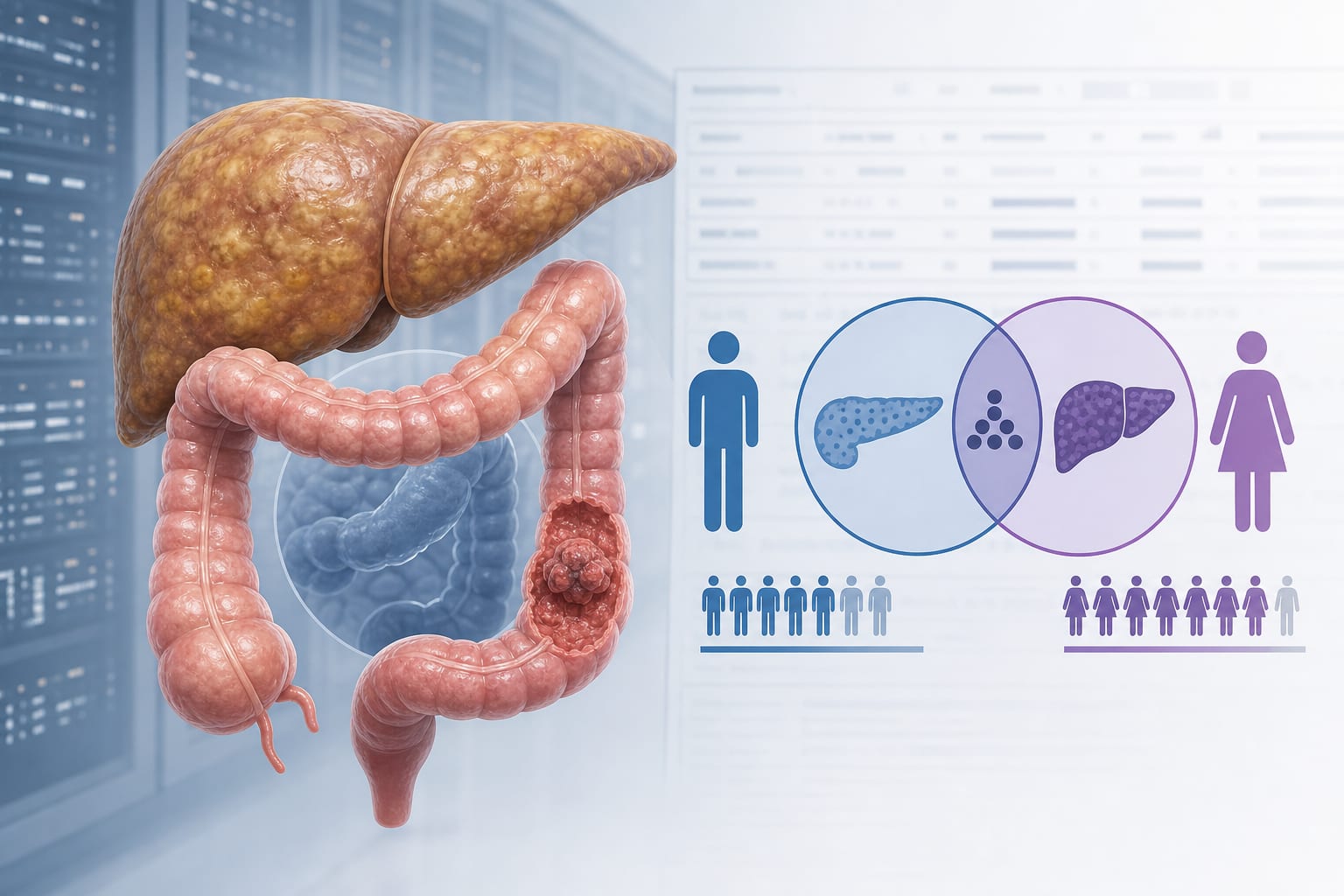
  • T2DM prevalence in male CRC patients: 10.04%, female: 5.92%
  • NAFLD prevalence in male CRC patients: 8.18%, female: 4.73%
  • Co-occurrence of T2DM and NAFLD in CRC patients: 0.68%
  • Distinctive metabolic abnormalities observed in patients with T2DM or NAFLD
  • No significant sex difference in co-occurrence of T2DM and NAFLD

Guideline-Based Recommendations

Diagnosis

  • T2DM and NAFLD diagnoses should be based on explicit physician-documented records.

Management

  • Monitor metabolic profiles including blood sugar, liver enzymes, and lipid profiles in CRC patients.

Monitoring & Follow-up

  • Regular assessment of AST as a potential differentiating marker for NAFLD.

Risks

  • T2DM independently increases CRC risk by approximately 20–30%.

Patient & Prescribing Data

Adult patients aged ≥16 years with confirmed colorectal cancer

Clinical documentation of T2DM and NAFLD is essential for accurate treatment planning.

Clinical Best Practices

  • Utilize electronic medical records for comprehensive patient data analysis.
  • Conduct larger prospective studies to further explore metabolic comorbidities in CRC.

Related Resources & Content

    Original Source(s)

    Related Content