Conexiant’s news site is now MDSpire News. Learn more
Advertisement
Fenestrated Endovascular Repair of an Abdominal Aortic Aneurysm
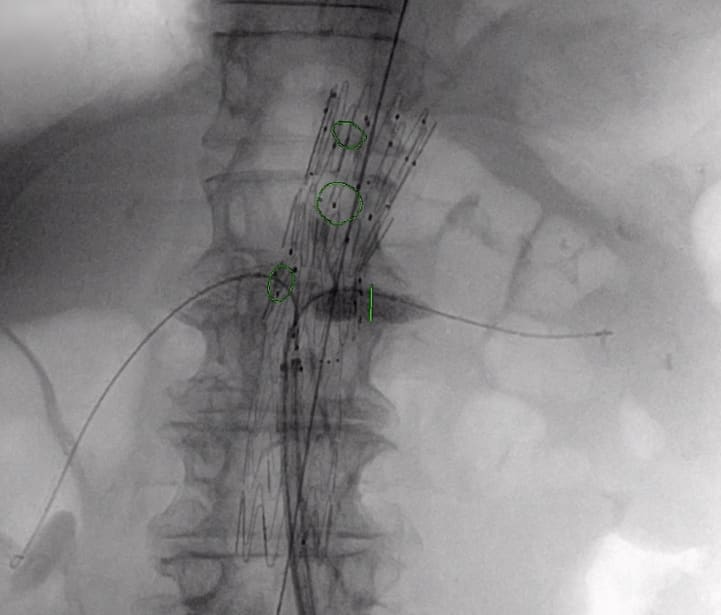
Sentara vascular surgeon Animesh Rathore, MD, presents the case of a 76-year-old man with a large abdominal aortic aneurysm measuring approximately 5.5 cm. Advanced COPD, congestive heart failure, and chronic renal failure made him unsuitable for open surgical repair.
Clinical Scorecard: Fenestrated Endovascular Repair of an Abdominal Aortic Aneurysm
At a Glance
Category
Detail
Condition
Clinical topic addressed by the source article: Fenestrated Endovascular Repair of an Abdominal Aortic Aneurysm
Key Mechanisms
Mechanisms or clinical associations described in the source article.
Target Population
A 76-year-old man with advanced COPD, congestive heart failure, and chronic renal failure; these conditions made him unsuitable for open surgical repair.
Care Setting
Care setting described in the source article.
Key Highlights
The patient had a large abdominal aortic aneurysm measuring approximately 5.5 cm.
Advanced COPD, congestive heart failure, and chronic renal failure made the patient unsuitable for open surgical repair.
The treating vascular surgeon chose fenestrated endovascular aneurysm repair.
The video presents key portions of the procedure and procedural considerations.
Guideline-Based Recommendations
Diagnosis
Management
Monitoring & Follow-up
Risks
Patient & Prescribing Data
One 76-year-old man with an approximately 5.5 cm abdominal aortic aneurysm, advanced COPD, congestive heart failure, and chronic renal failure.
The case describes fenestrated endovascular aneurysm repair; no medication or prescribing details are provided.
When patients with refractory AFib fall into a treatment gap, a collaborative new multidisciplinary clinic from Keck Medicine of USC gives them a way out.