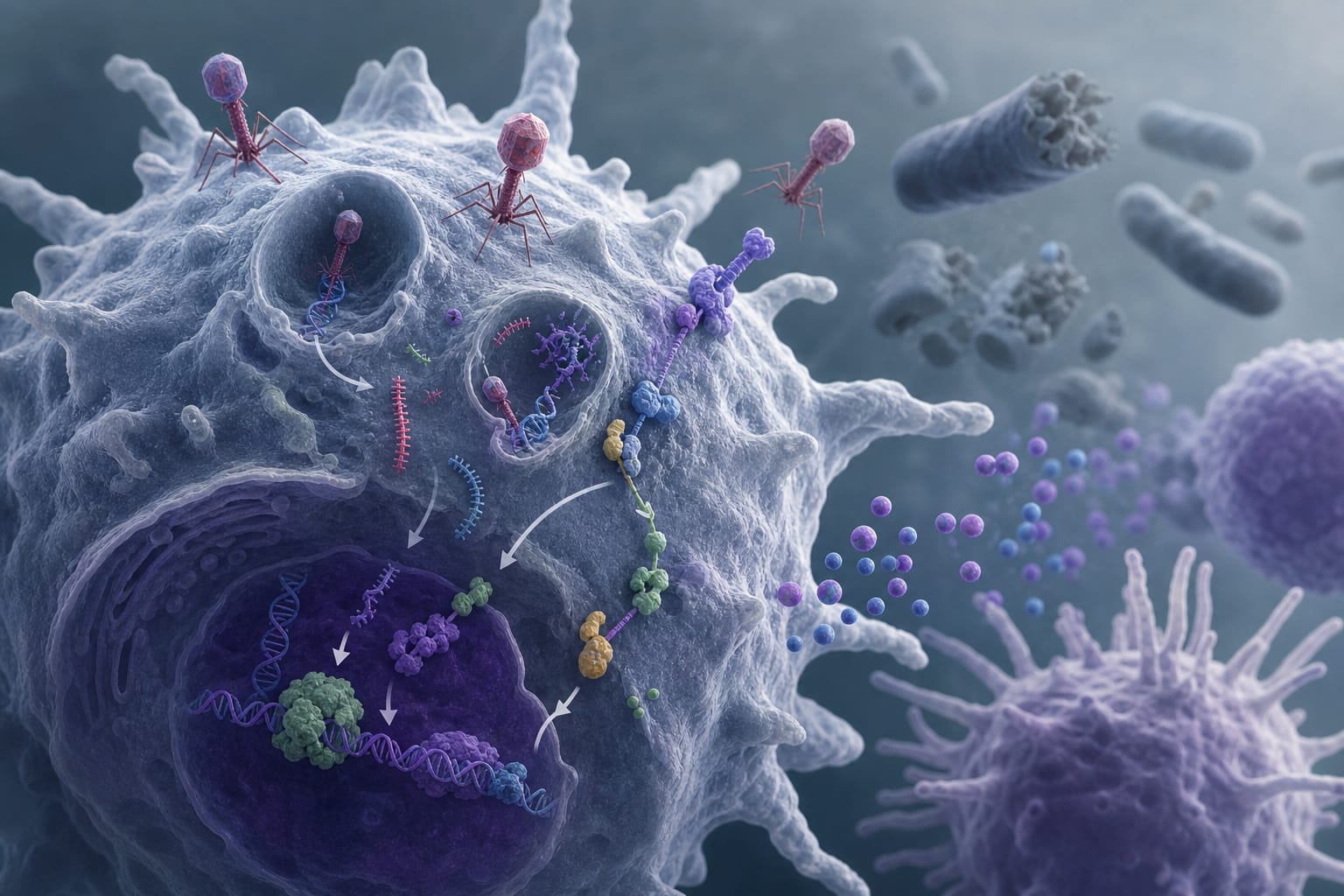
Clinical Scorecard: Understanding the Role of Bacteriophages in Innate Immune Recognition and Their Immunomodulatory Effects: Insights for Phage Therapy
At a Glance
Category
Detail
Condition
Infectious diseases treated with phage therapy
Key Mechanisms
Phages interact with the host immune system through pattern recognition receptors, modulating inflammatory signaling pathways.
Target Population
Patients with multidrug-resistant bacterial infections
Care Setting
Clinical settings and in vivo experiments
Key Highlights
Phages can promote bacterial clearance and limit excessive inflammation.
Phage-mediated immune regulation may impair antibacterial immunity in certain contexts.
Understanding phage-immune interactions is essential for optimizing phage therapy.
Phages are recognized by pattern recognition receptors, activating immune responses.
Phage therapy is being re-evaluated due to increasing antibiotic resistance.
Guideline-Based Recommendations
Diagnosis
Evaluate the host immune response to phages and bacterial infections.
Management
Consider phage therapy as a treatment option for multidrug-resistant infections.
Monitoring & Follow-up
Monitor the effects of phage therapy on immune responses and infection outcomes.
Risks
Phage therapy may exacerbate inflammatory diseases or impair antibacterial immunity.
Patient & Prescribing Data
Patients with infections caused by multidrug-resistant bacteria.
Phage therapy should be tailored to the host immune status and specific disease contexts.
Clinical Best Practices
Integrate insights from viral immunology to understand phage effects.
Assess the safety and efficacy of phage therapy in clinical settings.