Smartphone-Based Monitoring of Quality of Life and Adverse Events After Neurosurgery: Prospective Cohort Study - Scorecard - MDSpire
Coming Soon: Introducing MDSpire News. Learn more
Conexiant’s news site is now MDSpire News. Learn more

Mobile Device Monitoring of Patient Well-Being and Complications Following Neurosurgical Procedures: A Prospective Cohort Investigation

  • By

  • Alexis Paul Romain Terrapon

  • Erik Schulz

  • Athina Firtinidou

  • Silvio Heinig

  • Lorenzo Bertulli

  • Felix Corr

  • Meltem Gönel

  • Maria Nikolaeva

  • Thomas Petutschnigg

  • Sivani Sivanrupan

  • Jakob Heimer

  • Menno R Germans

  • Christian Zweifel

  • Andreas Raabe

  • Philippe Schucht

  • Luca Regli

  • Marian Christoph Neidert

  • Oliver Bozinov

  • Linda Bättig

  • Martin Nikolaus Stienen

  • September 9, 2026

Share

Clinical Scorecard: Mobile Device Monitoring of Patient Well-Being and Complications Following Neurosurgical Procedures: A Prospective Cohort Investigation

At a Glance

CategoryDetail
ConditionNeurosurgical Procedures
Key MechanismsUse of smartphone applications for real-time monitoring of patient well-being and adverse events.
Target PopulationPatients undergoing neurosurgical procedures.
Care SettingMulticenter, prospective observational study.

Key Highlights

  • Introduction of the Therapy-Disability-Neurology (TDN) grade for adverse event assessment.
  • Use of the Subjective Well-Being Index (SWI) for longitudinal patient-reported outcomes.
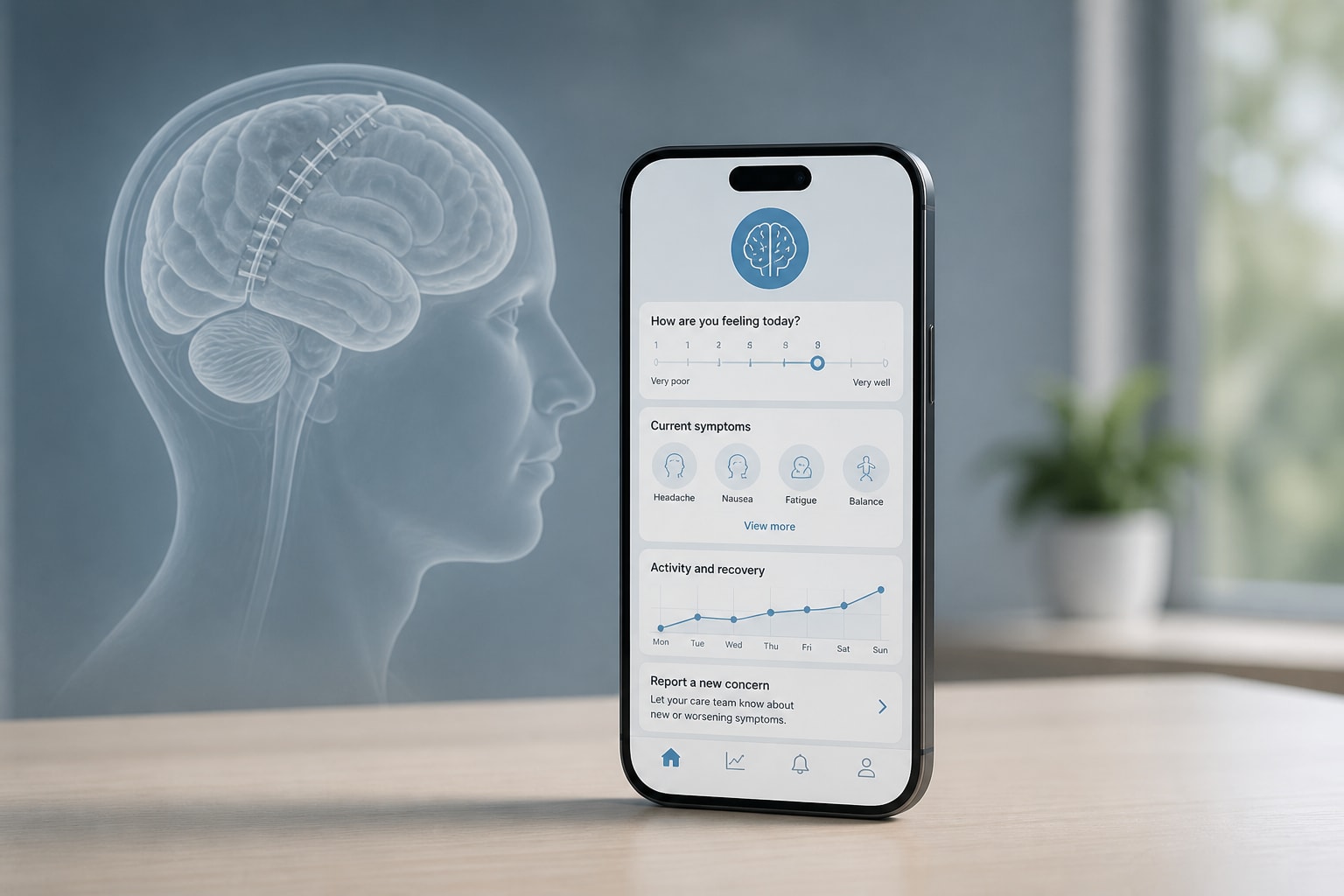
  • Evaluation of smartphone application OP Tracker for real-time data collection.
  • Assessment of adverse events using both Clavien-Dindo grading and TDN grade.
  • Focus on improving understanding of postoperative trajectories and patient quality of life.

Guideline-Based Recommendations

Diagnosis

  • Utilization of standardized grading systems for adverse events in neurosurgery.

Management

  • Implementation of mobile applications for tracking recovery and complications.

Monitoring & Follow-up

  • Frequent, resource-efficient evaluation of patient outcomes using digital tools.

Risks

  • Potential for underreporting of adverse events due to limitations in existing grading systems.

Patient & Prescribing Data

Patients undergoing various neurosurgical procedures.

Mobile monitoring may enhance early recognition of postoperative complications.

Clinical Best Practices

  • Adopt the TDN grading system for a comprehensive assessment of adverse events.
  • Encourage the use of smartphone applications for patient-reported outcomes.
  • Ensure regular follow-up and data collection to monitor patient well-being.

Related Resources & Content

Original Source(s)

Related Content