Autoantibody-mediated pain in long COVID: evidence from multiple lines
-
By
-
Charles Nicaise
-
Pierre Bulpa
-
Marc Jamoulle
-
June 17, 2026
-
Clinical Scorecard: Autoantibody-Related Pain in Long COVID: Insights from Various Studies
At a Glance
| Category | Detail |
|---|
| Condition | |
| Key Mechanisms | Autoimmune mechanisms mediated by pathogenic autoantibodies, persistent immune activation, viral persistence, neuroinflammation, endothelial dysfunction, dysautonomia. |
| Target Population | |
| Care Setting | |
Key Highlights
- Long COVID is a clinically heterogeneous condition with a wide spectrum of symptoms.
- Women are disproportionately affected by long COVID, particularly in pain-related phenotypes.
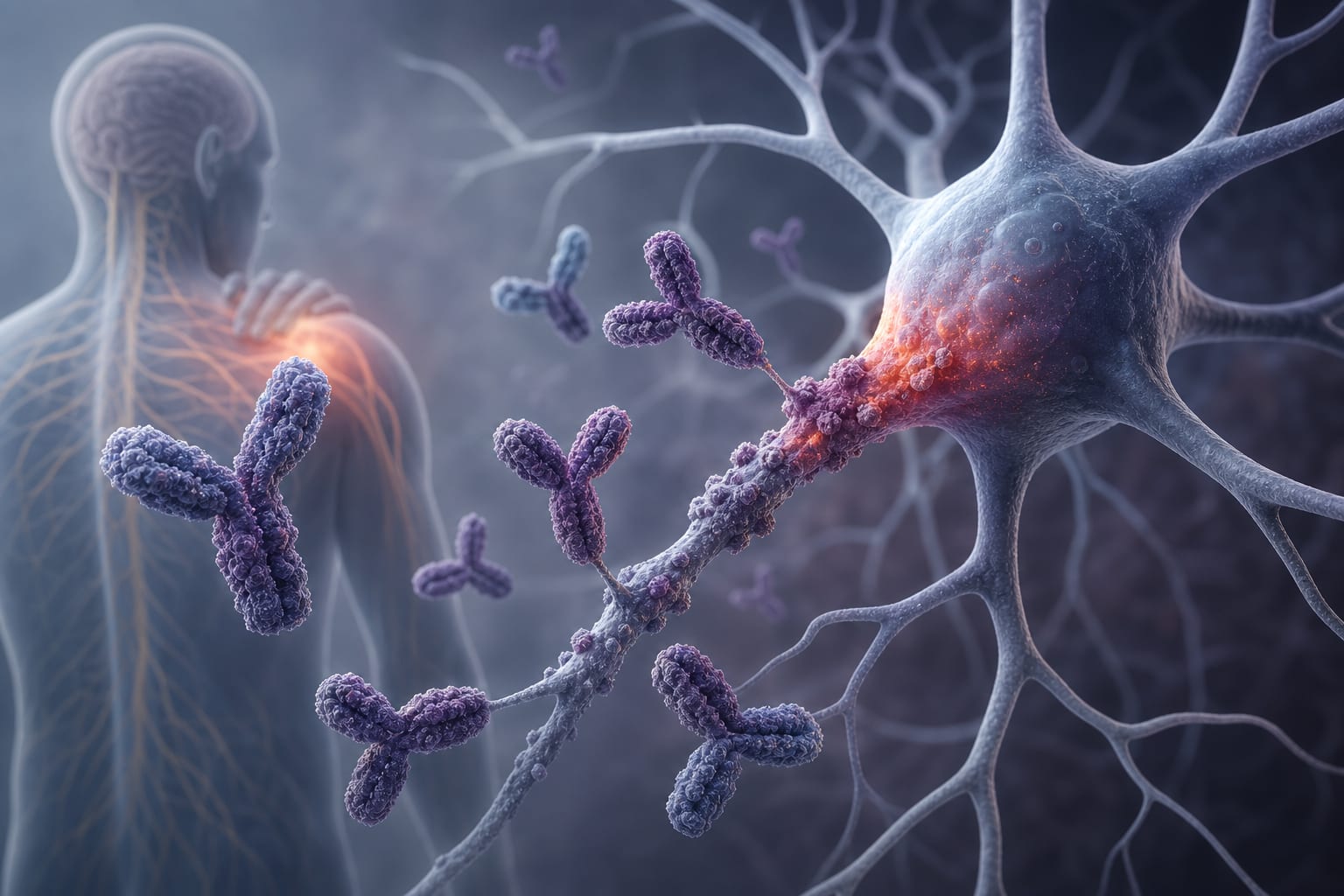
- Emerging evidence suggests a link between autoantibodies and pain-related symptoms in long COVID.
- Current studies indicate that patient-derived IgG can trigger pain responses in animal models.
- No unifying mechanism for long COVID has been established.
Guideline-Based Recommendations
Diagnosis
- Identification of distinct immune and autoimmune profiles in patients.
Management
- Consideration of therapies aimed at neutralizing pathogenic antibodies and dampening immune activation.
Monitoring & Follow-up
- Further investigation using skin biopsy samples or electrodiagnostic testing.
Risks
- Lack of identification of a causal or universal autoantibody complicates treatment.
Patient & Prescribing Data
Patients with long COVID experiencing pain-related symptoms.
Exploratory studies have shown potential benefits of IVIg in small cohorts, but universal effectiveness is uncertain.
Clinical Best Practices
- Comprehensively report patient demographics and relevant symptoms.
- Utilize Human Phenotype Ontology classifiers for symptom description.
- Ensure clear inclusion/exclusion criteria in studies.
Related Resources & Content