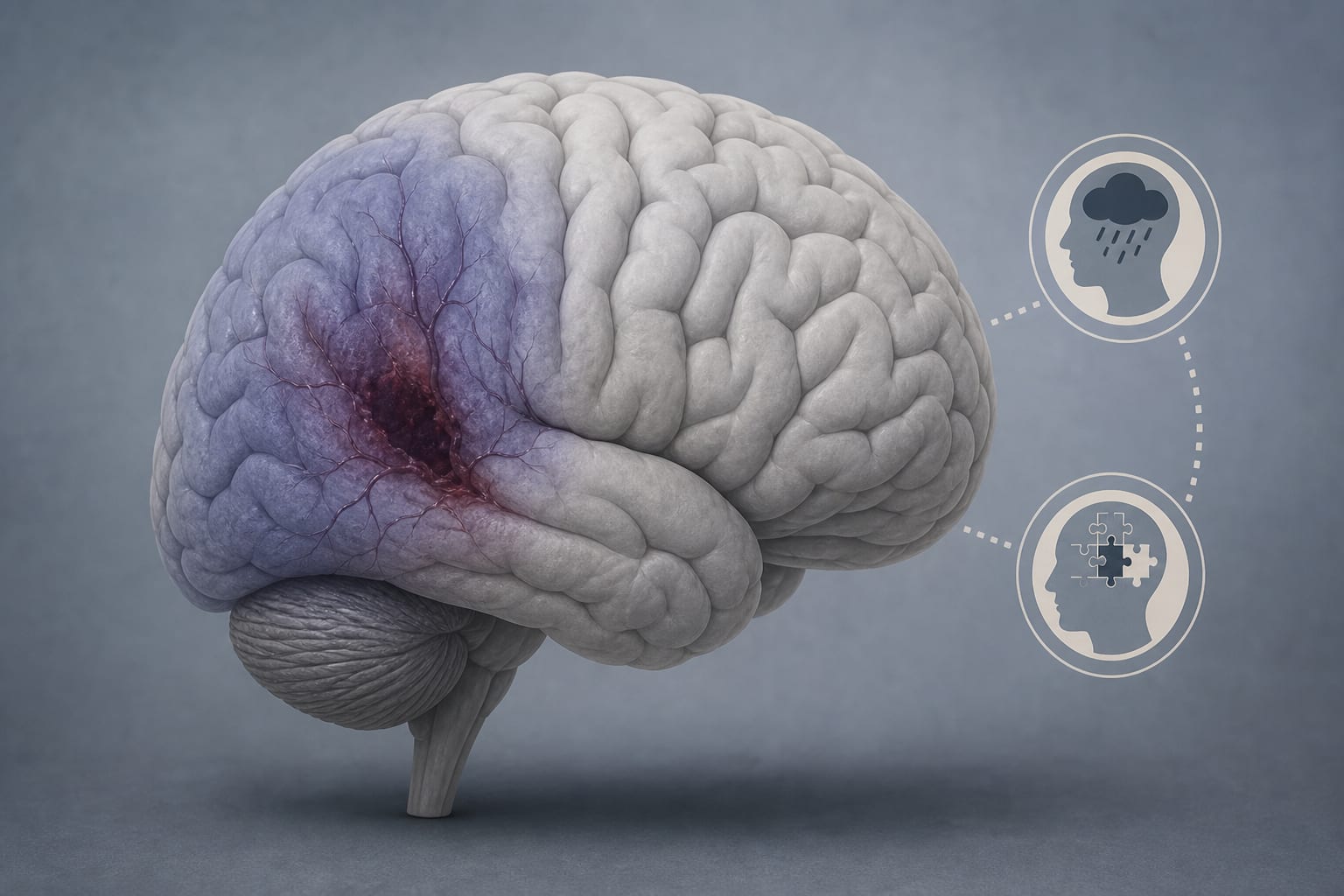
Insights on Key Factors Influencing Post-Stroke Depression and Cognitive Decline in Survivors of Acute Stroke
By
Polona Rus Prelog
Matija Zupan
Senta Frol
September 14, 2026
Clinical Scorecard: Insights on Key Factors Influencing Post-Stroke Depression and Cognitive Decline in Survivors of Acute Stroke
At a Glance
Category Detail
Condition Post-Stroke Depression and Cognitive Impairment Key Mechanisms Disruption of prefrontal–subcortical networks, changes in monoaminergic signaling, stroke-related neuroinflammatory processes Target Population Survivors of acute ischemic stroke Care Setting Neurology services
Key Highlights
Right-hemisphere lesions, higher baseline PHQ-9 scores, and lower baseline MMSE scores predict post-stroke outcomes. Post-stroke depression (PSD) and cognitive impairment (PSCI) often co-occur and share neurobiological substrates. Screening for PSD using PHQ-9 and cognitive assessment with MMSE and MoCA are essential in acute stroke care. Lower baseline MMSE scores may indicate pre-existing cognitive vulnerability. Future research should focus on integrating neuropsychiatric assessments into stroke care pathways. Guideline-Based Recommendations
Diagnosis
Use DSM-5 criteria for diagnosing PSD. Employ PHQ-9 with a cutoff of ≥5 for initial screening. Management
Consider a two-stage screening approach: initial PHQ-2 followed by PHQ-9 for positive screens. Monitoring & Follow-up
Monitor for depressive symptoms and cognitive decline during follow-up. Risks
Transient post-stroke symptoms may be misclassified as PSD if not properly assessed. Patient & Prescribing Data
Acute ischemic stroke survivors at risk for PSD and PSCI.
Timely multidisciplinary follow-up is recommended based on PHQ-9 and MMSE results.
Clinical Best Practices
Incorporate structured mood and cognitive assessments early in post-stroke care. Utilize MoCA for a more sensitive detection of cognitive deficits post-stroke. Related Resources & Content