Innovative technique to cover exposed dura mater after occipital osteomyelitis, using our triple layer using matriderm. A case report - Scorecard - MDSpire

Innovative technique to cover exposed dura mater after occipital osteomyelitis, using our triple layer using matriderm. A case report

  • By

  • Ezzat E. E. Gabar

  • Mohammed Shawir

  • Mohammed Elnibras

  • Hytham Ibrahim Shokry Elatrozy

  • Mahmoud Shadad

  • Marei Al amari

  • Eyad Ali Faizo

  • Nadeem Muneer M. Maliabari

  • June 23, 2026

  • 0 min

Share

Clinical Scorecard: A Novel Three-Layer Approach for Covering Exposed Dura Mater in Occipital Osteomyelitis: A Case Study

At a Glance

CategoryDetail
ConditionOccipital Osteomyelitis
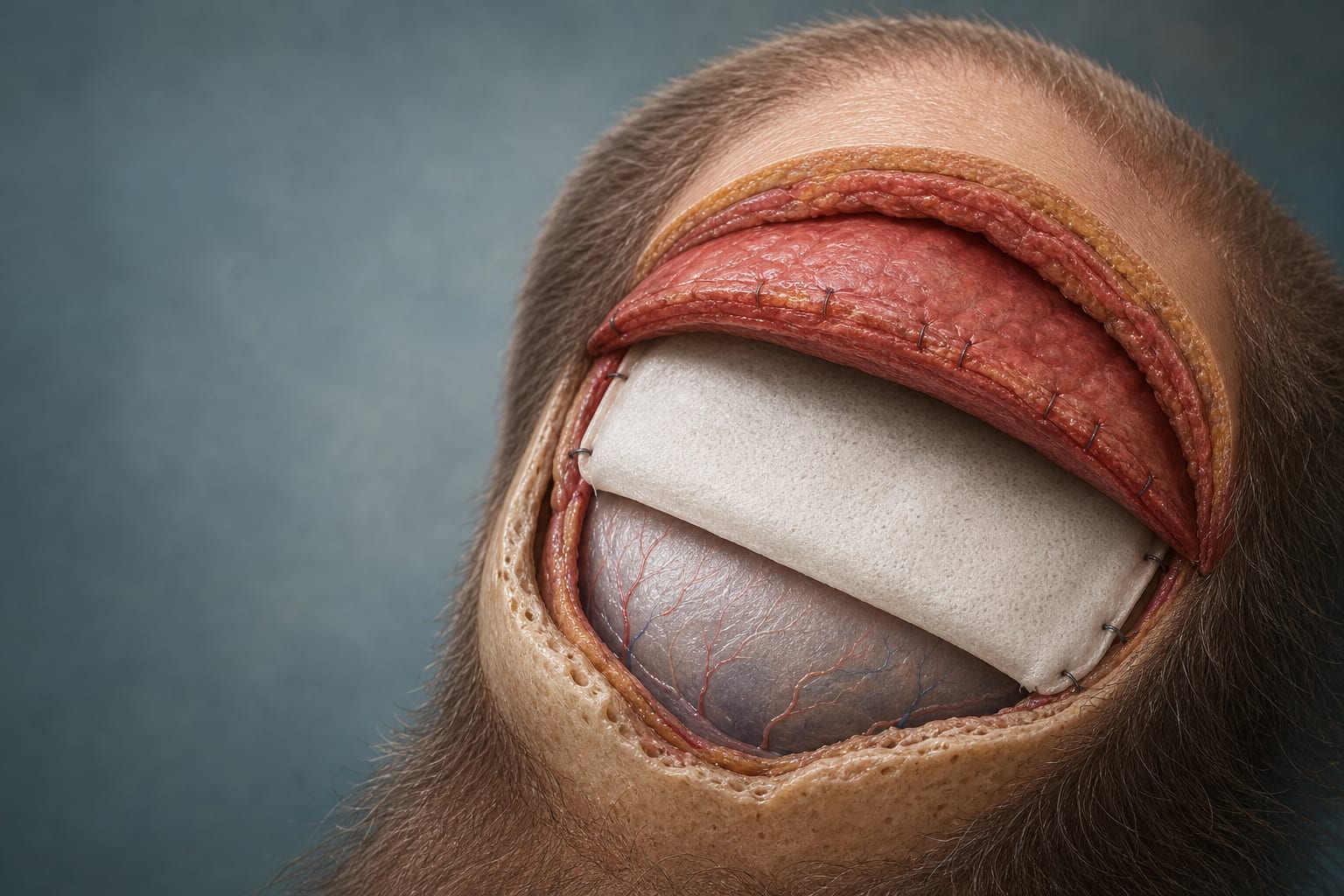
Key MechanismsThree-layer technique using Matriderm®, galea rotation flap, and fasciocutaneous transposition flap.
Target PopulationPatients with large scalp defects and exposed dura mater, particularly those unfit for free flap surgery.
Care SettingPlastic surgery outpatient clinic

Key Highlights

  • Innovative three-layer technique avoids complications of free flaps.
  • Case study of a 35-year-old male with chronic osteomyelitis.
  • Satisfactory functional and aesthetic outcomes reported.
  • No neurological deficits or complications observed post-surgery.
  • Patient satisfaction maintained over three years.

Guideline-Based Recommendations

Diagnosis

  • Assessment of osteomyelitis through imaging and clinical evaluation.

Management

  • Utilization of a three-layer approach for reconstruction of cranial defects.

Monitoring & Follow-up

  • Regular postoperative follow-up at 1, 2, and 3 weeks, and 1, 3, and 6 months.

Risks

  • Potential complications associated with free flaps, including thrombosis and necrosis.

Patient & Prescribing Data

Individuals with post-traumatic occipital osteomyelitis and significant skin loss.

Matriderm® and split-thickness skin grafts can be effective alternatives to traditional flap surgery.

Clinical Best Practices

  • Consider patient fitness for free flap surgery when planning reconstruction.
  • Employ a multidisciplinary approach for complex cases involving neurosurgery and plastic surgery.
  • Ensure thorough preoperative assessments to mitigate risks.

Related Resources & Content

Original Source(s)

Related Content