Residual inflammation in the cerebrospinal fluid after short- and long-term natalizumab treatment in relapsing-remitting multiple sclerosis - Scorecard - MDSpire
Conexiant’s news site is now MDSpire News. Learn more
Advertisement
Persistent Inflammation in Cerebrospinal Fluid Following Short- and Long-Term Treatment with Natalizumab in Patients with Relapsing-Remitting Multiple Sclerosis
Clinical Scorecard: Persistent Inflammation in Cerebrospinal Fluid Following Short- and Long-Term Treatment with Natalizumab in Patients with Relapsing-Remitting Multiple Sclerosis
At a Glance
Category
Detail
Condition
Key Mechanisms
Natalizumab blocks peripheral immune cell migration into the central nervous system, reducing CSF inflammation, but residual inflammation may persist in OCB-positive patients.
Target Population
Care Setting
Key Highlights
NTZ treatment reduces most CSF inflammatory biomarkers compared to untreated RRMS patients.
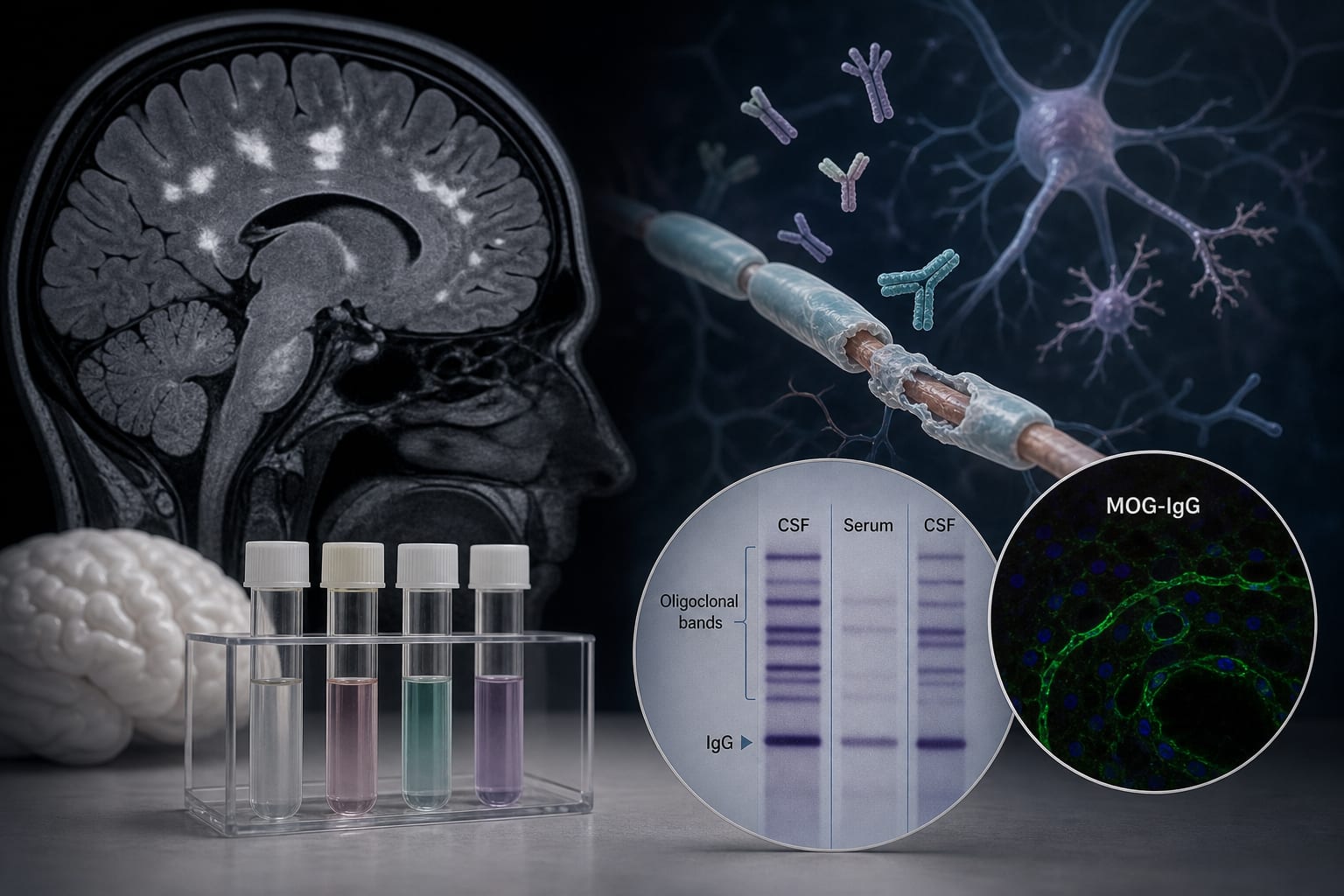
Residual intrathecal inflammation persists in OCB-positive patients after more than five years of NTZ treatment, indicating ongoing immune activity.
sCD27, sBCMA, and IgG index levels remain elevated in OCB-positive NTZ-treated patients, suggesting incomplete suppression of inflammation.
Guideline-Based Recommendations
Diagnosis
Management
Monitoring & Follow-up
Evaluate OCB status and CSF inflammatory biomarkers in patients treated with NTZ at least annually.
Risks
Patient & Prescribing Data
Long-term NTZ treatment may not fully suppress intrathecal inflammation, particularly in OCB-positive patients, which could influence treatment strategies.
Clinical Best Practices
Regular assessment of CSF biomarkers in NTZ-treated patients, ideally every 6-12 months.
Consider OCB status when evaluating treatment efficacy and inflammation, and educate patients on its importance.
by Sophie Buhelt, Malene Bredahl Hansen, Helle Bach Søndergaard, Sahla El Mahdaoui, Marie Mathilde Hansen, Mie Reith Mahler, Jeppe Romme Christensen, Finn Sellebjerg