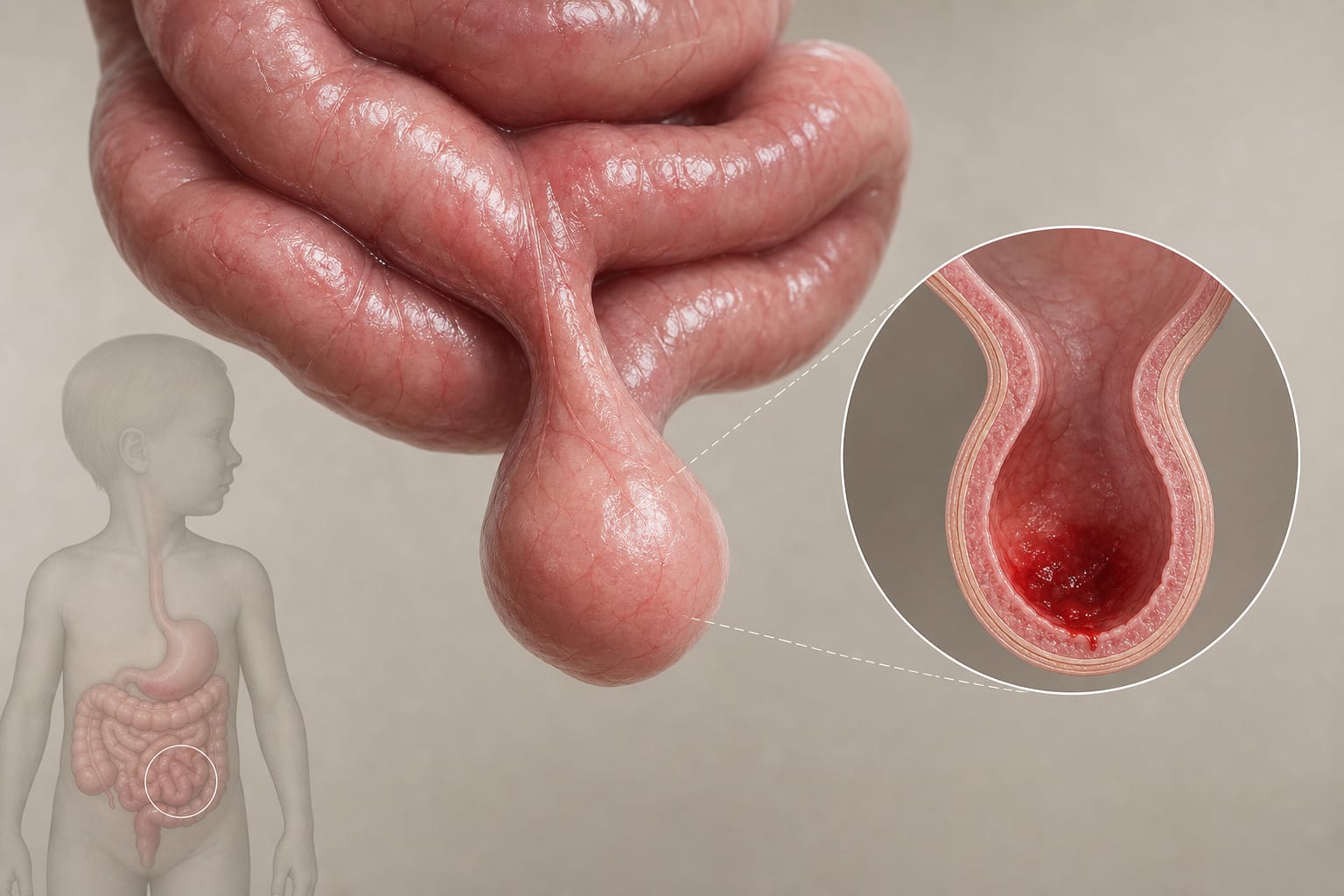
Inverted U-Shaped Relationship Between Diverticular Width and Gastrointestinal Bleeding in Symptomatic Meckel's Diverticulum Children: A Retrospective Single-Center Study - Scorecard - MDSpire
Advertisement
Inverted U-Shaped Relationship Between Diverticular Width and Gastrointestinal Bleeding in Symptomatic Meckel's Diverticulum Children: A Retrospective Single-Center Study
Clinical Scorecard: Relationship Between Diverticulum Width and Gastrointestinal Bleeding in Pediatric Patients with Symptomatic Meckel's Diverticulum: A Retrospective Analysis from a Single Center
At a Glance
Category
Detail
Condition
Meckel's Diverticulum
Key Mechanisms
Diverticulum width as an independent predictor of gastrointestinal bleeding risk.
Target Population
Pediatric patients with symptomatic Meckel's diverticulum.
Care Setting
Single center, retrospective cohort study.
Key Highlights
Diverticulum width is an independent predictor of gastrointestinal bleeding risk.
An inverted U-shaped relationship exists between diverticulum width and bleeding risk.
Peak bleeding risk occurs at a diverticulum width of approximately 1.25 cm.
Ectopic mucosa interacts with diverticulum width to influence bleeding risk.
Findings may enhance risk stratification and inform surgical decision-making.
Guideline-Based Recommendations
Diagnosis
Assess diverticulum width in symptomatic pediatric patients.
Management
Consider diverticulum width in surgical decision-making for Meckel's diverticulum.
Monitoring & Follow-up
Monitor for gastrointestinal bleeding in patients with diverticula near 1.25 cm.
Risks
Increased risk of gastrointestinal bleeding associated with specific diverticulum widths.
Patient & Prescribing Data
Pediatric patients with symptomatic Meckel's diverticulum.
Surgical intervention may be guided by diverticulum width and presence of ectopic mucosa.
Clinical Best Practices
Utilize diverticulum width as a risk stratification tool.
Incorporate findings into preoperative assessments for surgical candidates.