Study Reveals Single-Cell Neural Activity Linked to Human Speech Production
-
June 17, 2026
Clinical Scorecard: Study Reveals Single-Cell Neural Activity Linked to Human Speech Production
At a Glance
| Category | Detail |
|---|---|
| Condition | Communication Disorders |
| Key Mechanisms | Single-cell brain activity encoding linguistic information |
| Target Population | Individuals with communication disorders |
| Care Setting | Clinical research settings, specifically epilepsy monitoring |
Key Highlights
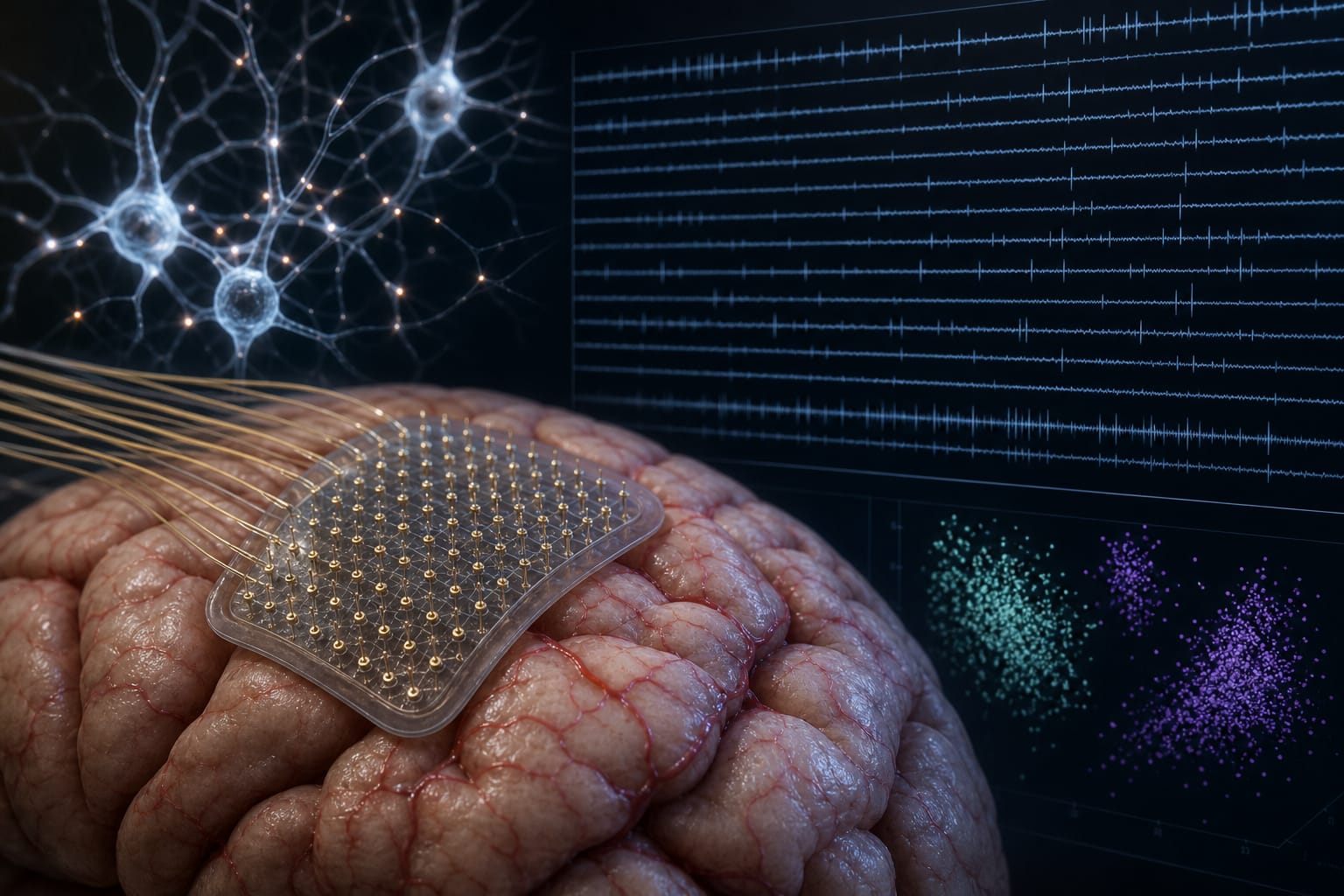
- Neuronal data from microelectrode arrays used to study speech production
- Machine-learning models predicted grammar, meaning, and context of spoken sentences
- Neurons showed division of labor in processing language
Guideline-Based Recommendations
Diagnosis
- Utilize neuronal recordings for insights into speech-related thoughts
Management
Monitoring & Follow-up
- Monitor neuronal activity during natural conversations for research purposes
Risks
- Invasive procedures associated with microelectrode array implantation
Patient & Prescribing Data
Patients undergoing epilepsy monitoring
Research may inform future treatments for speech restoration
Clinical Best Practices
- Conduct further research on the relationship between neuronal activity and language processing
Related Resources & Content
- National Institute on Deafness and Other Communication Disorders (NIDCD)
- National Institutes of Health (NIH)
Based on findings from:
Researchers discover single-cell brain activity that underlies human speech
National Institutes Of Health (Nih), 2026.
https://www.nih.gov/news-events/news-releases/researchers-discover-single-cell-brain-activity-underlies-human-speech
This content is an AI-generated, fully rewritten summary based on a published scholarly article. It does not reproduce the original text and is not a substitute for the original publication. Readers are encouraged to consult the source for full context, data, and methodology.