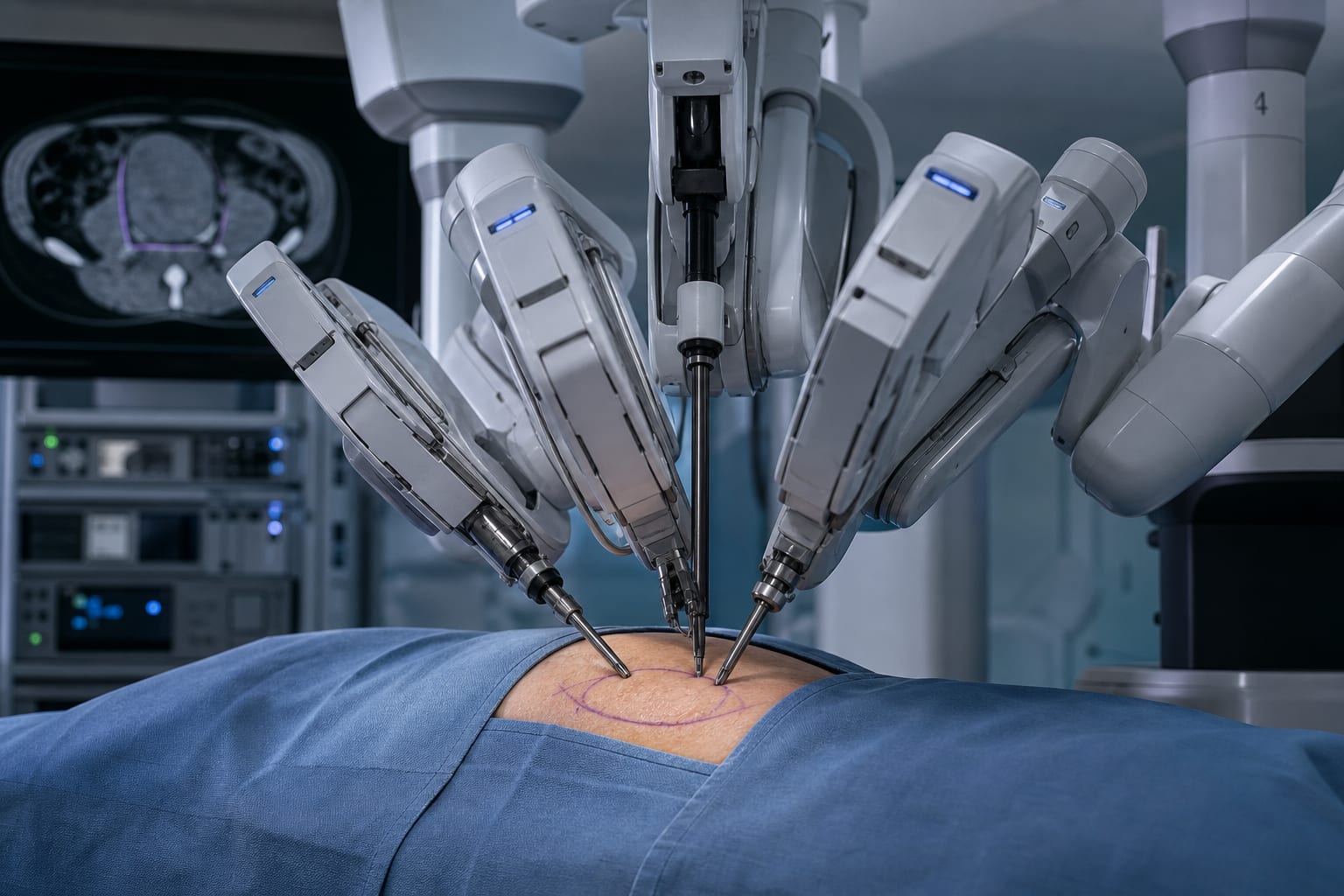
Laparoscopic repair of CIH is a minimally invasive alternative to open surgery with evolving technical modifications.
Two groups based on internal ring diameter: ≤1 cm treated with sac disconnection alone; >1 cm treated with sac disconnection plus iliopubic tract repair.
No peritoneal closure performed after sac disconnection; repair of wide deep ring done selectively without peritoneal closure.
Guideline-Based Recommendations
Diagnosis
Clinical diagnosis confirmed by laparoscopic exploration and measurement of internal ring diameter using Maryland forceps.
Management
For IR diameter ≤1 cm: laparoscopic disconnection of hernial sac without peritoneal closure or ring narrowing.
For IR diameter >1 cm: laparoscopic disconnection plus iliopubic tract repair to narrow the internal ring without peritoneal closure.
Avoid peritoneal closure after sac disconnection to simplify procedure.
Monitoring & Follow-up
Monitor for recurrence within one year postoperatively.
Assess operative time, safety, efficacy, and postoperative complications.
Risks
Potential for recurrence if internal ring is wide and not repaired.
Technical complexity requires surgical expertise to avoid injury to vas deferens and testicular vessels.
Patient & Prescribing Data
Pediatric patients aged 3 months to 12 years undergoing laparoscopic CIH repair without incarceration, recurrence, or associated comorbidities.
Tailoring surgical approach based on internal ring diameter optimizes outcomes; sac disconnection alone sufficient for narrow rings, while wide rings benefit from additional iliopubic tract repair.
Clinical Best Practices
Use precise measurement of internal ring diameter intraoperatively to guide surgical technique.
Perform careful dissection to avoid injury to vas deferens and testicular vessels.
Limit sutures during iliopubic tract repair to avoid excessive tension.
Avoid peritoneal closure after sac disconnection to reduce operative complexity.
Patients with preoperative vitamin D deficiency had higher postoperative pain scores and opioid use after mastectomy, including more than triple the odds of moderate to severe pain within 24 hours of surgery.