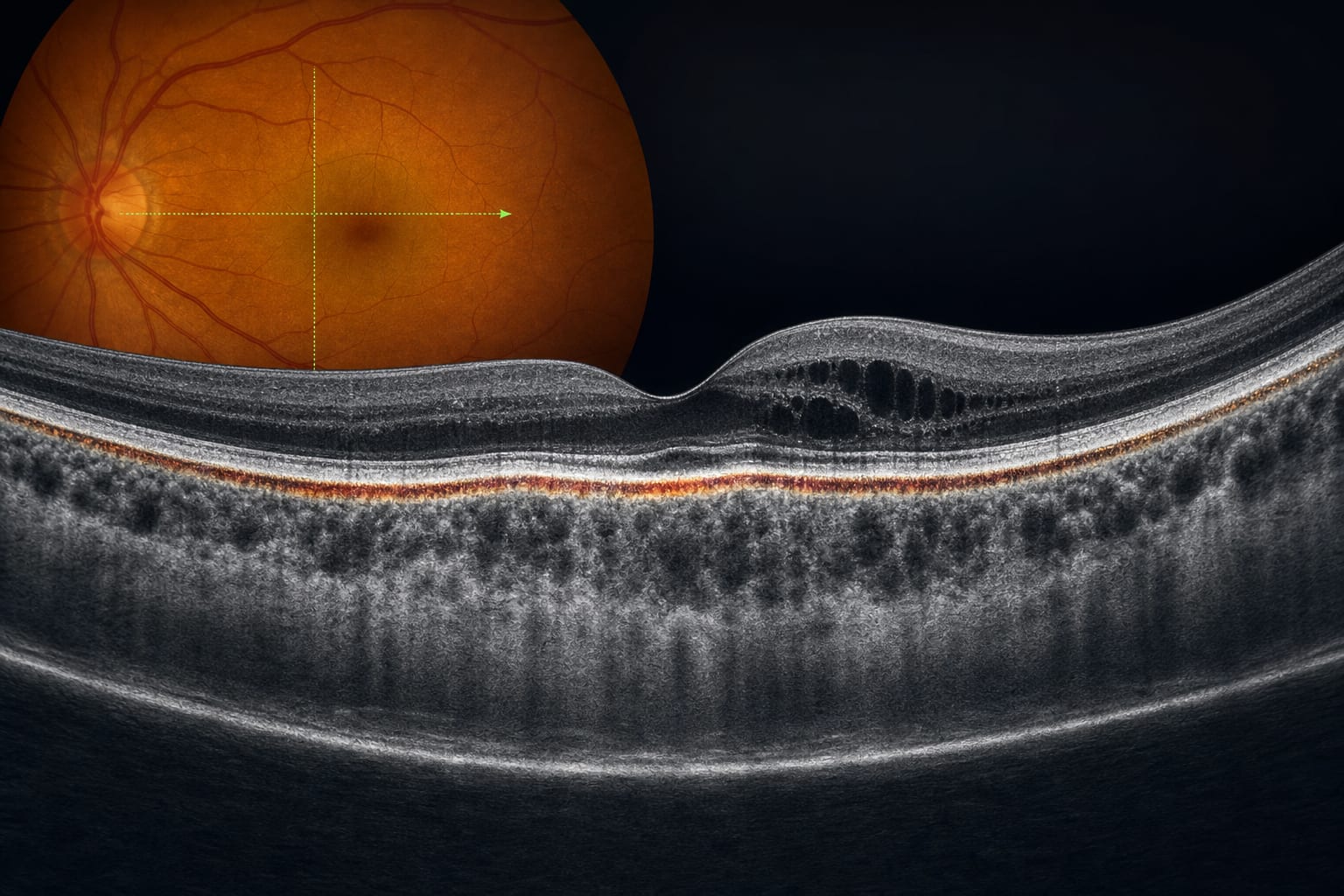
The Retina’s Hidden Polarization Patterns
How structured light could reveal a new window into retinal function
Clinical Scorecard: The Retina’s Hidden Polarization Patterns
At a Glance
Category Detail
Condition Retinal Health Assessment Key Mechanisms Structured light and polarization-sensitive scattering in the retina Target Population Healthy individuals and potentially patients with retinal diseases Care Setting Ophthalmology
Key Highlights
Structured light can create complex, multilobed patterns in retinal perception. Boehm's brushes can be transformed into intricate patterns using spin-orbit-coupled light. Detection thresholds for structured-light percepts improve with retinal eccentricity. Guideline-Based Recommendations
Diagnosis
Further studies needed to correlate structured-light percepts with retinal diseases. Management
Monitoring & Follow-up
Risks
Considerable validation required before clinical application. Patient & Prescribing Data
Healthy participants tested in a psychophysical study.
Structured-light testing may provide complementary information about retinal microstructure.
Clinical Best Practices
Related Resources & Content