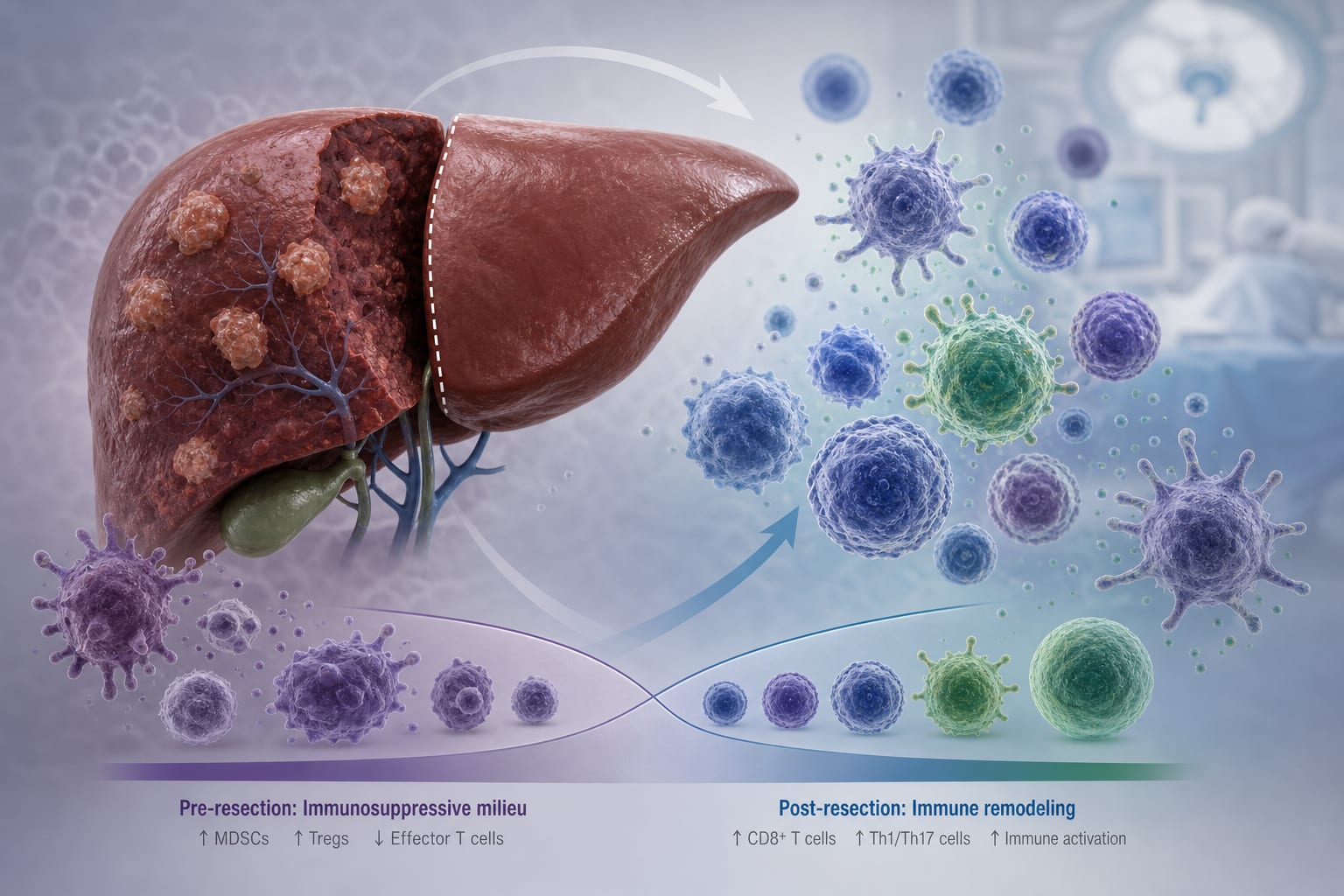
Systemic immune remodeling following curative (R0) resection of colorectal liver metastases
By
Shuo Ren
Migmar Tsamchoe
Stephanie K. Petrillo
Oran Zlotnik
Jessica Bloom
Anastasia Tsatoumas
Vered Domankevich
Anthoula Lazaris
Peter Metrakos
July 9, 2026
Clinical Scorecard: Immune Landscape Alterations After Curative R0 Resection of Colorectal Liver Metastases
At a Glance
Category Detail
Condition Colorectal cancer liver metastases (CRLM) Key Mechanisms Systemic immunosuppression and immune reprogramming post-resection Target Population Patients undergoing surgical resection for colorectal liver metastases Care Setting Oncology surgical units
Key Highlights
Postoperative increase in CD4+ T cells among circulating CD3+ T cells Reduction in overall CD8+ T cells post-resection Higher postoperative S100A9+ M-MDSCs in patients with recurrence Distinct postoperative immune profiles associated with KRAS mutations Potential for immunotherapeutic interventions in altered CD4+ T cell landscape Guideline-Based Recommendations
Diagnosis
Assess immune landscape alterations in CRLM patients pre- and post-resection Management
Consider neoadjuvant therapy combined with surgical R0 resection for CRLM Monitoring & Follow-up
Monitor immune cell populations and markers post-surgery for recurrence risk Risks
Relapse occurs in 55% to 80% of patients following metastatic resection Patient & Prescribing Data
Patients with colorectal liver metastases undergoing surgical resection
Immune checkpoint inhibitors may have limited efficacy in non-MSI patients
Clinical Best Practices
Utilize multiparameter flow cytometry for immune profiling Incorporate immune monitoring in postoperative care Investigate potential for adoptive cellular therapies targeting CD4+ T cells Related Resources & Content