Radiotherapy-synergized in situ hydrogel vaccine with engineered Lactococcus lactis FOLactis potentiates anti-tumor immunity in pancreatic cancer - Scorecard - MDSpire
Advertisement
Radiotherapy-synergized in situ hydrogel vaccine with engineered Lactococcus lactis FOLactis potentiates anti-tumor immunity in pancreatic cancer
Clinical Scorecard: In Situ Hydrogel Vaccine Enhanced by Radiotherapy and Engineered Lactococcus lactis FOLactis Boosts Anti-Tumor Immune Response in Pancreatic Cancer
At a Glance
Category
Detail
Condition
Pancreatic Cancer
Key Mechanisms
Combination of radiotherapy and engineered Lactococcus lactis to enhance immune response.
Target Population
Patients with pancreatic ductal adenocarcinoma (PDAC).
Care Setting
Oncology clinical settings utilizing immunotherapy and radiotherapy.
Key Highlights
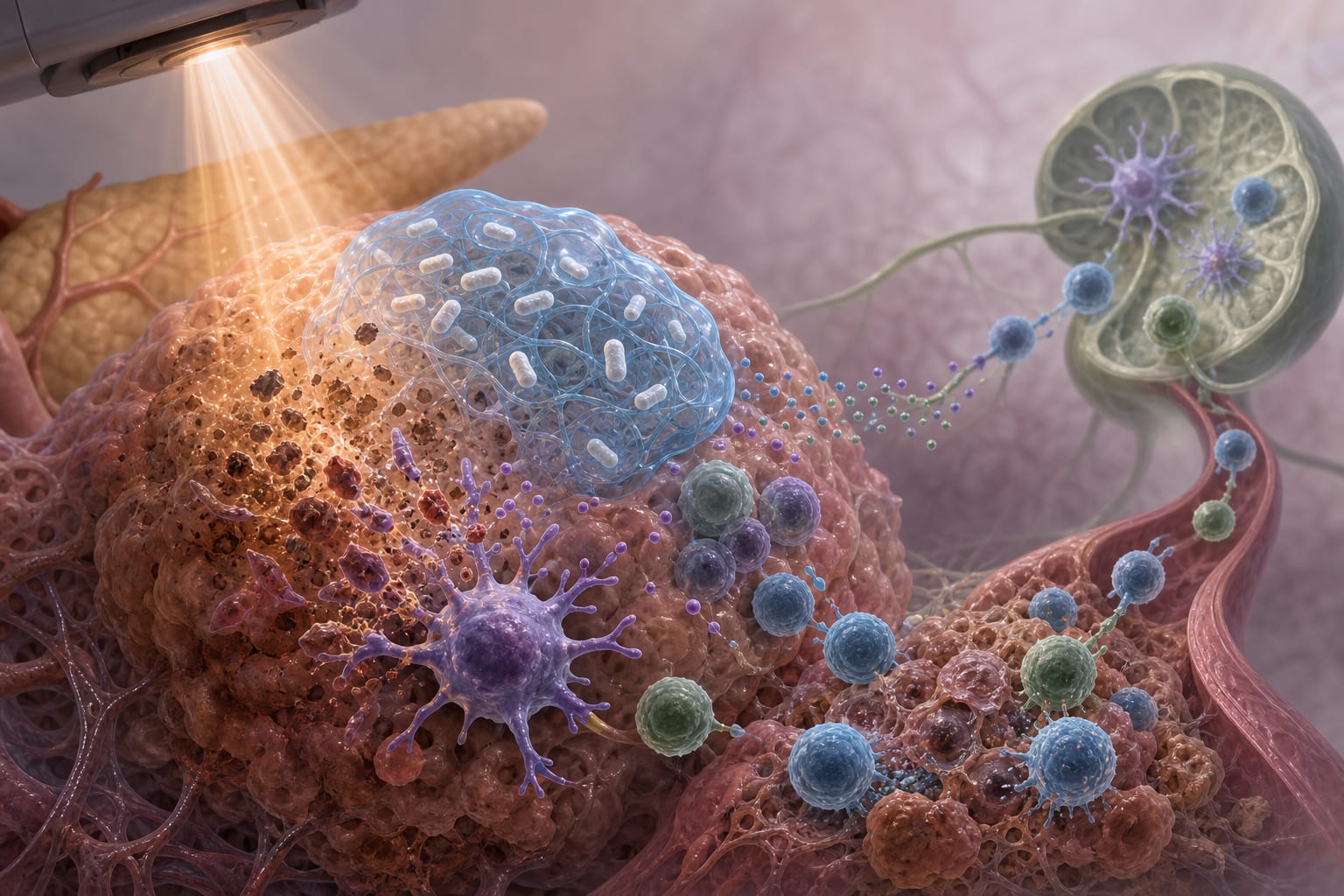
RH-FOLactis enhances anti-tumor immune response in PDAC.
Utilizes thermosensitive hydrogel for sustained release of immune-stimulating cytokines.
Promotes recruitment and activation of dendritic cells and T cells.
Transforms the immunosuppressive tumor microenvironment from 'cold' to 'hot'.
Demonstrates potential as a novel treatment strategy.
Guideline-Based Recommendations
Diagnosis
Diagnosis of pancreatic ductal adenocarcinoma (PDAC) based on clinical and imaging findings.
Management
Consider combination therapy with RH-FOLactis and radiotherapy for PDAC.
Monitoring & Follow-up
Monitor immune response and tumor progression post-treatment.
Risks
Potential for transient immune responses and insufficient antigen presentation.
Patient & Prescribing Data
Patients diagnosed with pancreatic ductal adenocarcinoma (PDAC).
In situ hydrogel vaccine combined with radiotherapy may improve treatment outcomes.
Clinical Best Practices
Utilize radiotherapy to induce immunogenic cell death and enhance antigen presentation.
Employ hydrogel systems for localized and sustained delivery of immunotherapeutic agents.
Incorporate engineered bacteria to enhance immune activation in the tumor microenvironment.