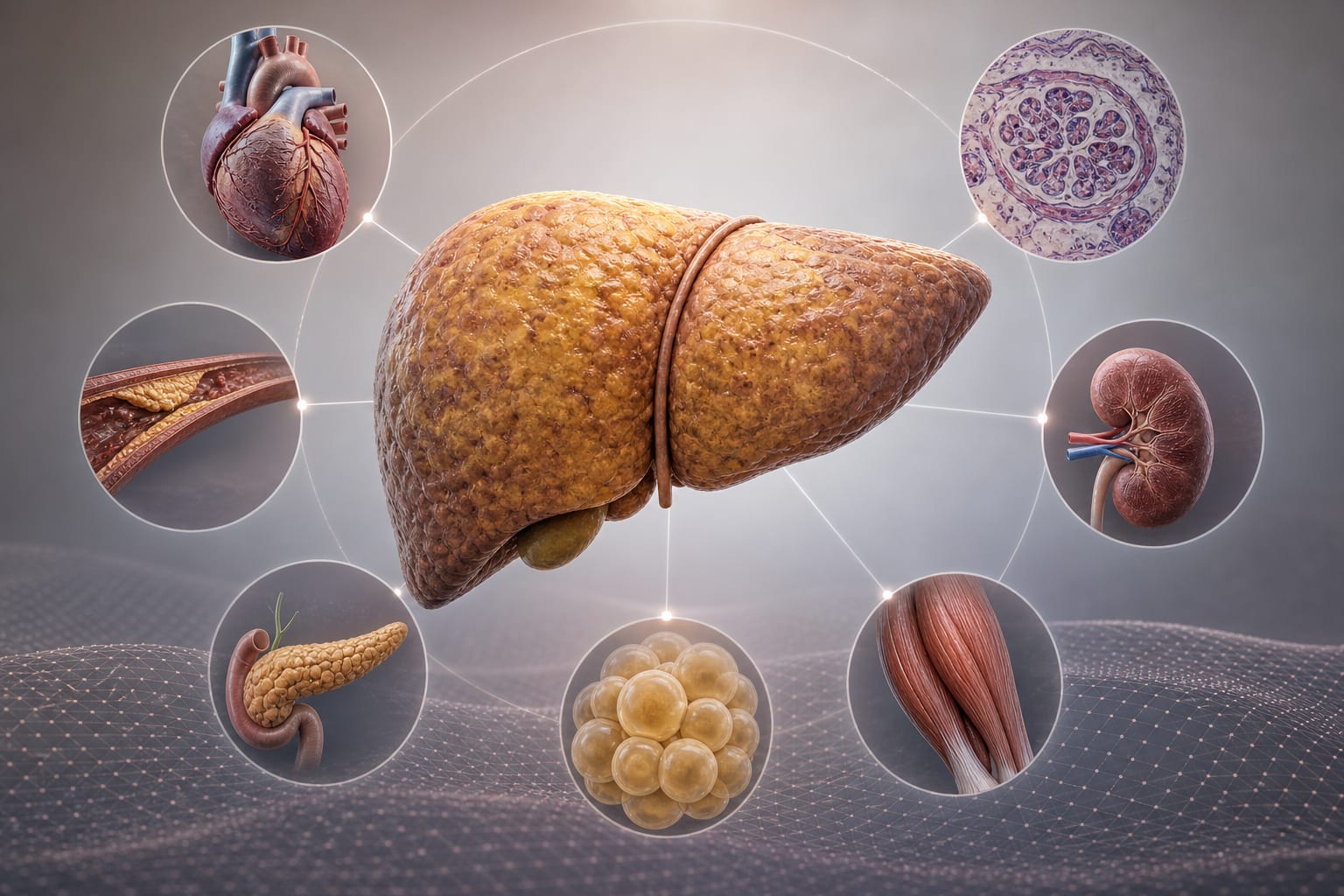
Clinical Scorecard: The MASLD Spectrum: A Rising Epidemic with Cardiometabolic and Extra-Hepatic Implications
At a Glance
Category
Detail
Condition
Key Mechanisms
Multisystem disease impacting cardiovascular, renal, nutritional, and musculoskeletal health, emphasizing the need for integrated management.
Target Population
Care Setting
Key Highlights
MASLD is linked to increased cardiovascular risk, particularly in T2DM patients.
The CALLY index serves as a promising non-invasive biomarker for MASLD risk stratification.
Sarcopenia is an independent risk factor for MASLD and advanced liver fibrosis.
Visceral fat area (VFA) is more strongly associated with MASLD than traditional BMI.
MASLD is correlated with renal health, including an increased risk of kidney stones due to shared metabolic pathways.
Guideline-Based Recommendations
Diagnosis
Management
Monitoring & Follow-up
Monitor bone health and renal health in high-risk MASLD patients, including specific parameters such as bone mineral density and kidney function tests.
Risks
Patient & Prescribing Data
Individuals with MASLD, particularly those with T2DM.
Ertugliflozin is noted for its effectiveness in reducing liver enzymes.
Clinical Best Practices
Implement early cardiovascular screening in MASLD patients.
Adopt sex-specific approaches in assessing metabolic risk, including tailored interventions based on sex differences in body composition and metabolic response.
Focus on maintaining skeletal muscle mass as a therapeutic target.