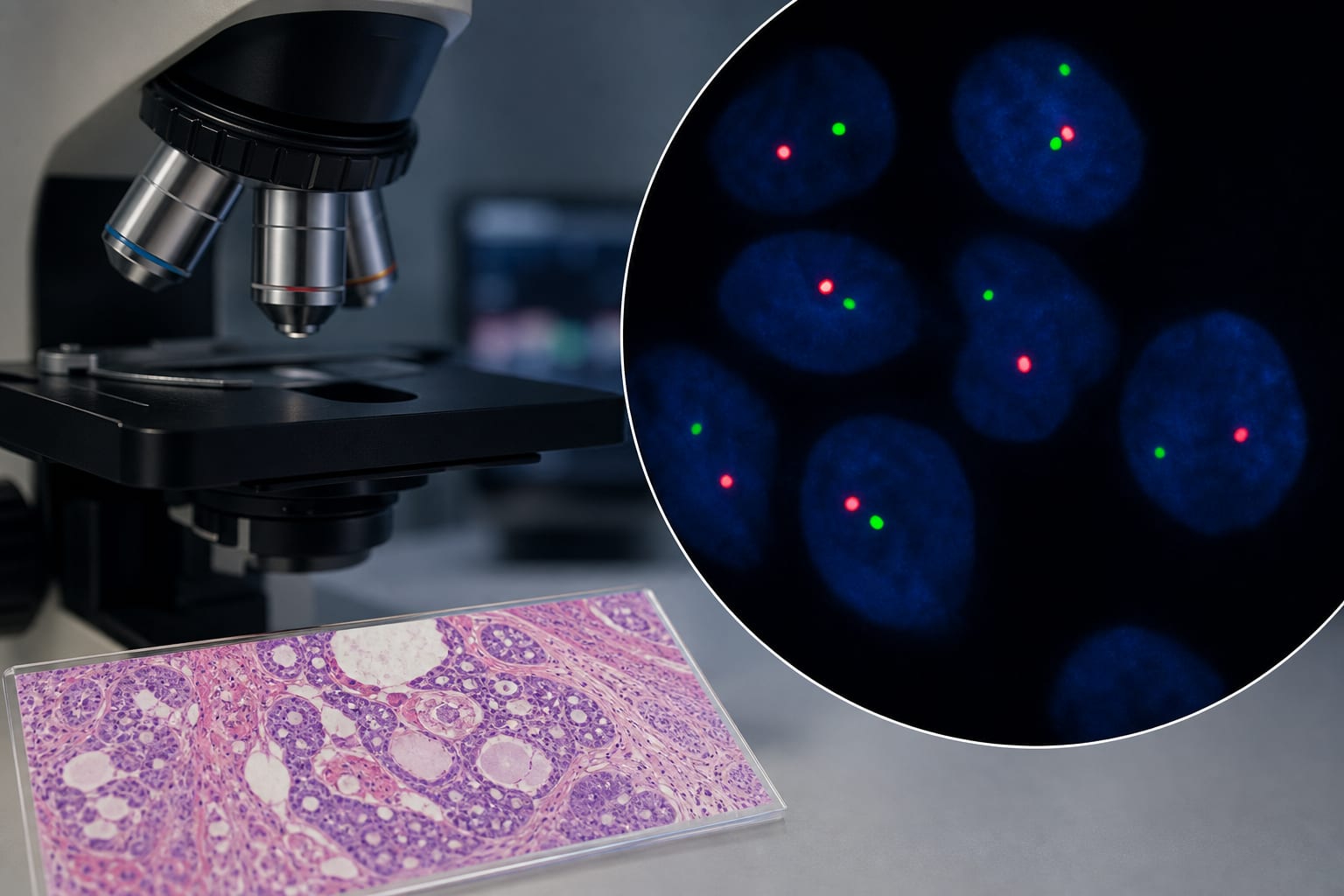
Case report: Secretory carcinoma of the breast with ETV6-NTRK3 fusion: clinicopathological features and molecular confirmation by FISH in two cases
By
Xiaoyu Sun
Jiaqi Liu
July 2, 2026
Clinical Scorecard: Clinical Insights: Two Cases of Breast Secretory Carcinoma with ETV6-NTRK3 Fusion Confirmed by FISH Analysis
At a Glance
Category Detail
Condition Secretory carcinoma of the breast (SCB) Key Mechanisms ETV6-NTRK3 gene fusion Target Population Patients with breast secretory carcinoma Care Setting Clinical pathology and oncology
Key Highlights
SCB accounts for less than 0.15% of all breast carcinomas. Characteristic morphology includes microcystic/tubulocystic and solid growth patterns. Both cases confirmed ETV6-NTRK3 fusion by FISH analysis. Immunohistochemistry revealed a triple-negative phenotype. Both patients underwent breast-conserving surgery with adjuvant therapy. Guideline-Based Recommendations
Diagnosis
Integrate morphology, immunohistochemistry, and FISH-based molecular confirmation. Management
Adjuvant chemotherapy and radiation therapy are recommended. Monitoring & Follow-up
Short-to-intermediate follow-up is necessary due to potential late recurrence. Risks
Late recurrence and distant metastasis have been reported in the literature. Patient & Prescribing Data
Two Chinese women diagnosed with SCB.
Neither patient had advanced disease or received TRK inhibitor therapy.
Clinical Best Practices
Confirm ETV6-NTRK3 fusion in suspected SCB cases. Utilize a multidisciplinary approach for diagnosis and treatment planning. Related Resources & Content