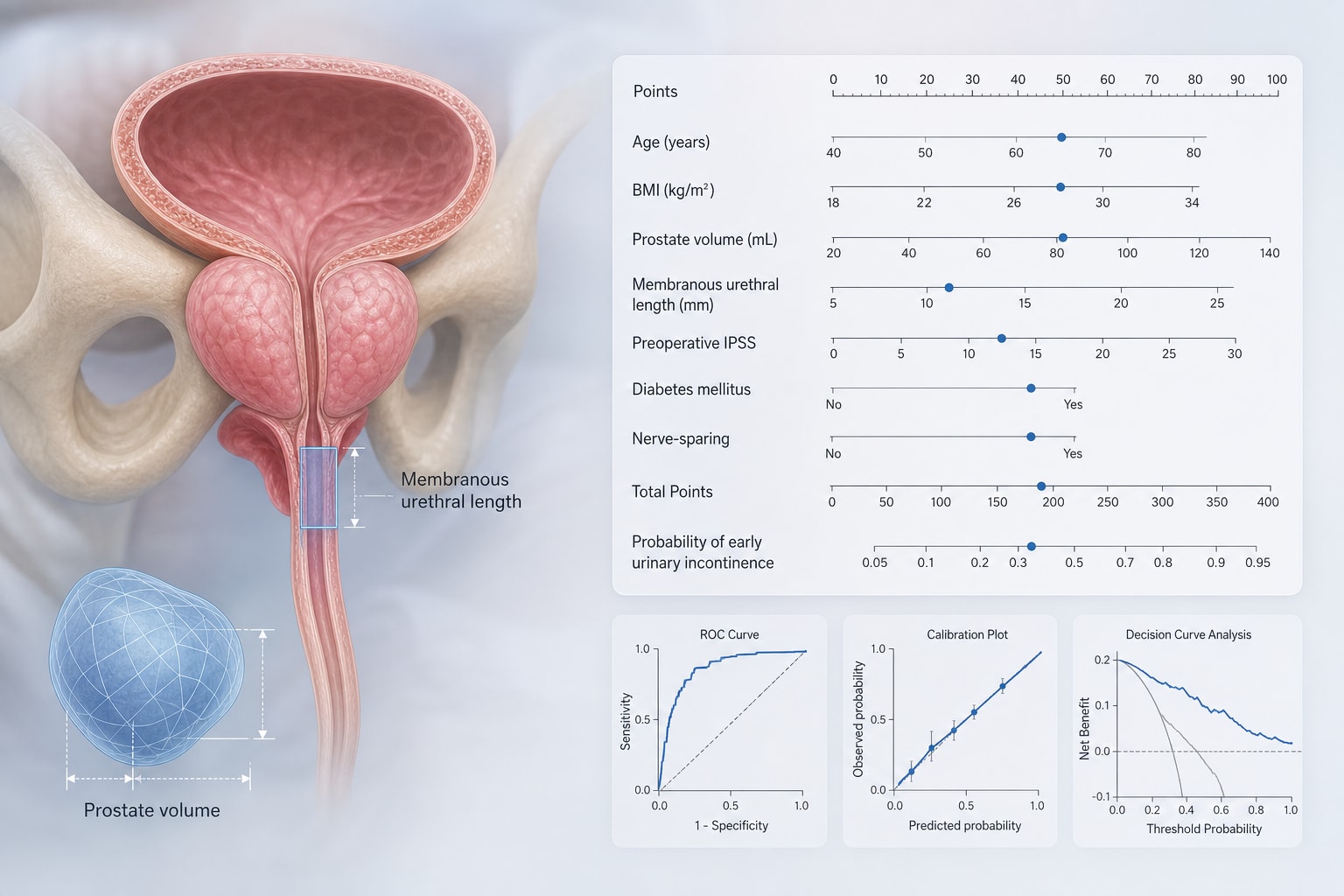
Developing a predictive model for early urinary incontinence after laparoscopic radical prostatectomy: a retrospective cohort study
By
Yuan Tang
Tianlu Li
Xiaoxi Song
Linghui Qin
July 7, 2026
Clinical Scorecard: Creating a Predictive Model for Early Urinary Incontinence Following Laparoscopic Radical Prostatectomy: A Retrospective Analysis
At a Glance
Category Detail
Condition Urinary Incontinence Key Mechanisms Prostate volume, membranous urethral length (MUL), intravesical prostatic protrusion length (IPPL), neurovascular bundle (NVB) preservation Target Population Patients undergoing laparoscopic radical prostatectomy for prostate cancer Care Setting Retrospective analysis in a hospital setting
Key Highlights
41.2% of patients experienced urinary incontinence post-surgery Independent predictors identified include prostate volume, MUL, IPPL, and NVB preservation Nomogram developed for predicting early urinary incontinence AUC of 0.910 indicates good discriminatory power of the predictive model Calibration curve shows good consistency of the model Guideline-Based Recommendations
Diagnosis
Utilize preoperative MRI to assess anatomical factors related to urinary incontinence Management
Consider predictors such as prostate volume and MUL when planning surgical approach Monitoring & Follow-up
Follow-up on urinary incontinence status at 3-month post-operative visit Risks
Be aware of the risk factors influencing urinary incontinence post-radical prostatectomy Patient & Prescribing Data
408 patients who underwent laparoscopic radical prostatectomy
Preoperative assessment of anatomical factors can inform surgical decisions
Clinical Best Practices
Incorporate predictive models in preoperative evaluations Utilize MRI findings to guide surgical planning Educate patients on potential postoperative outcomes Related Resources & Content