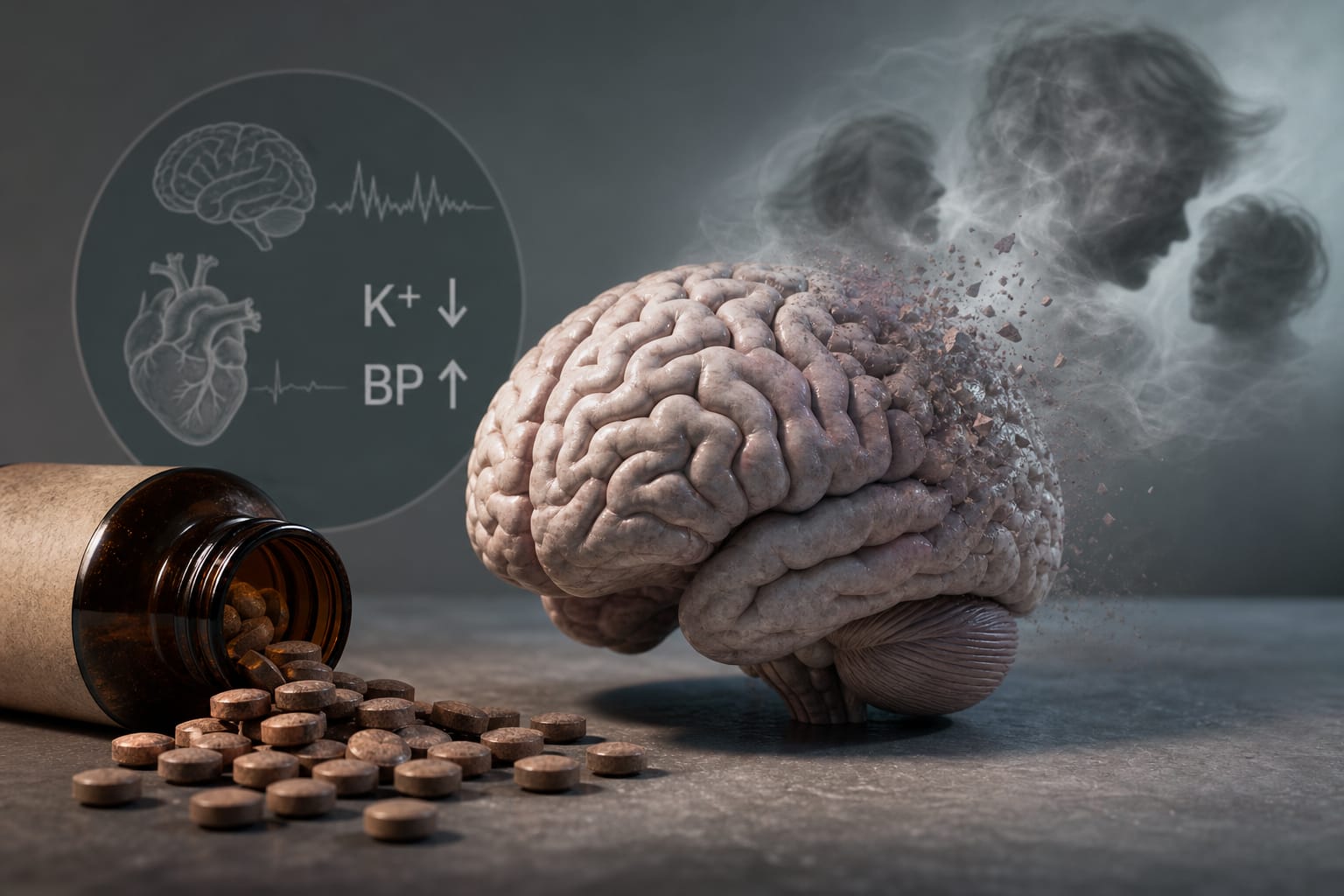
Case Study: Delirium and Adverse Effects Associated with the Misuse of Compound Liquorice Tablets
-
By
-
Xiwen Tian
-
Liu Liu
-
Liyao Huang
-
Jubo Yin
-
Yanjuan Zeng
-
Yao Chen
-
Shanghao Yang
-
Xuhui Zhou
-
July 6, 2026
Clinical Scorecard: Case Study: Delirium and Adverse Effects Associated with the Misuse of Compound Liquorice Tablets
At a Glance
| Category | Detail |
|---|
| Condition | Substance Use Disorder due to Compound Liquorice Tablets |
| Key Mechanisms | Opioid dependence and withdrawal symptoms |
| Target Population | Individuals using compound liquorice tablets for cough relief |
| Care Setting | Addiction Medicine Center |
Key Highlights
- Patient developed delirium after discontinuing compound liquorice tablets.
- Withdrawal symptoms included confusion, hallucinations, and severe hypokalemia.
- Management included benzodiazepines, antidepressants, and antipsychotics.
- Successful withdrawal led to resolution of symptoms and stabilization.
- Emerging risk of abuse associated with compound liquorice tablets noted.
Guideline-Based Recommendations
Diagnosis
- ICD-10 criteria for opioid-induced mental and behavioral disorders.
Management
- Benzodiazepine tapering regimen for withdrawal symptoms.
- Use of antidepressants and antipsychotics for mood and psychotic symptoms.
Monitoring & Follow-up
- Active management of hypertension and correction of hypokalemia.
Risks
- Potential for addiction and severe adverse effects from misuse.
Patient & Prescribing Data
29-year-old male with a history of COVID-19 and self-medication.
Gradual increase in dosage led to dependence and severe withdrawal symptoms.
Clinical Best Practices
- Educate patients on the risks of misuse of compound liquorice tablets.
- Implement stricter prescription controls for medications with addiction potential.
- Conduct thorough assessments for patients presenting with altered mental status and substance use history.
Related Resources & Content