Conexiant’s news site is now MDSpire News. Learn more
Advertisement
Elevation of Cytokeratin-18 as an Early Indicator of Hepatic Cellular Alterations in Obesity Induced by High-Fat Diet Prior to the Development of Steatohepatitis
Clinical Scorecard: Elevation of Cytokeratin-18 as an Early Indicator of Hepatic Cellular Alterations in Obesity Induced by High-Fat Diet Prior to the Development of Steatohepatitis
At a Glance
Category
Detail
Condition
Non-alcoholic fatty liver disease (NAFLD)
Key Mechanisms
Cytokeratin-18 (CK-18) as a biomarker for liver cell death and steatohepatitis
Target Population
Individuals with obesity and metabolic dysfunction
Care Setting
Research study on high-fat diet-induced obesity in rats
Key Highlights
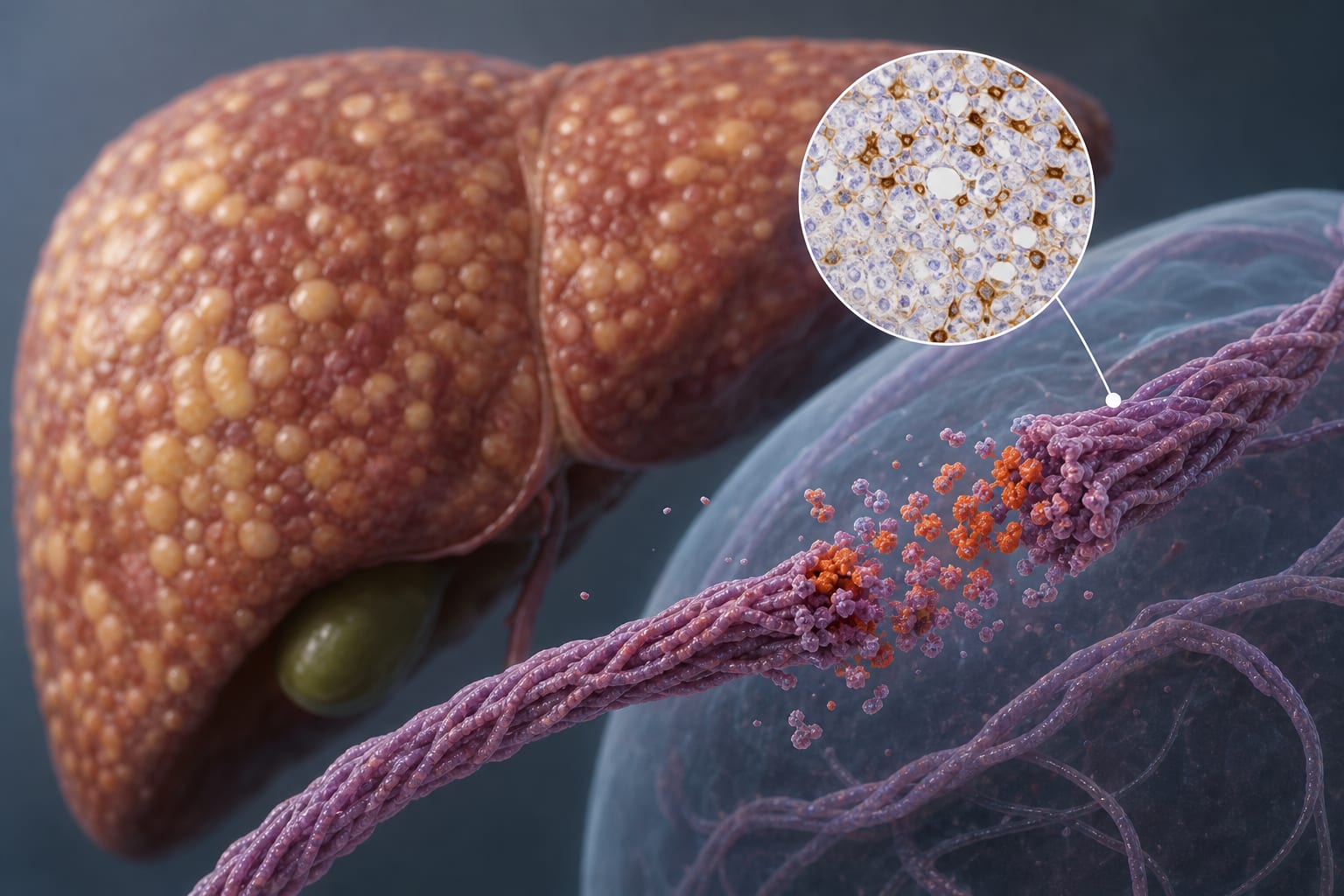
CK-18 levels significantly increased in high-fat diet group compared to normal-fat diet group.
Histopathological changes included ballooning and steatosis in high-fat diet specimens.
NAFLD activity score remained ≤3 despite increased CK-18 levels.
Obesity is a major risk factor for the development of NAFLD.
Non-invasive biomarkers like CK-18 are valuable for early detection of liver injury.
Guideline-Based Recommendations
Diagnosis
Diagnosis of NAFLD requires evidence of hepatic steatosis plus one of the conditions: overweight/obesity, diabetes mellitus type 2, or metabolic risk abnormalities.
Management
Non-invasive biomarkers should be considered for diagnosing NAFLD.
Monitoring & Follow-up
Monitor CK-18 levels as a potential indicator of early hepatocellular injury.
Risks
Invasive procedures like liver biopsy carry risks such as hemorrhage and may not be acceptable to all patients.
Patient & Prescribing Data
Rats in a controlled dietary study
High-fat diet leads to increased CK-18 and liver histopathological changes.
Clinical Best Practices
Utilize CK-18 as a non-invasive biomarker for early detection of liver injury in obese patients.
Consider lifestyle modifications to manage obesity and associated liver conditions.