Intravesical hyaluronic acid and chondroitin sulphate for recurrent urinary tract infections: a prospective multicentre comparison of two instillation protocols - Scorecard - MDSpire
Conexiant’s news site is now MDSpire News. Learn more
Advertisement
Comparative Analysis of Two Instillation Protocols of Intravesical Hyaluronic Acid and Chondroitin Sulphate for Women with Recurrent Urinary Tract Infections: A Prospective Multicenter Study
Clinical Scorecard: Comparative Analysis of Two Instillation Protocols of Intravesical Hyaluronic Acid and Chondroitin Sulphate for Women with Recurrent Urinary Tract Infections: A Prospective Multicenter Study
At a Glance
Category
Detail
Condition
Recurrent Urinary Tract Infections (r-UTIs)
Key Mechanisms
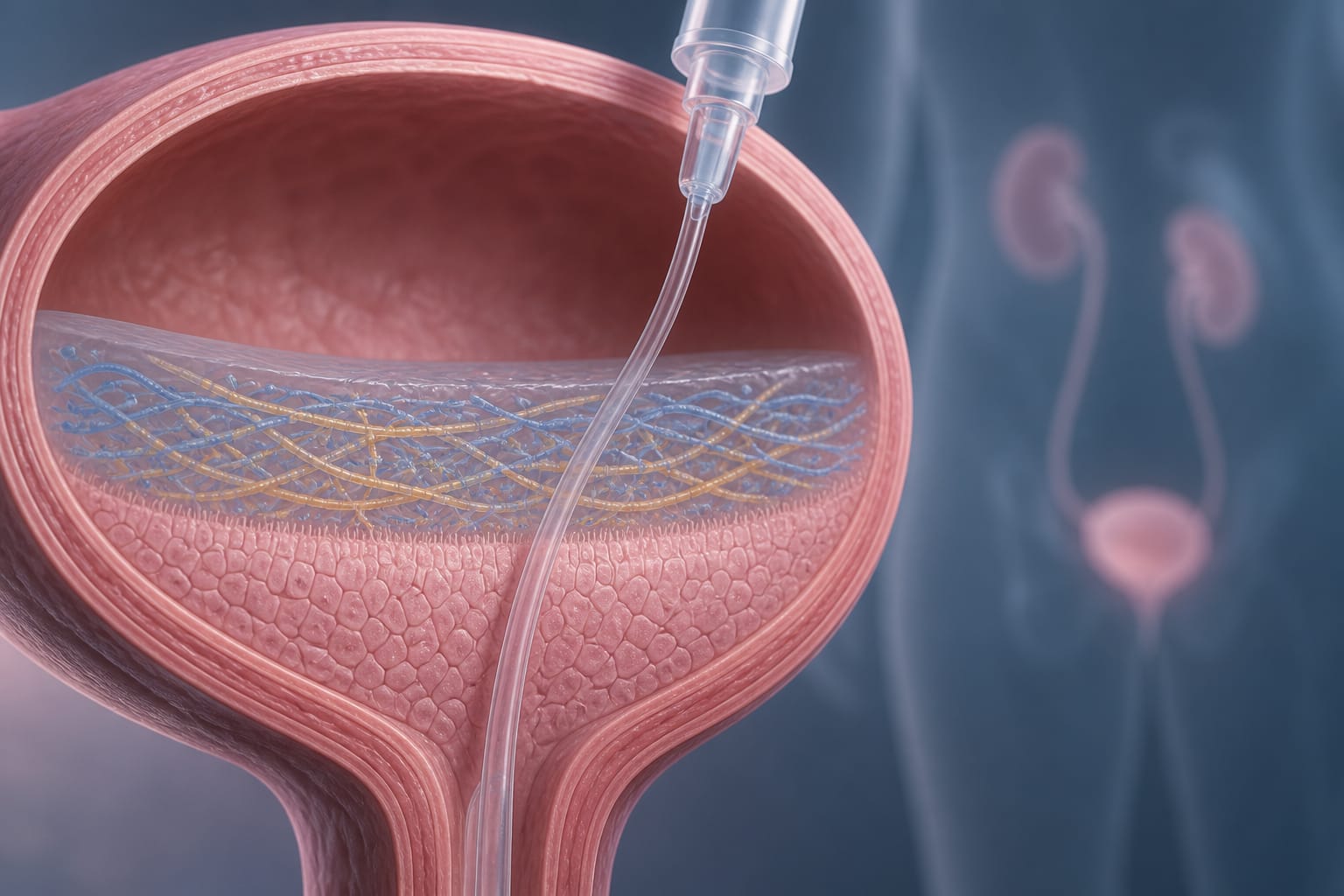
Intravesical replenishment of glycosaminoglycans (GAGs) using hyaluronic acid (HA) and chondroitin sulphate (CS) to restore the urothelial barrier and reduce bacterial adhesion.
Target Population
Women aged ≥18 years with recurrent urinary tract infections.
Care Setting
Urological practice across six Italian referral centers.
Key Highlights
140 women enrolled, divided into two treatment groups.
Both treatment protocols significantly reduced UTI recurrence over 12 months.
No significant difference in UTI frequency between the two groups (0.6 vs 0.7 episodes).
Improvements observed in urinary symptoms and pelvic pain.
No serious adverse events reported.
Guideline-Based Recommendations
Diagnosis
Recurrent urinary tract infections defined as two or more symptomatic episodes over six months or three episodes during one year with positive urine cultures.
Management
Intravesical administration of HA and CS as a non-antibiotic preventive strategy for r-UTIs.
Monitoring & Follow-up
Clinical evaluation, bladder diary, uroflowmetry, post-void residual, pelvic-pain VAS, urinalysis, urine culture, and ICIQ-FLUTS questionnaire at baseline and follow-ups.
Risks
Potential for antimicrobial resistance and adverse drug reactions with prolonged antibiotic use.
Patient & Prescribing Data
Women with recurrent urinary tract infections.
Two distinct intravesical instillation protocols were evaluated for safety and effectiveness.
Clinical Best Practices
Consider intravesical HA and CS for women with recurrent urinary tract infections.
Follow EAU guidelines for diagnosis and management of r-UTIs.