Quantitative multi-slice spiral CT perfusion parameters as predictors of collateral status and 90-day functional outcome in acute ischemic stroke - Scorecard - MDSpire
Conexiant’s news site is now MDSpire News. Learn more
Advertisement
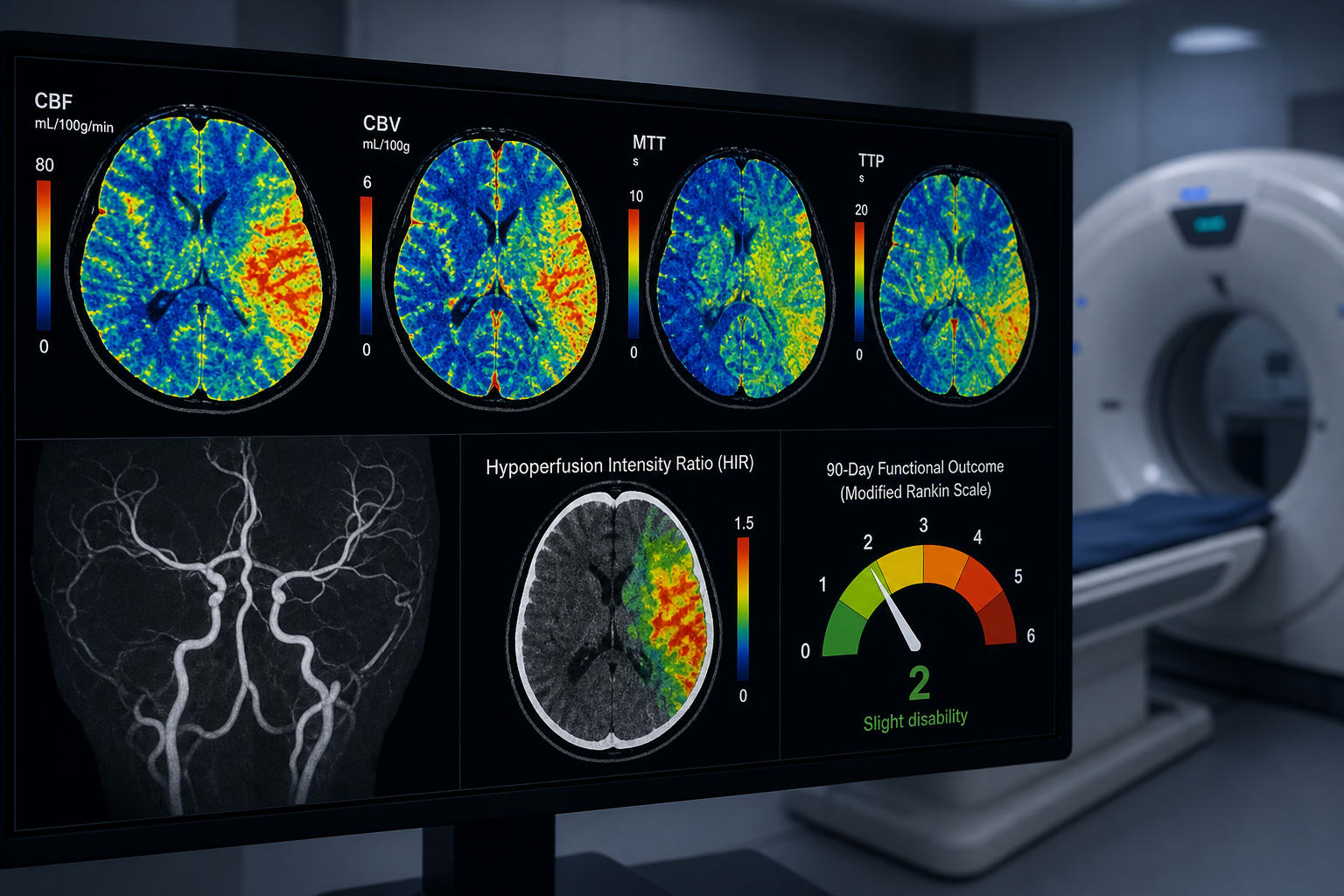
Assessment of Quantitative Multi-Slice Spiral CT Perfusion Metrics as Indicators of Collateral Circulation and 90-Day Functional Outcomes in Acute Ischemic Stroke
Clinical Scorecard: Assessment of Quantitative Multi-Slice Spiral CT Perfusion Metrics as Indicators of Collateral Circulation and 90-Day Functional Outcomes in Acute Ischemic Stroke
At a Glance
Category
Detail
Condition
Acute Ischemic Stroke
Key Mechanisms
Collateral circulation and perfusion metrics
Target Population
Patients with acute ischemic stroke undergoing perfusion imaging
Care Setting
Emergency department and neurology department
Key Highlights
Robust collateral circulation correlates with better perfusion metrics and outcomes.
Hypoperfusion intensity ratio (HIR) shows strong diagnostic performance for predicting outcomes.
Combined HIR, relative cerebral blood flow (rCBF), and Tmax model achieves high predictive accuracy.
Guideline-Based Recommendations
Diagnosis
Utilize multi-slice spiral CT perfusion imaging within 24 hours of symptom onset.
Management
Assess collateral circulation to inform treatment decisions, especially for endovascular thrombectomy.
Monitoring & Follow-up
Evaluate 90-day functional outcomes using the modified Rankin Scale.
Risks
Consider the risk of hemorrhagic transformation in patients with poor collateral flow.
Patient & Prescribing Data
Patients aged ≥ 18 years with clinical AIS diagnosis and confirmed intracranial artery occlusion.
Patients with robust collaterals experience less infarct core expansion and better outcomes.
Clinical Best Practices
Incorporate quantitative CTP parameters in acute stroke management.
Use HIR as a functional marker of collateral efficiency.