Differential roles of dopamine D1 and D2 receptors in pain modulation: a review
-
By
-
Minjie Huang
-
Xuejiao Li
-
Yingying Miao
-
Wenfeng Mao
-
Chenhao Xu
-
Mingxi Gu
-
May 28, 2026
Clinical Scorecard: Distinct Functions of Dopamine D1 and D2 Receptors in Pain Regulation: A Comprehensive Review
At a Glance
| Category | Detail |
|---|
| Condition | Chronic Pain |
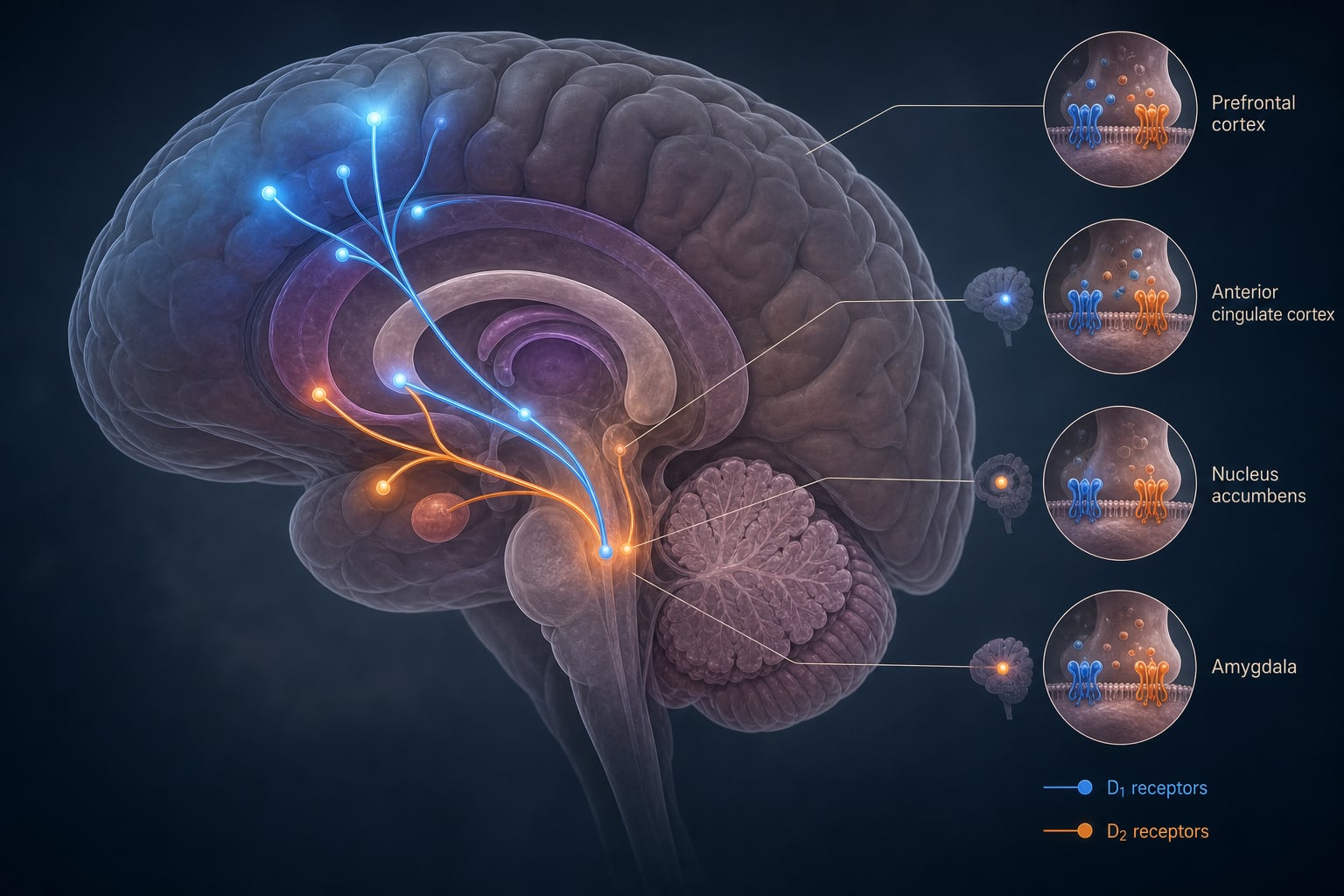
| Key Mechanisms | Dopamine D1 and D2 receptors modulate pain processing in specific brain regions. |
| Target Population | Patients with chronic pain and mood disorders. |
| Care Setting | Clinical pain management. |
Key Highlights
- D1R and D2R exhibit distinct and region-specific roles in pain regulation.
- D1R is implicated in pain signal integration and salience encoding in the PFC.
- D2R modulates inflammatory and neuropathic pain, as well as opioid synergy.
- Dopamine receptor targeting presents a novel strategy for pain management.
- Challenges remain in achieving precise treatment targeting specific regions.
Guideline-Based Recommendations
Diagnosis
- Evaluate the role of dopamine receptors in chronic pain conditions.
Management
- Consider dopamine receptor modulation as a non-opioid analgesic strategy.
Monitoring & Follow-up
- Assess neuroadaptations in brain regions associated with chronic pain.
Risks
- Monitor for potential opioid dependence in chronic pain patients.
Patient & Prescribing Data
Individuals with chronic pain and associated mood disorders.
Dopamine receptor modulation may enhance analgesia and reduce side effects.
Clinical Best Practices
- Integrate findings from multiple brain regions to understand pain modulation.
- Focus on the distinct roles of D1 and D2 receptors in pain management strategies.
Related Resources & Content