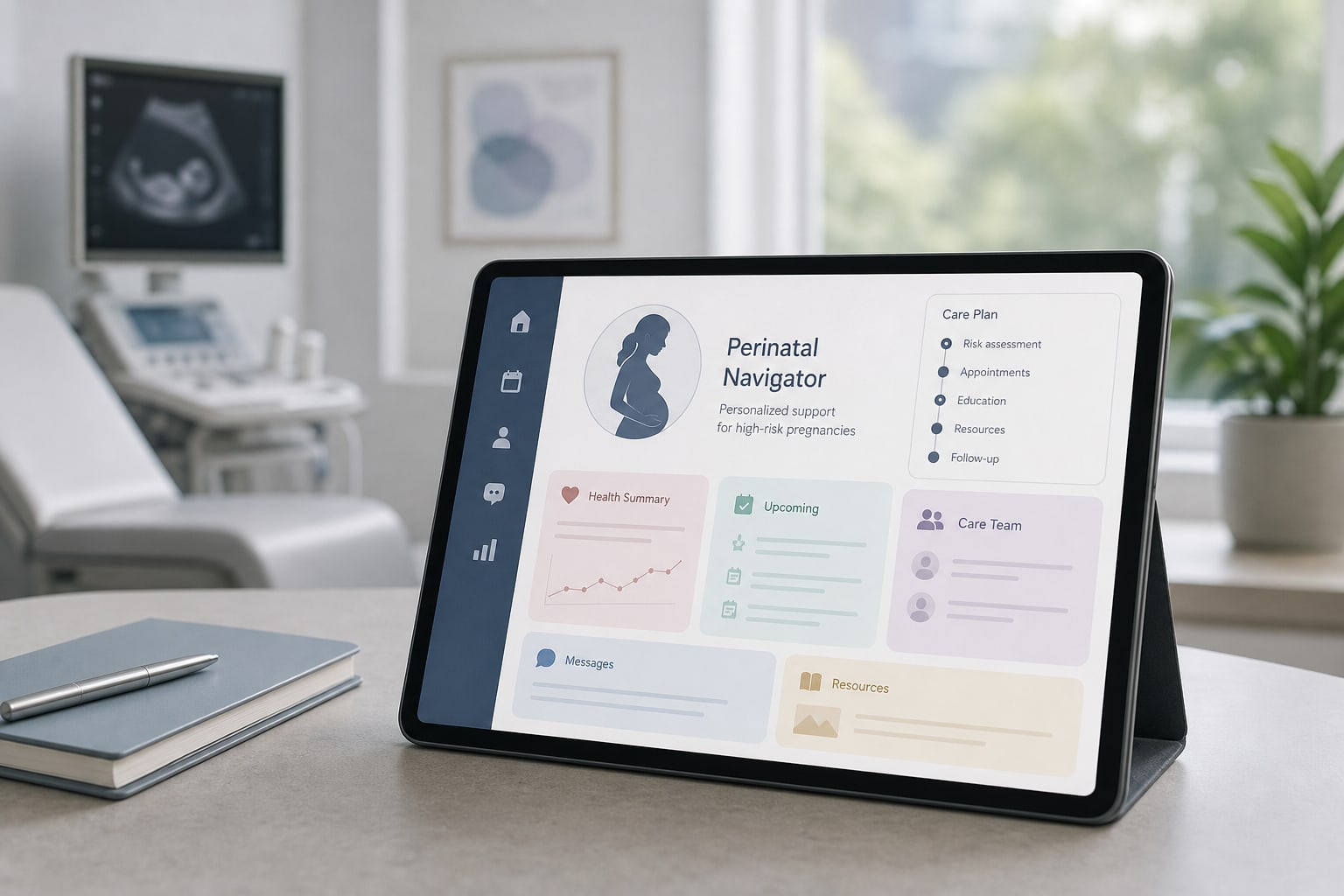
Clinical Scorecard: Assessing the Feasibility and Usability of a Digital Perinatal Navigation Tool for High-Risk Pregnancies: A Mixed-Methods Study
At a Glance
Category
Detail
Condition
Pregnancy-related mental health symptoms, obstetric complications, and pregnancy-related symptoms are discussed as factors associated with reduced quality of life.
Key Mechanisms
The introduction describes early identification of potential risks, intensified perinatal care, and targeted interventions as possible support approaches; it does not describe the digital tool’s mechanisms.
Target Population
Not specified in the supplied introduction.
Care Setting
Not specified in the supplied introduction.
Key Highlights
The introduction associates mental health symptoms, obstetric complications, and pregnancy-related symptoms with reduced quality of life during pregnancy.
The introduction reports depression in approximately 9.3% of pregnant individuals, anxiety in 16.9%, and at least one mental health disorder in up to 43.6%.
Antenatal depression is associated with elevated risks of preterm birth, low birth weight, and intrauterine growth restriction.
The introduction describes early risk identification, intensified perinatal care, and targeted interventions as potential support approaches.
The supplied excerpt contains background information but does not provide methods or findings about the digital tool’s feasibility or usability.
Guideline-Based Recommendations
Diagnosis
No diagnostic criteria or screening procedures are specified in the supplied introduction.
Management
The introduction states that early risk identification and intensified perinatal care may be important, and mentions targeted interventions; it does not provide a treatment protocol or guideline recommendation.
Monitoring & Follow-up
No monitoring schedule or specific measures are provided in the supplied introduction.
Risks
The introduction associates antenatal depression with elevated risks of preterm birth, low birth weight, and intrauterine growth restriction.
The introduction states that prenatal depression and anxiety can impair children’s socioemotional development.
Patient & Prescribing Data
The supplied introduction does not specify eligibility criteria or the population enrolled in the digital tool study.
The introduction mentions evidence-based support mechanisms, intensified perinatal care, and targeted interventions, but provides no medication, dosing, or tool-specific treatment details.
Clinical Best Practices
The introduction describes early identification of potential risks as a possible approach; it does not specify a screening procedure.
The introduction describes intensified perinatal care as a possible approach for identified risks; no care pathway is provided.
The introduction associates mental health symptoms and obstetric complications with maternal well-being and child outcomes; it does not state a clinical practice recommendation.
by Michelle Foerstel, Kristina Killinger, Mitho Mueller, Verena Engel, Katrin Schlobohm, Anna Sophie Scholz, Maren Goetz, Armin Bauer, Markus Wallwiener, Michael Abou-Dakn, Dorothea Scholle, Ekkehard Schleussner, Stephanie Wallwiener