Risk score for esophageal and gastric cancer in the over 50-year-old population based on self-reported information –the RISC-GAP project - Scorecard - MDSpire
Advertisement
Risk score for esophageal and gastric cancer in the over 50-year-old population based on self-reported information –the RISC-GAP project
Clinical Scorecard: Development of a Risk Assessment Tool for Esophageal and Gastric Cancer in Individuals Aged 50 and Above Utilizing Self-Reported Data – The RISC-GAP Initiative
At a Glance
Category
Detail
Condition
Esophageal and Gastric Cancer
Key Mechanisms
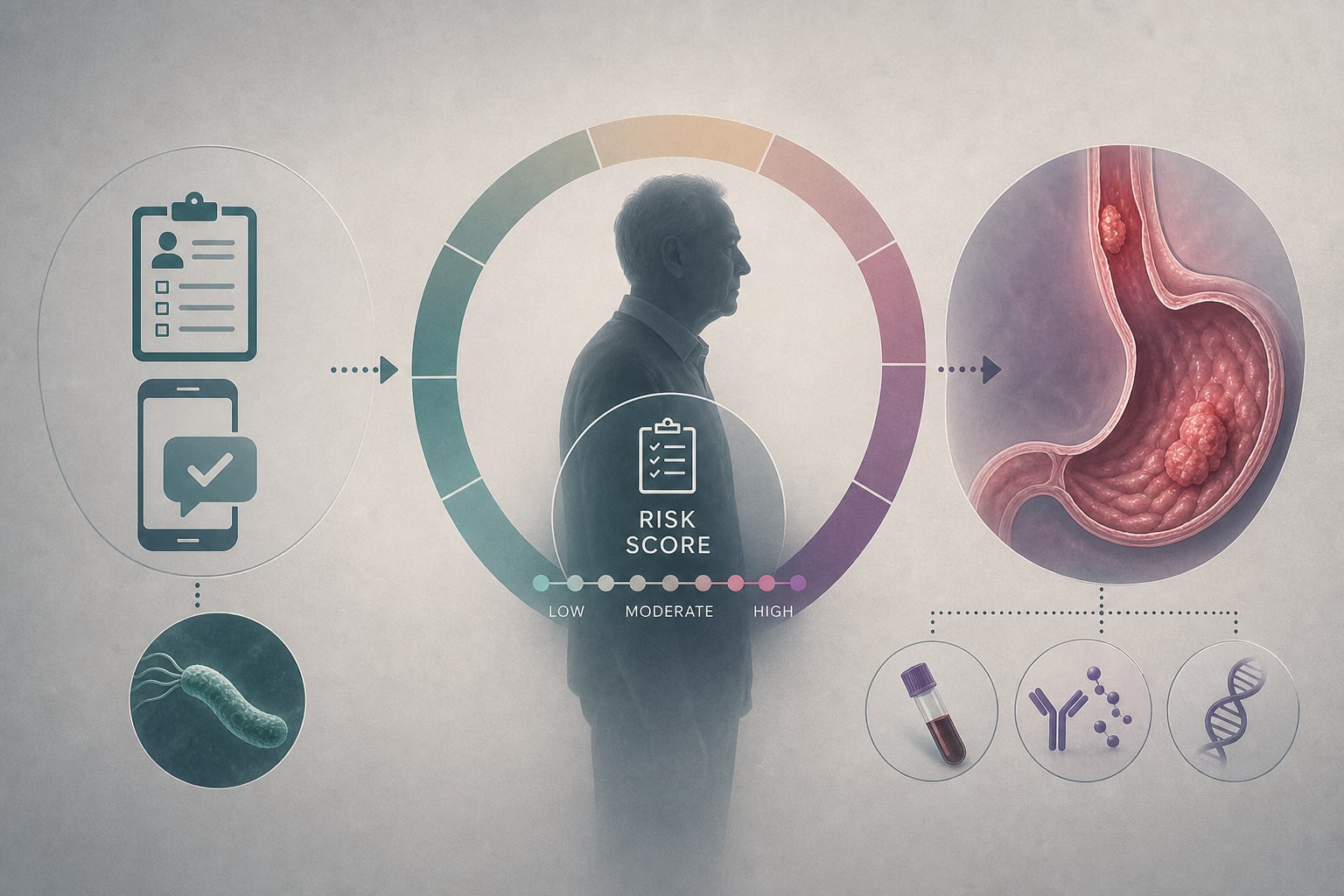
Risk assessment based on self-reported data and predictive biomarkers.
Target Population
Individuals aged 50 and above.
Care Setting
Population-based screening program.
Key Highlights
Gastric and esophageal cancer are significant health threats, particularly in older adults.
The RISC-GAP initiative aims to develop a risk score for identifying high-risk individuals.
Data from the UK Biobank was utilized to create a risk score based on self-reported information.
Helicobacter pylori infection is a key risk factor for gastric cancer.
A systematic preventive care program for GEC is currently lacking in Germany.
Guideline-Based Recommendations
Diagnosis
Utilize ICD-10 codes for gastric (C16) and esophageal cancer (C15) for diagnosis.
Management
Implement risk-adapted screening programs for high-risk individuals.
Monitoring & Follow-up
Follow-up on participants for cancer diagnosis and mortality.
Risks
Consider the complications associated with endoscopic screening.
Patient & Prescribing Data
Individuals aged 50 and above without prevalent gastric or esophageal cancer.
Focus on biomarker testing for individuals identified as high risk.
Clinical Best Practices
Encourage early detection and treatment of gastric and esophageal cancers.
Utilize self-reported data for risk assessment in screening programs.
Consider the implementation of targeted screening rather than general population screening.