Conexiant’s news site is now MDSpire News. Learn more
Advertisement
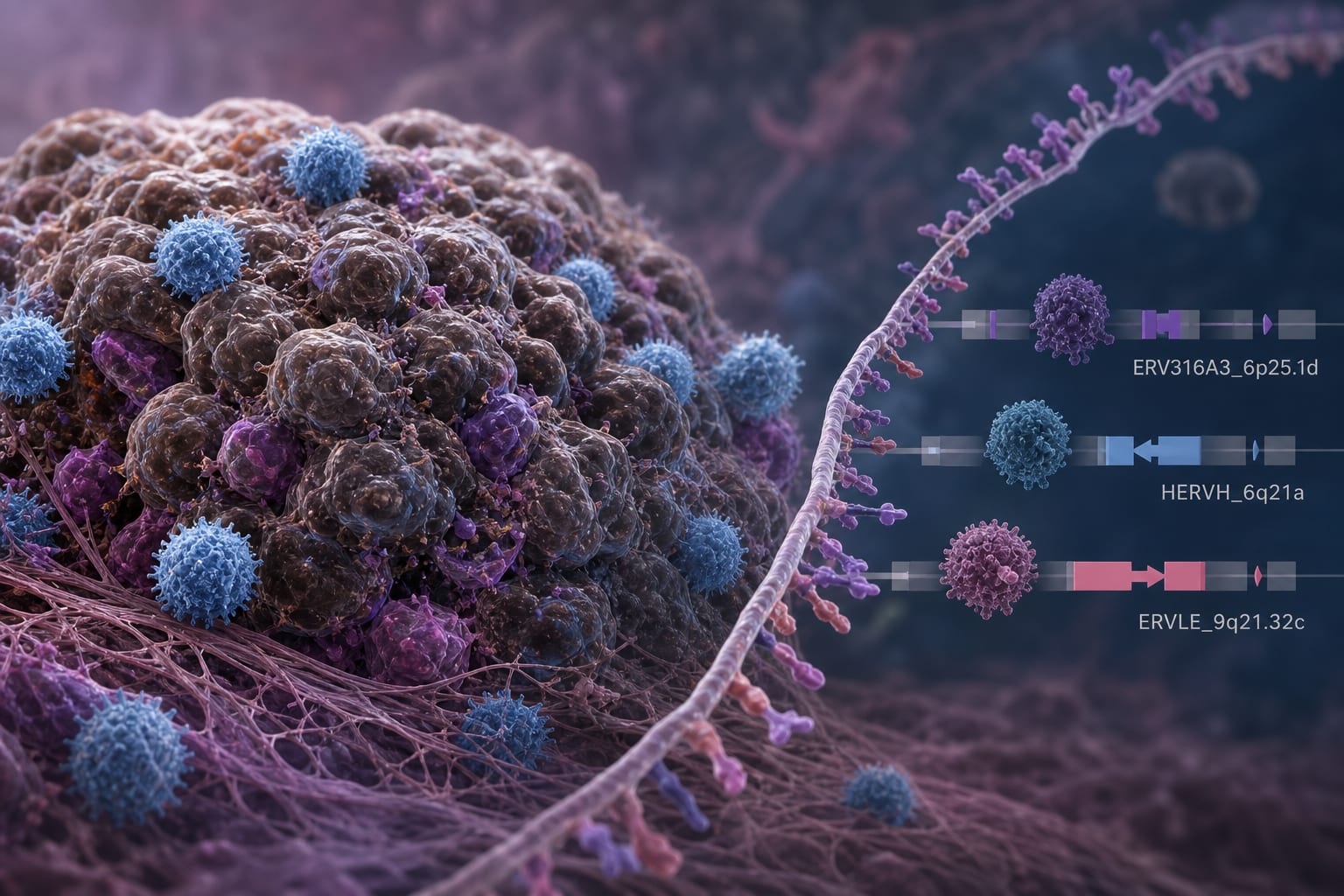
Identification of Aggressive Acral Melanoma Phenotype with Depleted NK Cells and Resistance to Checkpoint Inhibition through Locus-Specific HERV Expression
Clinical Scorecard: Identification of Aggressive Acral Melanoma Phenotype with Depleted NK Cells and Resistance to Checkpoint Inhibition through Locus-Specific HERV Expression
At a Glance
Category
Detail
Condition
Acral Melanoma
Key Mechanisms
Depleted NK cells, locus-specific HERV expression
Target Population
Patients with acral melanoma
Care Setting
Oncology
Key Highlights
Acral melanoma exhibits a distinct molecular profile and poor responses to immune checkpoint inhibitors.
A three-locus HERV signature stratifies AM tumors by overall survival.
High-risk tumors show depletion of NK cells and elevated LIN28A and HMGA2.
Reduced odds of response to immune checkpoint inhibitors in high-risk tumors.
Potential for HERV-K antigens as immunotherapeutic targets.
Guideline-Based Recommendations
Diagnosis
Utilize RNA sequencing to assess locus-specific TE expression in acral melanoma.
Management
Consider the HERV signature for prognostic evaluation and treatment planning.
Monitoring & Follow-up
Monitor NK cell levels and HERV expression as potential indicators of tumor aggressiveness.
Risks
High-risk tumors are associated with poor response to immune checkpoint inhibitors.
Patient & Prescribing Data
Patients diagnosed with acral melanoma.
Immune checkpoint inhibitors may have limited efficacy in high-risk acral melanoma.
Clinical Best Practices
Integrate molecular profiling with clinical outcomes for personalized treatment strategies.
Evaluate the immunosuppressive tumor microenvironment in acral melanoma patients.