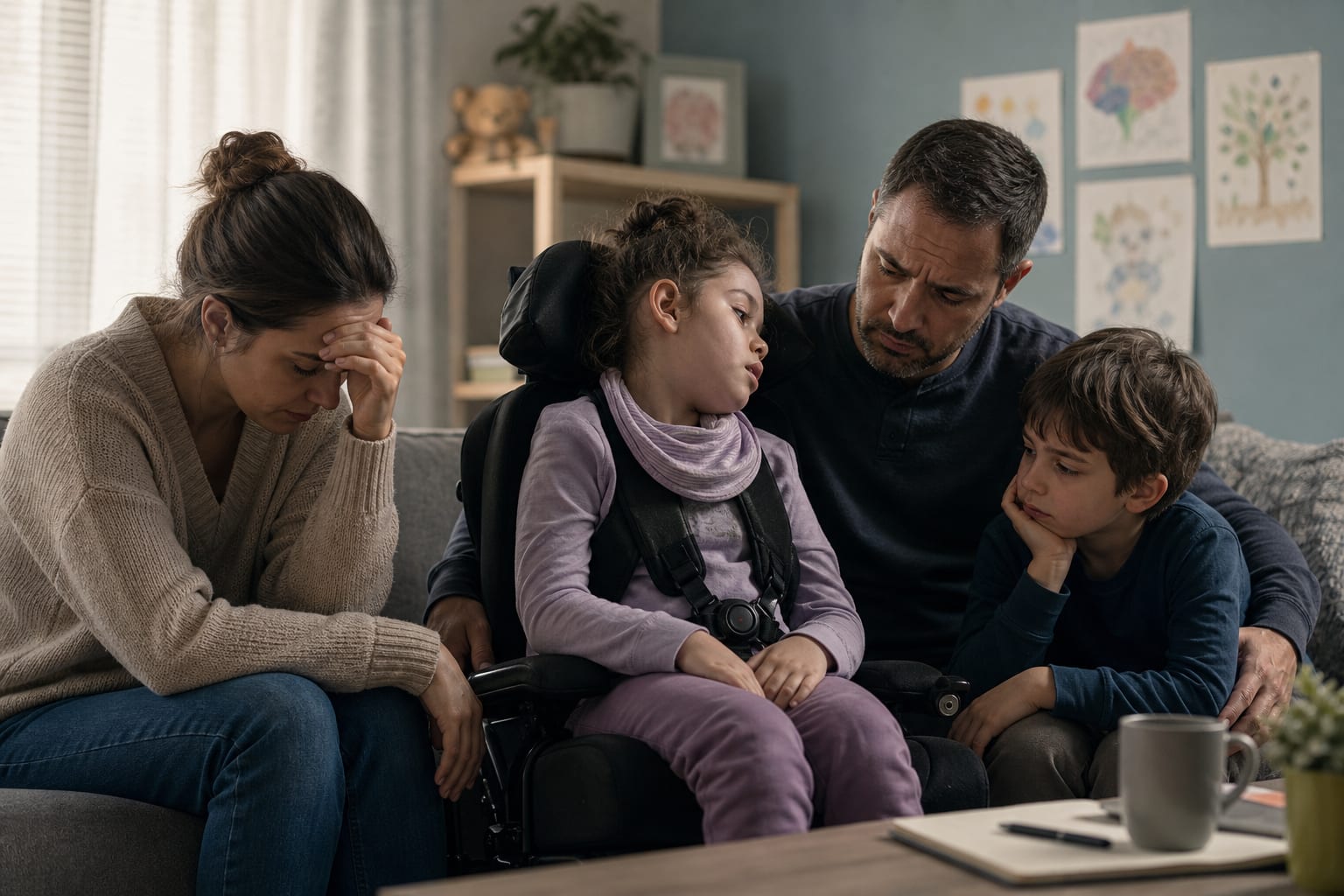
The Emotional and Psychological Effects of Pediatric Movement Disorders on Families: A Concise Overview
-
By
-
Hanin AlGethami
-
June 5, 2026
Clinical Scorecard: The Emotional and Psychological Effects of Pediatric Movement Disorders on Families: A Concise Overview
At a Glance
| Category | Detail |
|---|
| Condition | |
| Key Mechanisms | Chronic stress, anxiety, depression, and physical health strain in caregivers (source needed). |
| Target Population | |
| Care Setting | |
Key Highlights
- Caregivers experience significant emotional and physical health challenges (source needed).
- Supportive factors include peer networks and multidisciplinary care (source needed).
- Coping strategies are influenced by sociocultural contexts (source needed).
- A family-centered questionnaire for movement disorders is under development (source needed).
- Caregiver experiences vary based on disorder type and complexity (source needed).
Guideline-Based Recommendations
Diagnosis
- Recognize the psychological impact of pediatric movement disorders on families (source needed).
Management
- Implement individualized support approaches for caregivers (source needed).
Monitoring & Follow-up
- Assess caregiver emotional well-being regularly (source needed).
Risks
- Caregivers face increased risk of chronic stress, anxiety, and depression (source needed).
Patient & Prescribing Data
Multidisciplinary care and psychological counseling are beneficial (source needed).
Clinical Best Practices
- Utilize family-centered assessment approaches (source needed).
- Incorporate evidence-based coping strategies (source needed).
- Facilitate community integration for affected families (source needed).
Related Resources & Content