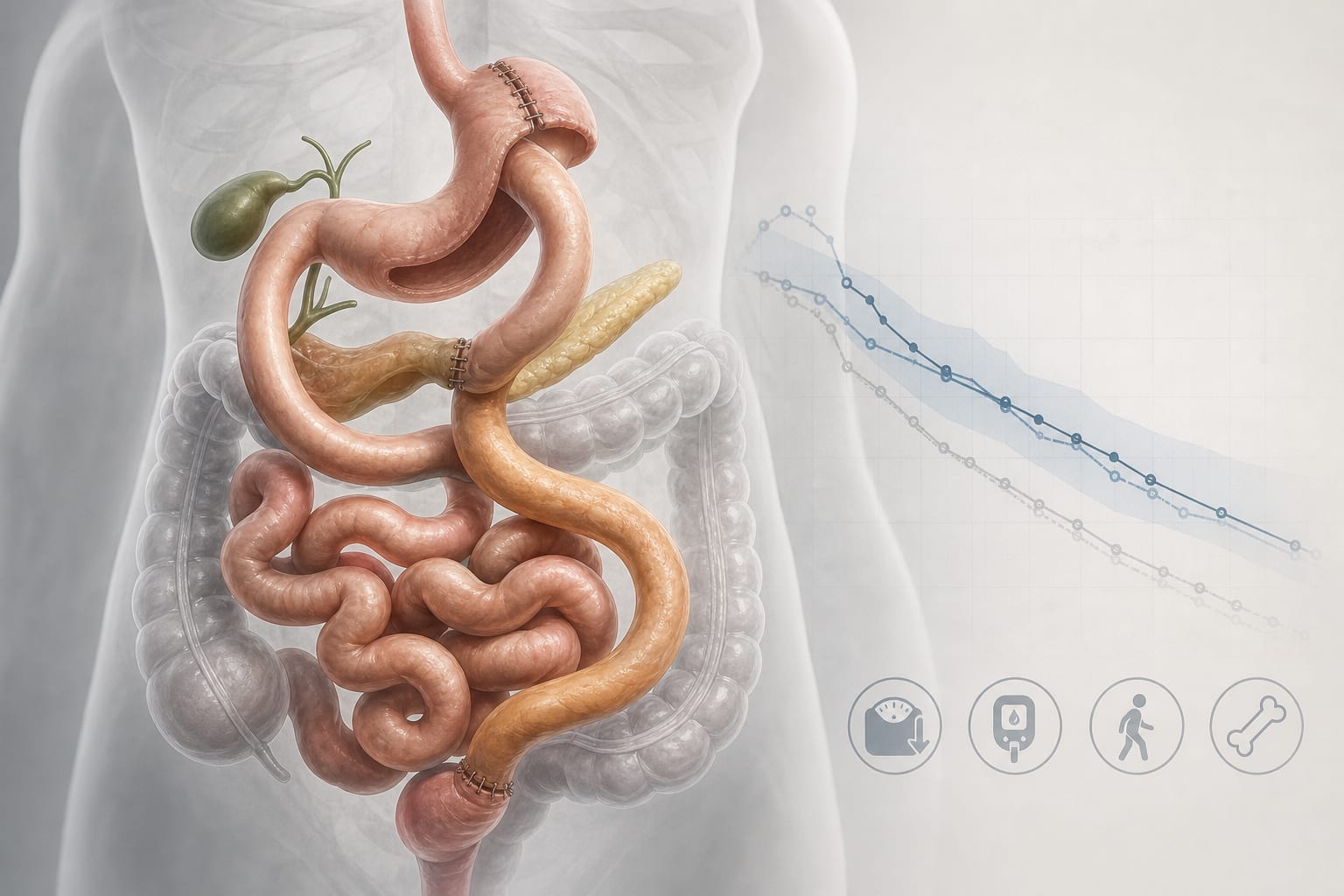
Reevaluating Hypoabsorptive Bariatric Surgery: An In-Depth Analysis of Long-Term Results and Clinical Considerations
Clinical Scorecard: Reevaluating Hypoabsorptive Bariatric Surgery: An In-Depth Analysis of Long-Term Results and Clinical Considerations
At a Glance
| Category | Detail |
|---|
| Condition | Obesity and metabolic comorbidities |
| Key Mechanisms | Hypoabsorption and intestinal adaptation phenomena |
| Target Population | Patients with severe obesity and metabolic comorbidities |
| Care Setting | Bariatric surgery centers |
Key Highlights
- Hypoabsorptive procedures constitute less than 3% of bariatric operations in the US.
- Long-term weight loss outcomes show hypoabsorptive surgery superior to RYGB and sleeve gastrectomy.
- Complications are more pronounced in frail patients, particularly those with older age and greater comorbidity burden.
- Diabetes remission rates are high post-hypoabsorptive surgery, with 92.8% for DS and 85.7% for SADI-S.
- Nutritional complications increase progressively over time, with significant rates by 30 years post-surgery.
Guideline-Based Recommendations
Diagnosis
- Assess obesity and metabolic comorbidities for surgical candidacy.
Management
- Consider hypoabsorptive procedures for patients with severe obesity and metabolic disorders.
Monitoring & Follow-up
- Regular follow-up for nutritional complications and metabolic status.
Risks
- Higher complication rates in frail patients, particularly with older age and lower nutritional reserves.
Patient & Prescribing Data
Patients with severe obesity and associated metabolic conditions.
Hypoabsorptive surgery offers durable weight loss and metabolic benefits but carries risks of long-term complications.
Clinical Best Practices
- Evaluate patient frailty and comorbidities before surgery.
- Monitor for nutritional deficiencies and complications postoperatively.
- Utilize long-term follow-up data to inform patient management.
Related Resources & Content