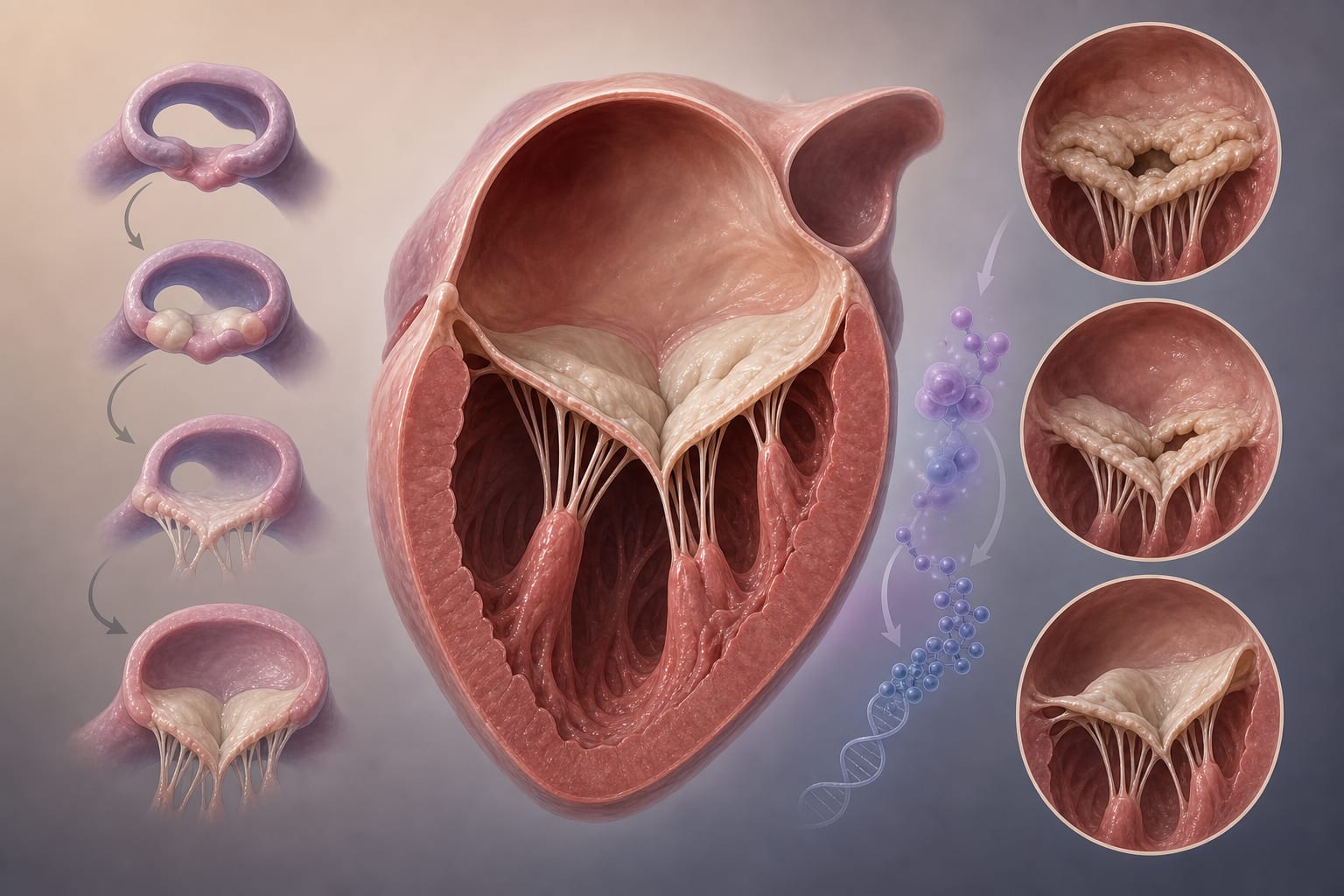
Commentary: Mechanisms of mitral valve development and disease
By
Giulio Calcagni
Flaminia Pugnaloni
Paolo Versacci
Bruno Marino
June 23, 2026
Clinical Scorecard: Insights into the Developmental Mechanisms and Pathologies of the Mitral Valve
At a Glance
Category Detail
Condition Mitral Valve Disease Key Mechanisms Embryologic mechanisms, endothelial injury, inflammatory pathways, genetic predisposition. Target Population Patients with rheumatic mitral stenosis, congenital mitral stenosis, myxomatous mitral valve prolapse, and genetic syndromes. Care Setting Clinical assessment of mitral valve abnormalities in congenital and syndromic contexts.
Key Highlights
Three major mitral phenotypes: rheumatic mitral stenosis, congenital mitral stenosis, myxomatous mitral valve prolapse. Role of Sonic Hedgehog signalling in atrioventricular canal formation and associated cardiac defects. Mitral valve abnormalities recognized in genetic syndromes such as Down syndrome and RASopathies. Mitral leaflet elongation in hypertrophic cardiomyopathy as a primary phenotypic expression. Collagenopathies highlight heterogeneous developmental pathways leading to mitral pathology. Guideline-Based Recommendations
Diagnosis
Consider genetic syndromes in patients with mitral valve abnormalities. Management
Monitor mitral valve function in patients with associated genetic conditions. Monitoring & Follow-up
Regular echocardiographic evaluation for mitral valve structure and function. Risks
Increased risk of mitral valve disease in patients with genetic syndromes. Patient & Prescribing Data
Patients with mitral valve disease associated with genetic syndromes.
Management strategies should consider the underlying genetic and developmental context.
Clinical Best Practices
Integrate developmental biology insights into clinical assessments of mitral valve disease. Utilize echocardiography to evaluate mitral valve abnormalities in syndromic patients. Collaborate with genetic specialists for comprehensive management of patients with mitral valve disease. Related Resources & Content