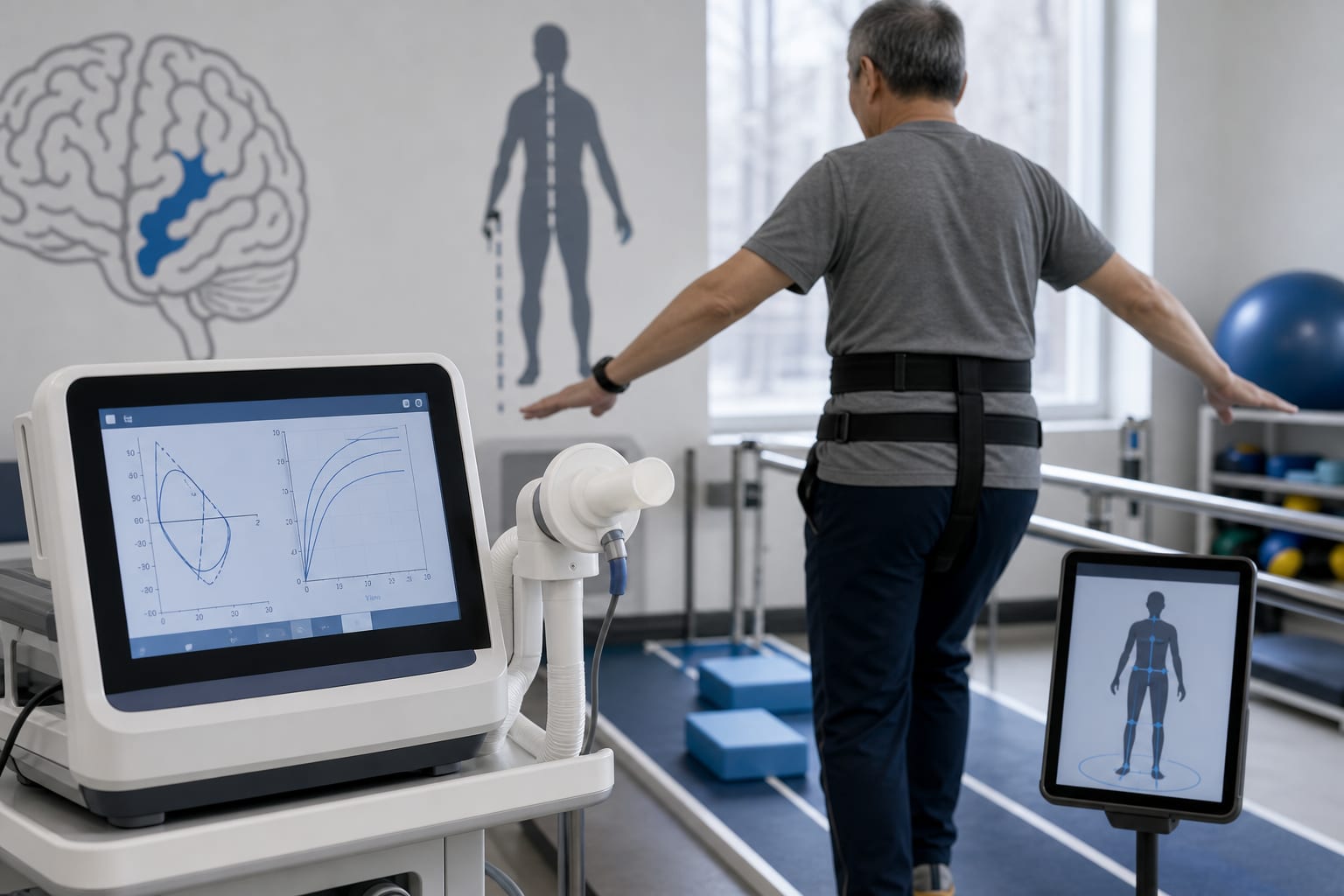
Association between pulmonary function and balance, motor function, and trunk stability in stroke survivors
-
By
-
Shuai Guo
-
Anming Hu
-
Yumei Zhang
-
June 18, 2026
-
Clinical Scorecard: Relationship of Lung Function with Balance, Motor Skills, and Trunk Stability in Individuals Who Have Survived a Stroke
At a Glance
| Category | Detail |
|---|
| Condition | Stroke |
| Key Mechanisms | Pulmonary function affects balance, motor skills, and trunk stability. |
| Target Population | Individuals who have survived a stroke, aged 18-80, within 3 months post-stroke. |
| Care Setting | Rehabilitation Medicine Department |
Key Highlights
- Positive correlations between pulmonary function parameters and balance/motor function scores.
- PEF% showed the strongest correlation with trunk stability.
- Integration of pulmonary assessment into stroke rehabilitation is recommended.
Guideline-Based Recommendations
Diagnosis
- Assess pulmonary function using VC%, FEV1%, PEF%, and other parameters.
Management
- Incorporate pulmonary screening into multidisciplinary stroke rehabilitation.
Monitoring & Follow-up
- Monitor balance and motor function alongside pulmonary metrics.
Risks
- Lower pulmonary function may contribute to impaired rehabilitation outcomes.
Patient & Prescribing Data
Stroke survivors with unilateral lower-limb motor impairment.
Respiratory training may improve both lung function and functional outcomes.
Clinical Best Practices
- Conduct comprehensive assessments of pulmonary function in stroke rehabilitation.
- Utilize objective measures of balance and motor function in conjunction with pulmonary metrics.
Related Resources & Content