Integrating Multifocal Scleral Lenses for Discontented GP Users - Scorecard - MDSpire
Advertisement
Integrating Multifocal Scleral Lenses for Discontented GP Users
Explore a transformative case where multifocal scleral lenses enhance comfort and vision for a long-term GP lens user, as discussed by Dr. Daniel Helin.
Clinical Scorecard: Integrating Multifocal Scleral Lenses for Discontented GP Users
At a Glance
Category
Detail
Condition
Discomfort and unsatisfactory near vision in long-term gas permeable (GP) lens wearers with keratoconus and dry eye disease
Key Mechanisms
Use of multifocal scleral lenses to improve comfort, stability, and functional vision by addressing lens dislodgement and near vision deficits
Target Population
Long-term GP lens wearers with keratoconus, dry eye disease, and dissatisfaction with near vision and lens stability
Care Setting
Specialty contact lens clinics with access to scleral lens fitting and follow-up
Key Highlights
Multifocal scleral lenses provide improved comfort and stability compared to corneal GP lenses in patients with keratoconus and dry eye.
Quadrant-specific haptics in scleral lens design can reduce lens decentration and posterior tear film debris.
Adjusting the near optical zone in multifocal scleral lenses aids neuroadaptation and optimizes near vision without compromising distance vision.
Guideline-Based Recommendations
Diagnosis
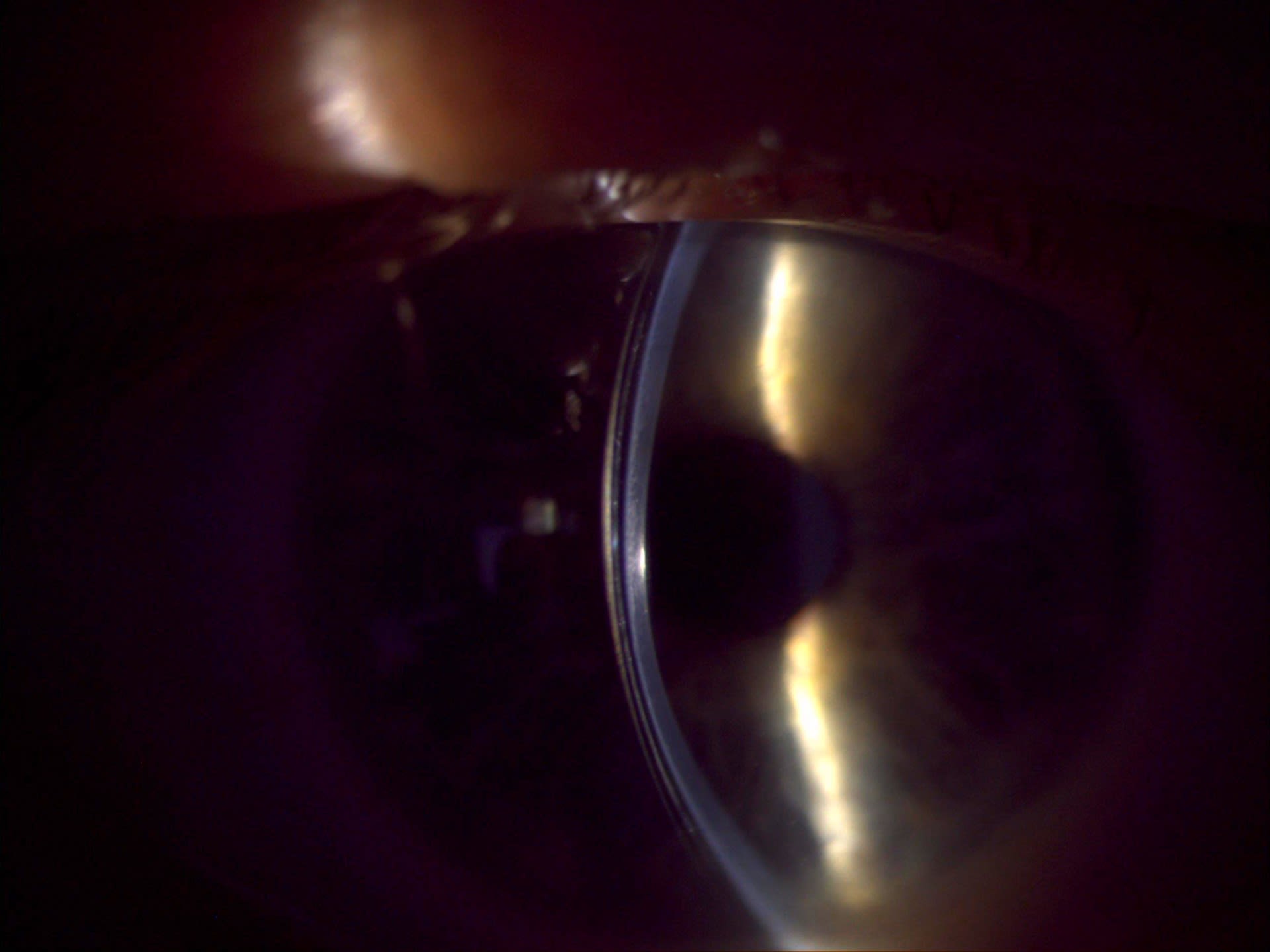
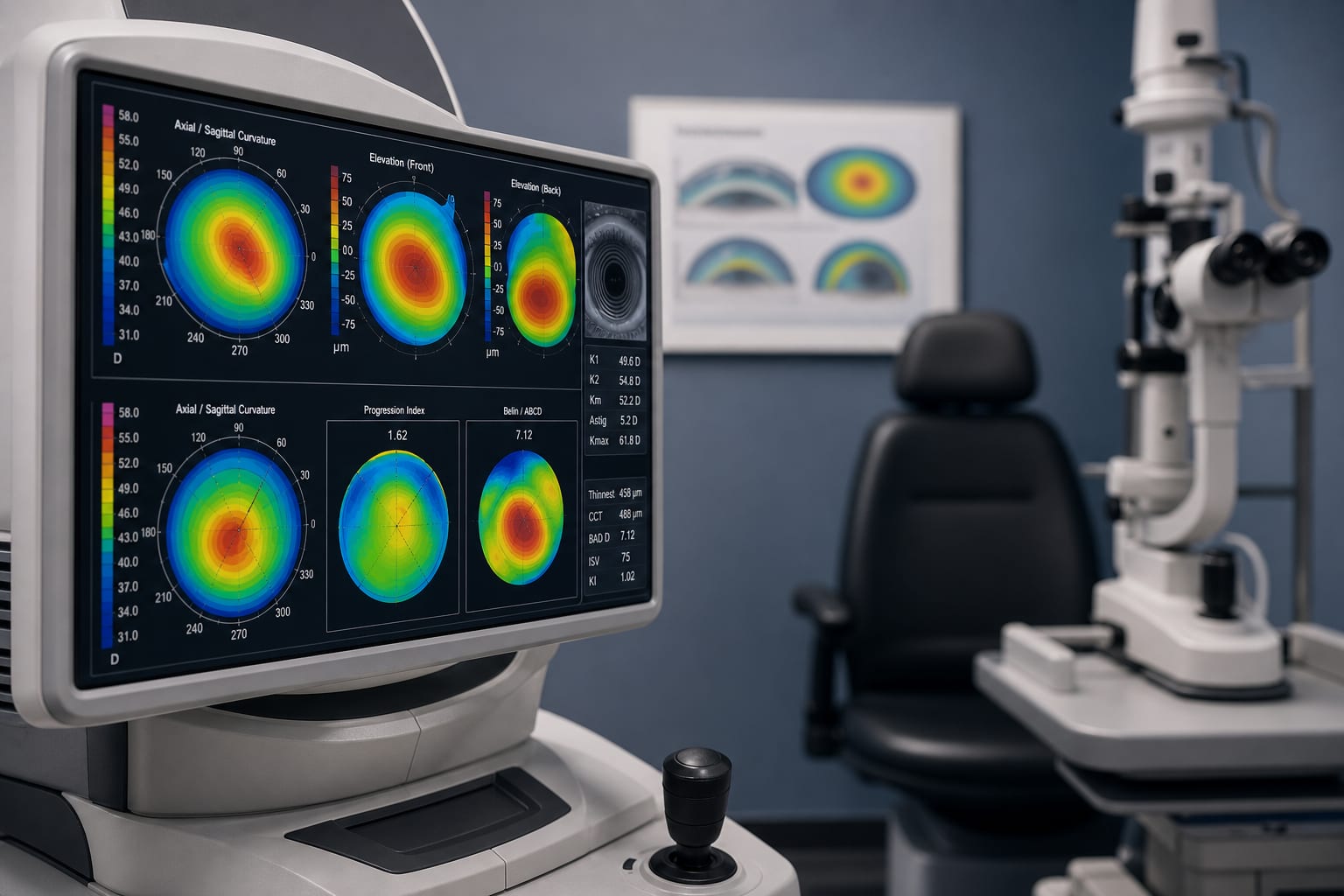
Perform tomography scans and manifest refraction to assess ocular status and refractive error.
Evaluate patient history for dry eye disease, lens dislodgement, and near vision complaints.
Management
Trial fitting of scleral lenses to assess comfort and stability improvements over GP lenses.
Use quadrant-specific haptics to customize lens fit and reduce decentration.
Consider multifocal scleral lenses for patients seeking improved near vision without reading glasses.
Adjust near optical zone in multifocal lenses based on patient adaptation and visual needs.
Monitoring & Follow-up
Follow up to assess comfort, lens stability, and visual acuity at distance, intermediate, and near.
Monitor for posterior tear film debris and lens fogging; adjust fit as needed.
Counsel patients on neuroadaptation period for multifocal lenses and manage expectations.
Risks
Potential lens decentration causing tear film debris and fogging.
Adaptation difficulties with multifocal lenses, especially for near vision.
Patient & Prescribing Data
53-year-old male with keratoconus, dry eye disease, and 25-year history of RGP lens use
Multifocal scleral lenses improved comfort and stability immediately; near vision improved after adjusting near optical zone and neuroadaptation, achieving 20/20-2 distance and J1 near vision.
Clinical Best Practices
Engage in detailed patient counseling regarding multifocal scleral lens adaptation and realistic visual outcomes.
Customize scleral lens fit using quadrant-specific haptics to enhance comfort and reduce complications.
Perform over-refraction after trial fitting to optimize near addition power.
Schedule regular follow-ups to monitor lens fit, comfort, and visual performance.