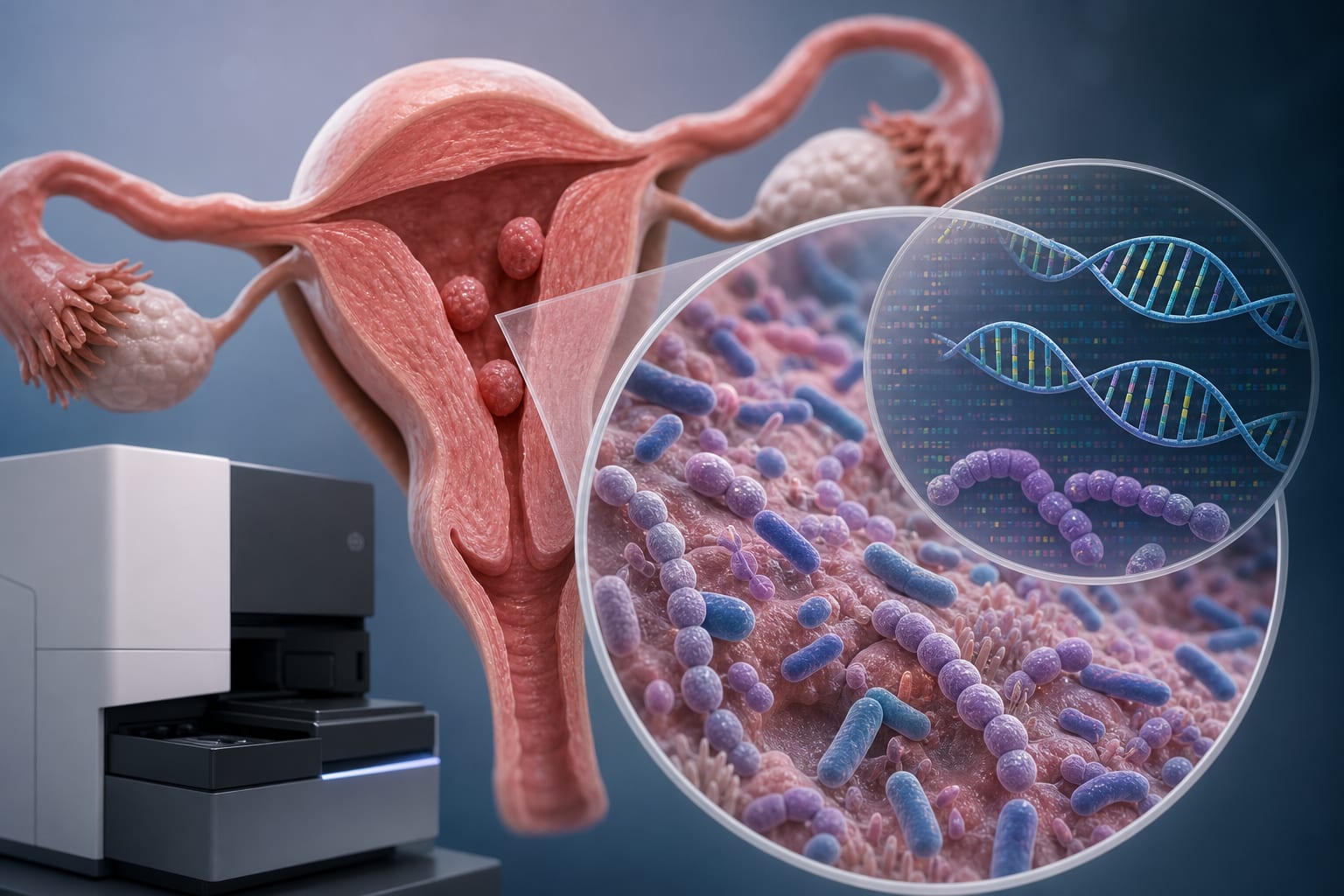
Characteristics in the uterine cavity microbiota of infertile women with hydrosalpinx or endometrial polyps revealed by shotgun metagenomics
By
ShuZhen Li
Huifeng Zeng
Xiulin Wan
Zhiruo Chen
Xia Nong
Lisi Peng
Qingyang Li
Yuxia Wang
July 2, 2026
Clinical Scorecard: Analysis of Uterine Cavity Microbiota in Infertile Women with Hydrosalpinx or Endometrial Polyps through Shotgun Metagenomics
At a Glance
Category Detail
Condition Infertility due to Endometrial Polyps and Hydrosalpinx
Key Mechanisms Dysbiosis of uterine cavity microbiota impacting reproductive health
Target Population Infertile women under 38 years of age undergoing IVF or ICSI
Care Setting Center for Reproductive Medicine
Key Highlights
Higher microbial alpha diversity in fertile controls compared to EM and HD groups EM group showed dysbiosis with elevated pathogenic bacteria, particularly Streptococcus HD group exhibited reduced microbial load and increased Streptococcus Study identifies distinct microbial profiles for EM and HD Microbiota may serve as a potential biomarker for infertility
Guideline-Based Recommendations
Diagnosis
Utilize shotgun metagenomic sequencing for comprehensive characterization of uterine microbiota
Management
Consider microbiota-targeted interventions for infertility associated with EM and HD
Monitoring & Follow-up
Assess microbial profiles in the uterine cavity for changes during treatment
Risks
Increased risk of infertility due to dysbiosis in EM and HD
Patient & Prescribing Data
Infertile women with EM or HD undergoing IVF or ICSI
Oral administration of doxycycline for chronic endometritis treatment
Clinical Best Practices
Conduct thorough screening for gynecological conditions prior to IVF or ICSI Implement strict sterile conditions during sample collection
Related Resources & Content