BCOR-CCNB3 fusion–positive sarcoma treated with chemotherapy and carbon-ion radiotherapy: a case report of long-term disease control of a cervical spine case with a 12-year follow-up - Scorecard - MDSpire
Conexiant’s news site is now MDSpire News. Learn more
Advertisement
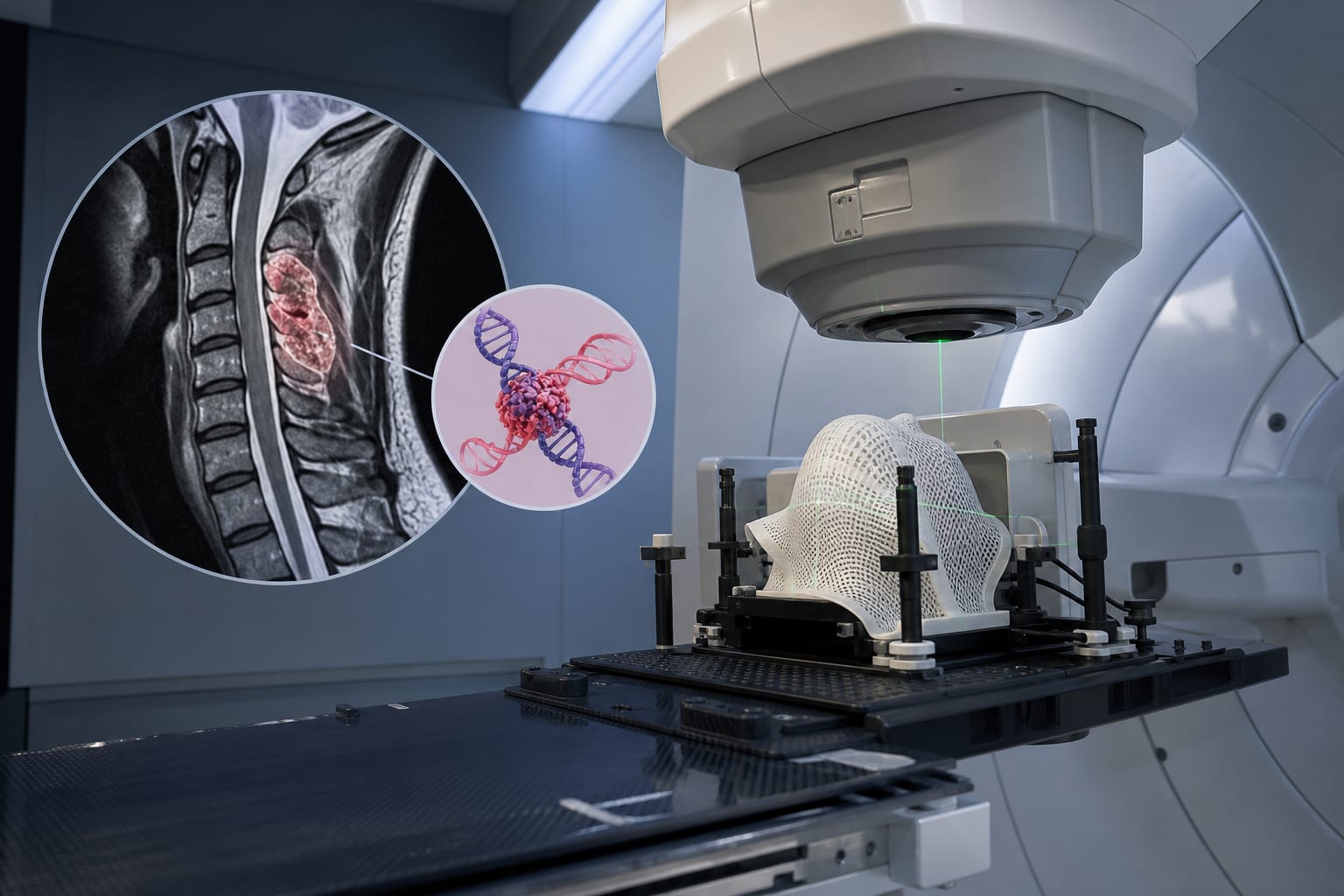
Management of BCOR-CCNB3 Fusion-Positive Sarcoma with Chemotherapy and Carbon-Ion Radiotherapy: A Case Study Highlighting Long-Term Disease Control in a Cervical Spine Patient Over 12 Years
Clinical Scorecard: Management of BCOR-CCNB3 Fusion-Positive Sarcoma with Chemotherapy and Carbon-Ion Radiotherapy: A Case Study Highlighting Long-Term Disease Control in a Cervical Spine Patient Over 12 Years
At a Glance
Category
Detail
Condition
BCOR–CCNB3 fusion-positive sarcoma (BCS)
Key Mechanisms
Characterized by BCOR–CCNB3 gene fusion resulting from a paracentric inversion on chromosome X.
Target Population
Predominantly children and adolescents.
Care Setting
Multimodal approach including chemotherapy and radiotherapy.
Key Highlights
Initial treatment followed protocols for Ewing sarcoma.
Systemic chemotherapy resulted in tumor shrinkage.
Carbon-ion radiotherapy (CIRT) achieved durable local control.
Patient remained asymptomatic without neurological deficits over 12 years.
An updated clinical practice guideline from the American Society for Radiation Oncology substantially expands and modernizes recommendations for the use of radiation therapy in pancreatic cancer.