Higher admission serum total carbon dioxide is independently associated with early seizure recurrence in children with benign convulsions with mild gastroenteritis - Scorecard - MDSpire
Conexiant’s news site is now MDSpire News. Learn more
Advertisement
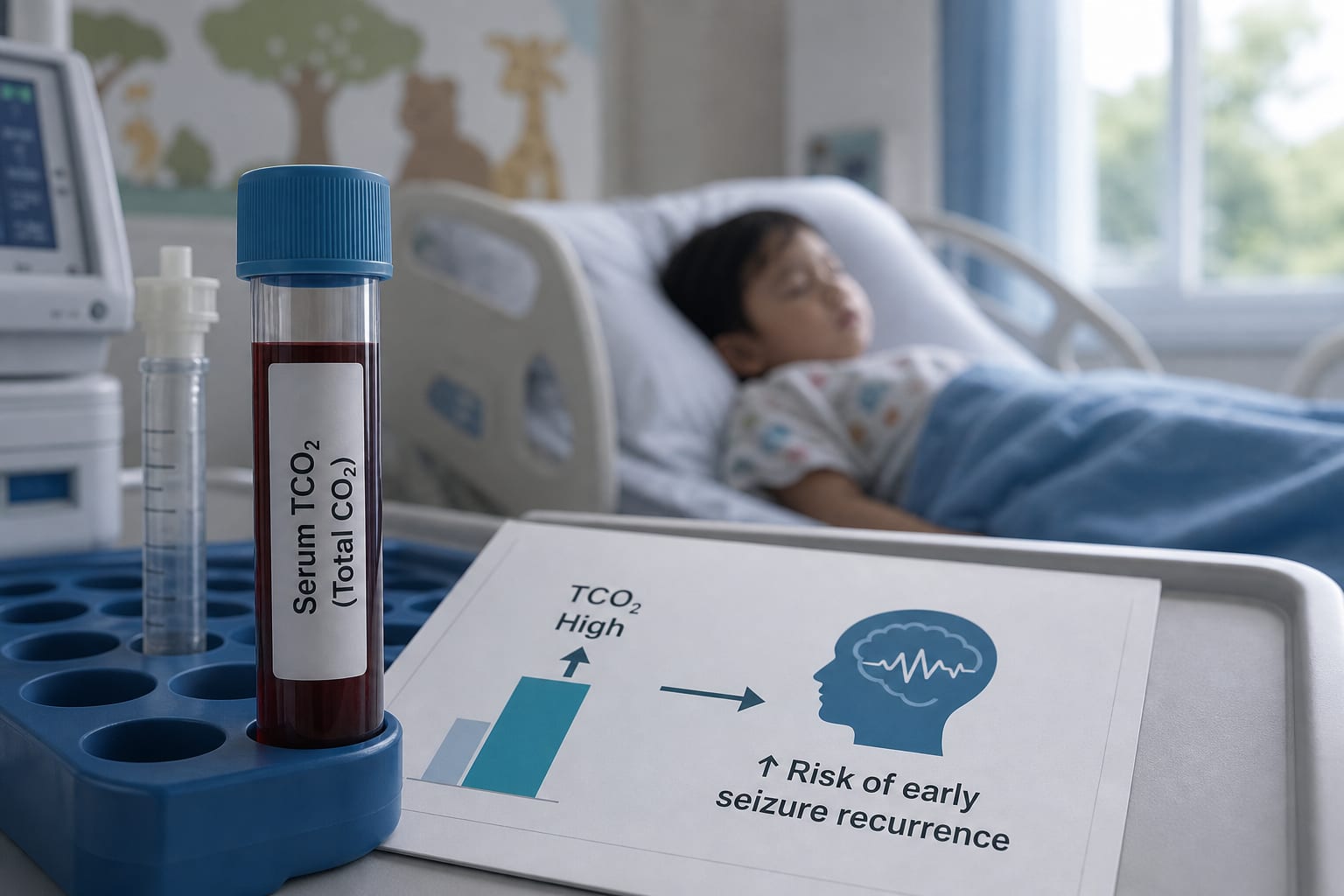
Elevated serum total carbon dioxide levels at admission are linked to increased risk of early seizure recurrence in pediatric patients with benign convulsions associated with mild gastroenteritis
Clinical Scorecard: Elevated serum total carbon dioxide levels at admission are linked to increased risk of early seizure recurrence in pediatric patients with benign convulsions associated with mild gastroenteritis
At a Glance
Category
Detail
Condition
Benign convulsions associated with mild gastroenteritis (CwG)
Key Mechanisms
Higher admission serum total carbon dioxide (TCO2) levels are associated with increased risk of seizure recurrence.
Target Population
Children aged 6 months to 6 years diagnosed with CwG.
Care Setting
Tertiary care institution
Key Highlights
26.7% of children experienced seizure recurrence within 48 hours.
Median TCO2 was significantly higher in the recurrence group (17.4 vs. 15.1 mmol/L).
Higher TCO2 levels were independently associated with recurrence (odds ratio 1.235).
A TCO2 cutoff of 16.25 mmol/L showed 78.3% sensitivity and 61.9% specificity.
Strong correlation between venous TCO2 and arterial bicarbonate (r = 0.966).
Guideline-Based Recommendations
Diagnosis
Diagnosis of CwG based on clinical criteria and exclusion of other causes.
Management
Consider monitoring intensity based on admission TCO2 levels.
Monitoring & Follow-up
Observe children with higher TCO2 levels closely for seizure recurrence.
Risks
Younger age and higher TCO2 levels are associated with increased risk of recurrence.
Patient & Prescribing Data
Children aged 6 months to 6 years with benign convulsions and mild gastroenteritis.
Anticonvulsant use may be considered based on clinical assessment and TCO2 levels.
Clinical Best Practices
Utilize TCO2 as a readily accessible biomarker for risk stratification.
Conduct further validation in prospective cohorts.