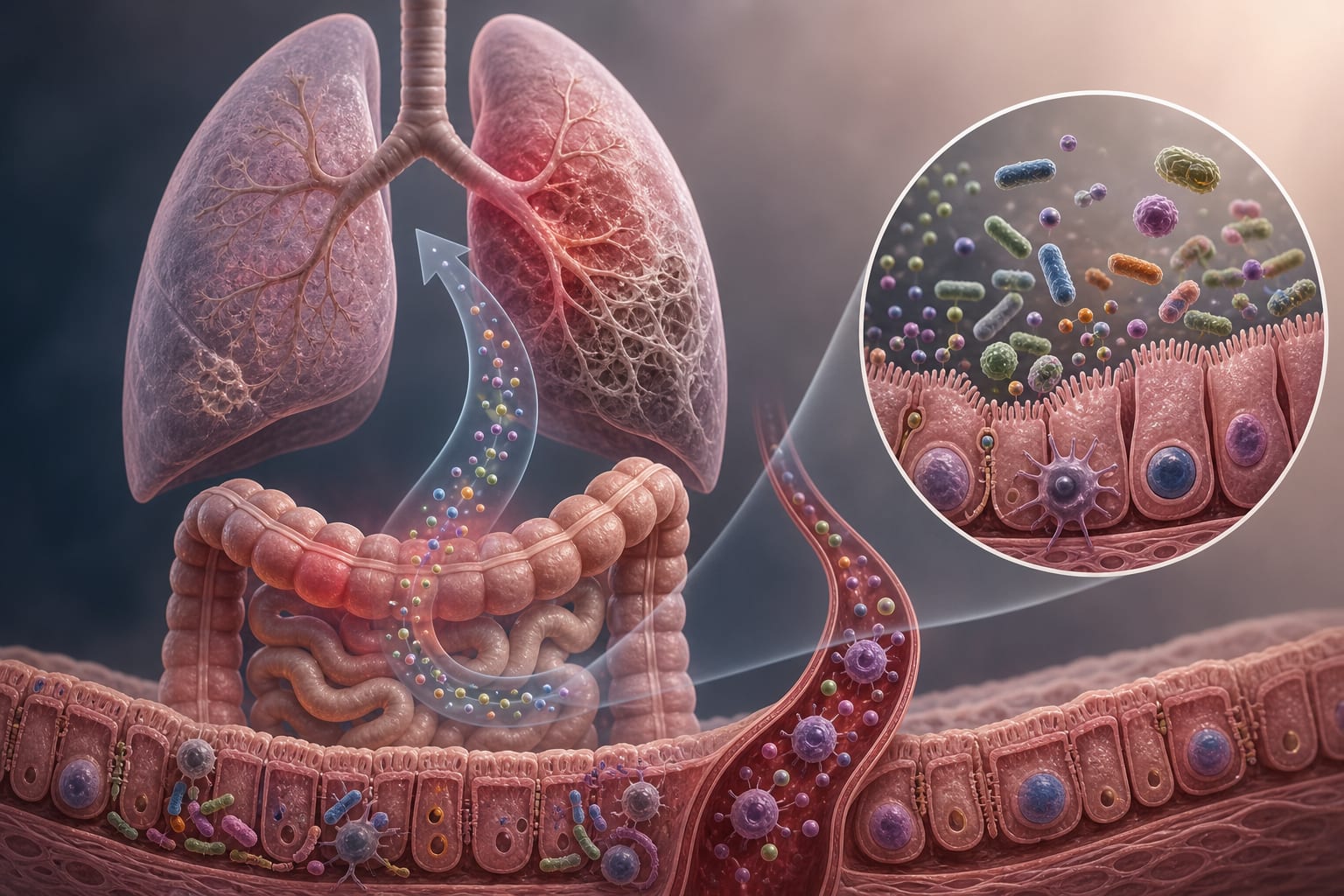
Gut–lung axis in radiation-induced lung injury: mechanisms and interventions
By
Ping Zhou
Xiao Jiang
Haiyan Zhang
Shizheng Jiang
Xiaotao Zhang
Chengtai Ma
Xiaoshuai Bai
July 2, 2026
Clinical Scorecard: The Role of the Gut–Lung Microbiota Axis in Lung Injury Caused by Radiation: Mechanisms and Treatment Strategies
At a Glance
Category Detail
Condition Radiation-induced lung injury (RILI) Key Mechanisms Gut dysbiosis, inflammation, and fibrosis pathways (TLR4/NF-κB, TGF-β/Smad, S1P–S1PR, cGAS–STING) Target Population Patients undergoing thoracic radiotherapy for malignancies Care Setting Oncology and radiotherapy
Key Highlights
RILI includes acute radiation pneumonitis (RP) and chronic radiation-induced pulmonary fibrosis (RPF). Gut microbiota stability is associated with the risk of grade ≥2 RP. Phase-specific interventions such as gut microbiota monitoring and SCFA supplementation have been explored. Proton therapy may reduce the risk of RILI compared to photon-based radiotherapy. Future RCTs are needed to establish causality in gut-lung interactions. Guideline-Based Recommendations
Diagnosis
Monitor for symptoms of RP and RPF in patients receiving thoracic radiotherapy. Management
Glucocorticoids are first-line treatment for symptomatic RP. Monitoring & Follow-up
Assess gut microbiota stability and metabolites as potential biomarkers. Risks
Concurrent chemotherapy and baseline interstitial lung disease elevate the risk of RILI. Patient & Prescribing Data
Patients with non-small cell lung cancer and other thoracic malignancies receiving radiotherapy.
Antifibrotics have limited benefit for established RPF.
Clinical Best Practices
Consider microbiota modulation strategies in vulnerable patients. Utilize advanced radiotherapy techniques to minimize lung exposure. Related Resources & Content