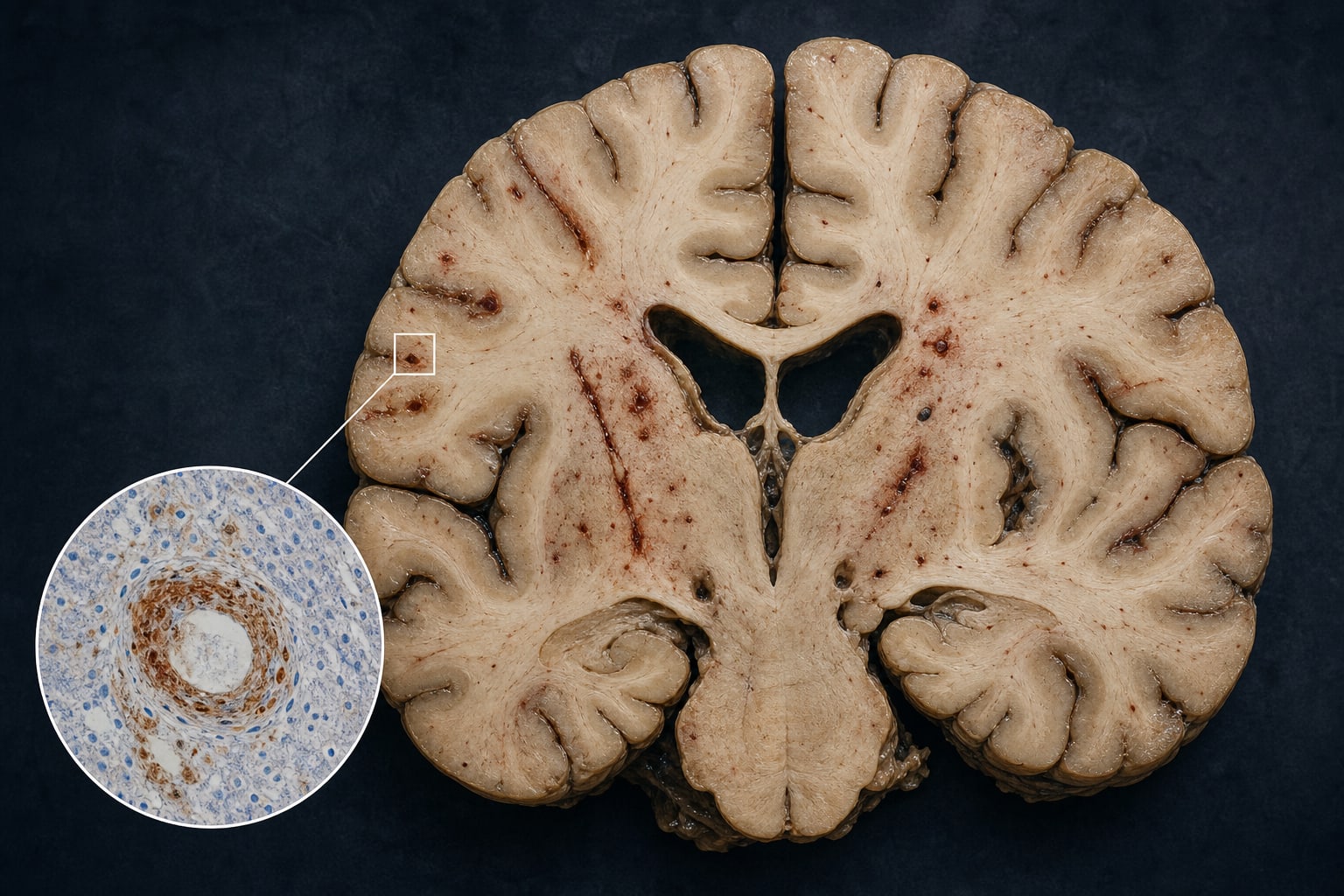
High-Level Alzheimer Disease Neuropathological Change Following Iatrogenic Exposure
-
By
-
Gargi Banerjee
-
Tze How Mok
-
Harpreet Hyare
-
Oliver Cousins
-
Zane Jaunmuktane
-
Simon Mead
-
John Collinge
-
May 1, 2026
-
Clinical Scorecard: Neuropathological Changes in Alzheimer Disease Induced by Iatrogenic Factors
At a Glance
| Category | Detail |
|---|
| Condition | Iatrogenic Alzheimer Disease (iAD) |
| Key Mechanisms | Self-propagating assemblies of misfolded proteins, particularly amyloid-β (Aβ), associated with iatrogenic factors. |
| Target Population | Patients treated with cadaveric pituitary-derived human growth hormone (c-hGH). |
| Care Setting | National Prion Clinic and associated healthcare facilities. |
Key Highlights
- Iatrogenic cerebral amyloid angiopathy (iCAA) and parenchymal Aβ pathology reported in c-hGH recipients.
- Clinical iCAA typically presents with intracerebral hemorrhage decades post-procedure.
- Compelling association between specific c-hGH preparations and early-onset AD.
- Novel condition, iAD, may differ from sporadic and inherited AD.
- Limited neuropathology available showed only mild tauopathy.
Guideline-Based Recommendations
Diagnosis
- Consider iAD in patients with a history of c-hGH treatment presenting with cognitive decline.
Management
- Monitor for symptoms of cognitive impairment and neurological deficits in treated individuals.
Monitoring & Follow-up
- Longitudinal follow-up in the National Prion Monitoring Cohort for individuals at risk.
Risks
- Increased risk of intracerebral hemorrhage in recipients of cadaveric pituitary hormones.
Patient & Prescribing Data
Individuals previously treated with cadaveric pituitary hormones.
Symptoms may develop decades after treatment, necessitating long-term monitoring.
Clinical Best Practices
- Obtain informed consent for genetic testing and tissue use for research.
- Conduct thorough postmortem examinations with appropriate ethical approvals.
- Utilize advanced immunostaining techniques for neuropathological assessment.
References