SARS-CoV-2-host and interactions: the dual roles of E3 ubiquitin ligases and ubiquitin-like modification mechanisms in viral infection - Scorecard - MDSpire
Conexiant’s news site is now MDSpire News. Learn more
Advertisement
Interactions Between SARS-CoV-2 and Host Cells: The Critical Functions of E3 Ubiquitin Ligases and Ubiquitin-Like Modification Pathways in Viral Pathogenesis
Clinical Scorecard: Interactions Between SARS-CoV-2 and Host Cells: The Critical Functions of E3 Ubiquitin Ligases and Ubiquitin-Like Modification Pathways in Viral Pathogenesis
At a Glance
Category
Detail
Condition
Key Mechanisms
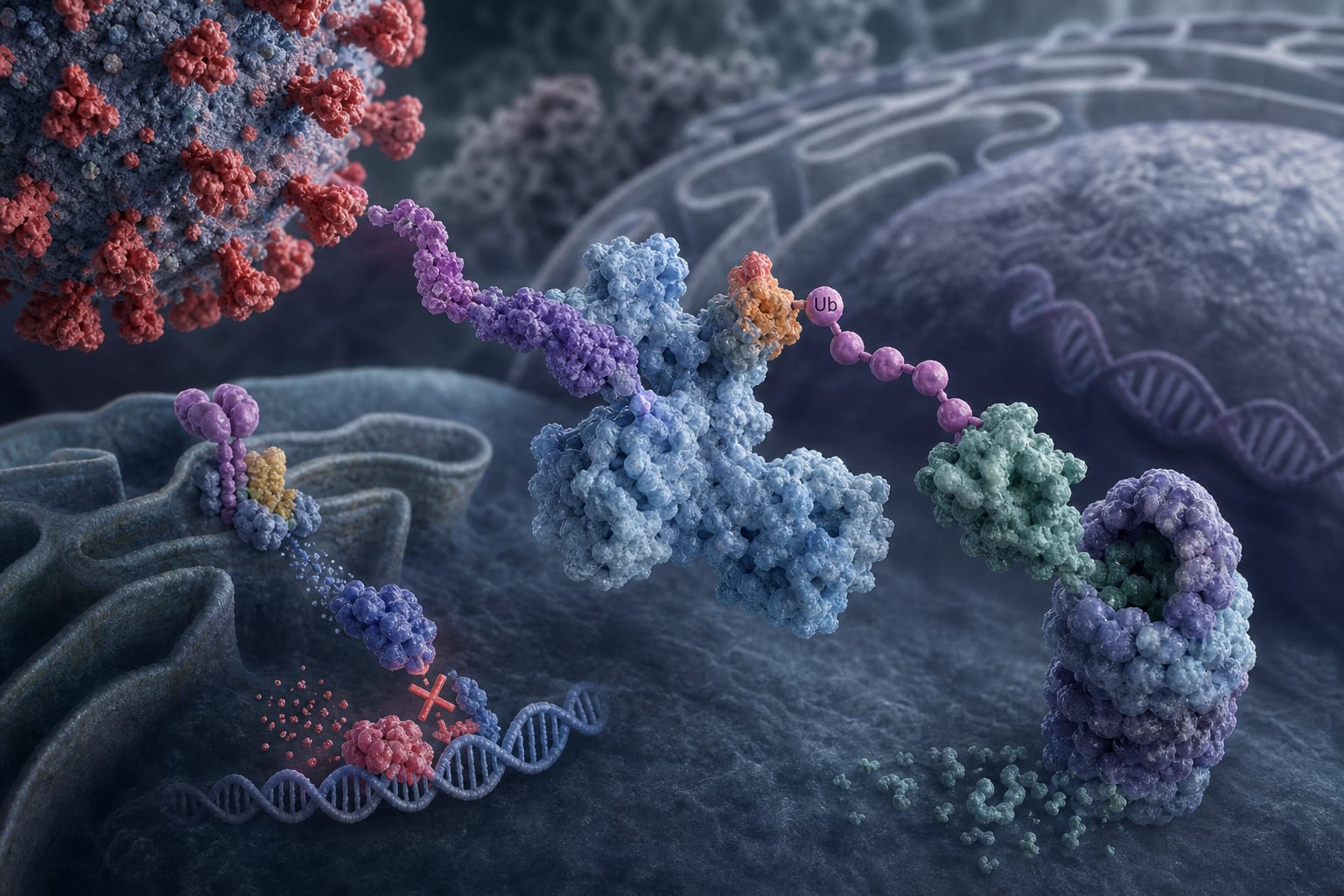
E3 ubiquitin ligases regulate viral replication, immune evasion, and apoptosis through ubiquitination, with specific examples like MARCH8 and RNF5.
Target Population
Care Setting
Key Highlights
E3 ubiquitin ligases are crucial in the interplay between SARS-CoV-2 and host immune responses.
Viral proteins can hijack host E3 enzymes to inhibit interferon production.
Differential expression of E3 ligases affects COVID-19 severity and symptoms.
E3 ligases may serve as therapeutic targets for antiviral strategies.
Understanding E3 ligase interactions can inform host-directed therapies.
Targeting E3 ligases carries risks of immune dysregulation.
Guideline-Based Recommendations
Diagnosis
Management
Monitoring & Follow-up
Risks
Excessive inhibition of E3 ligases may lead to immune dysregulation.
Careful monitoring of E3 ligase activity is essential to avoid adverse effects.
Patient & Prescribing Data
Patients with COVID-19 and Long COVID.
Targeting E3 ligases may provide novel therapeutic avenues.
Clinical Best Practices
Investigate the role of E3 ligases in individual patient responses to SARS-CoV-2.
Utilize E3 ligase modulation as a potential strategy for restoring antiviral immune balance.
Understand the spatiotemporal specificity of E3 ligases to tailor patient-specific therapies.