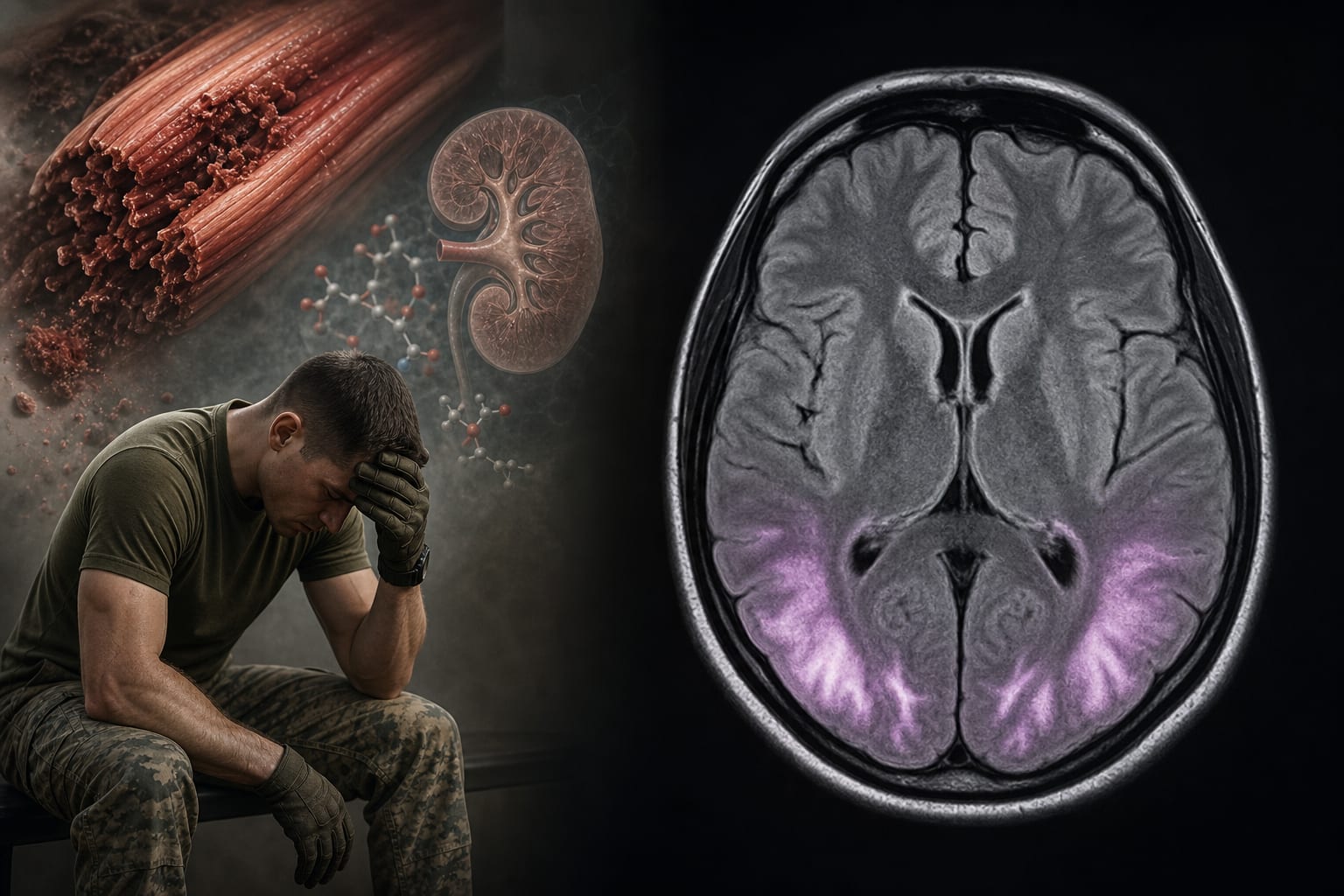
Acute Neurological Complications of Rhabdomyolysis: A Case of Posterior Reversible Encephalopathy Syndrome in a Military Personnel
-
July 7, 2026
Clinical Scorecard: Acute Neurological Complications of Rhabdomyolysis: A Case of Posterior Reversible Encephalopathy Syndrome in a Military Personnel
At a Glance
| Category | Detail |
|---|---|
| Condition | Rhabdomyolysis and Posterior Reversible Encephalopathy Syndrome (PRES) |
| Key Mechanisms | Endothelial dysfunction and vasogenic edema due to elevated blood pressure and toxin-mediated effects. |
| Target Population | Active-duty military service members |
| Care Setting | Clinical management of exertional rhabdomyolysis |
Key Highlights
- PRES is a rare complication of rhabdomyolysis, characterized by acute neurologic symptoms.
- Military personnel are at increased risk for exertional rhabdomyolysis due to training demands.
- Management includes aggressive IV fluid resuscitation and monitoring for neurologic symptoms.
- PRES can present with headaches, visual disturbances, and altered mental status.
- Early recognition and treatment can lead to resolution of symptoms and recovery.
Guideline-Based Recommendations
Diagnosis
- Monitor for neurologic symptoms in patients with rhabdomyolysis.
Management
- Aggressive IV fluid resuscitation and monitoring of renal function.
Monitoring & Follow-up
- Regular assessment of blood pressure and neurologic status.
Risks
- Potential for acute kidney injury, hypertension, and neurologic complications.
Patient & Prescribing Data
Active-duty military personnel experiencing exertional rhabdomyolysis.
Avoid triggers for PRES, including stimulants and excessive physical exertion.
Clinical Best Practices
- Implement clinical practice guidelines for assessing risk and prognosis of exertional rhabdomyolysis.
- Educate patients on recognizing symptoms of PRES and the importance of timely intervention.
Related Resources & Content
Based on findings from:
Posterior Reversible Encephalopathy Syndrome in a Military Service Member: A Rare Neurologic Sequela of Rhabdomyolysis
Annals Of Internal Medicine: Clinical Cases, 2026.
https://www.acpjournals.org/doi/10.7326/aimcc.2026.0048
This content is an AI-generated, fully rewritten summary based on a published scholarly article. It does not reproduce the original text and is not a substitute for the original publication. Readers are encouraged to consult the source for full context, data, and methodology.